Skip to content

10 Best AI Tools for Customer Support in 2026 (Compared & Reviewed)

10 Best AI Tools for Customer Support in 2026 (Compared & Reviewed)

Hundreds of vendors claim to offer intelligent customer support automation, though their capabilities vary significantly.

Some focus on conversational AI. Others specialize in ticket management. A smaller group combines AI reasoning with workflow execution to handle customer requests from start to finish.

To help decision-makers evaluate the market, we analyzed the best AI tools for customer support based on automation capabilities, omnichannel support, integrations, scalability, governance, analytics, and overall business impact.

In this guide, you’ll find the top AI customer support platforms, their strengths, limitations, pricing, and ideal use cases to help you choose the right solution for your organization.
Criteria We Used to Choose the Best AI Tools for Customer Support

Not all AI customer service tools deliver the same value. Many platforms answer questions effectively, while fewer can take actions, automate workflows, and drive measurable support outcomes.

We evaluated each solution based on the following criteria.

AI Resolution Capabilities

The most important factor is whether the platform can actually resolve customer issues. AI that answers questions is useful. AI that updates accounts, processes requests, triggers workflows, and completes tasks delivers greater operational value.

Omnichannel Support

Modern customers move across chat, email, voice, messaging apps, and support portals. We prioritized platforms that maintain context across channels and create a unified customer experience.

Workflow Automation

Support teams spend significant time on repetitive activities. Strong platforms automate processes such as refunds, account updates, routing, verification, escalations, and ticket handling.

Knowledge Management

An AI system is only as effective as its access to information. We looked for solutions with advanced knowledge retrieval, contextual understanding, and learning capabilities.

Human Handoff Experience

Some customer situations require human involvement. We evaluated how effectively each platform transfers conversations while preserving customer history and context.

Analytics and Reporting

Support leaders need visibility into performance, customer trends, operational bottlenecks, and AI effectiveness.

Integration Ecosystem

Organizations rely on CRMs, help desks, billing systems, ERPs, communication platforms, and internal tools. Integration flexibility played a major role in our evaluation.

Security and Governance

Enterprise adoption requires compliance, auditability, role-based access controls, and strong governance.

Pricing and ROI

We assessed pricing structures, scalability, and potential business impact to determine overall value.

Top 10 AI Tools for Customer Support

Tool Best For Starting Price Channels AI Resolution
Azeon Enterprise AI customer support automation Custom Chat, Email, Voice, Tickets High
Zendesk AI Existing Zendesk users Custom Chat, Email, Voice, Social Medium
Intercom Fin Conversational support teams Usage-based Chat, Email Medium
Freshdesk Freddy AI Growing support teams Paid Plans Chat, Email, Tickets Medium
Salesforce Service Cloud Einstein Salesforce ecosystem Custom Chat, Email, Voice Medium
Ada AI-first automation Custom Chat, Messaging High
Forethought Ticket deflection Custom Chat, Email Medium
Gladly Retail customer service Custom Chat, Email, Voice, SMS Medium
Kustomer CRM-driven support Custom Chat, Email, Voice Medium
Gorgias Ecommerce support Paid Plans Chat, Email, Social Medium

1. Azeon

Best for: Organizations seeking an AI platform that resolves customer issues, automates workflows, and orchestrates support operations across multiple channels.

Overview:

Azeon is an agentic AI platform built specifically for customer support operations. Unlike traditional chatbot solutions that focus primarily on conversations, Azeon functions as a System of Action capable of understanding requests, making decisions within approved boundaries, executing workflows, and delivering resolutions.

The platform operates across chat, email, voice, and ticketing environments while integrating with existing support infrastructure. Organizations can deploy Azeon without replacing their CRM, help desk, ERP, billing platform, or communication tools.

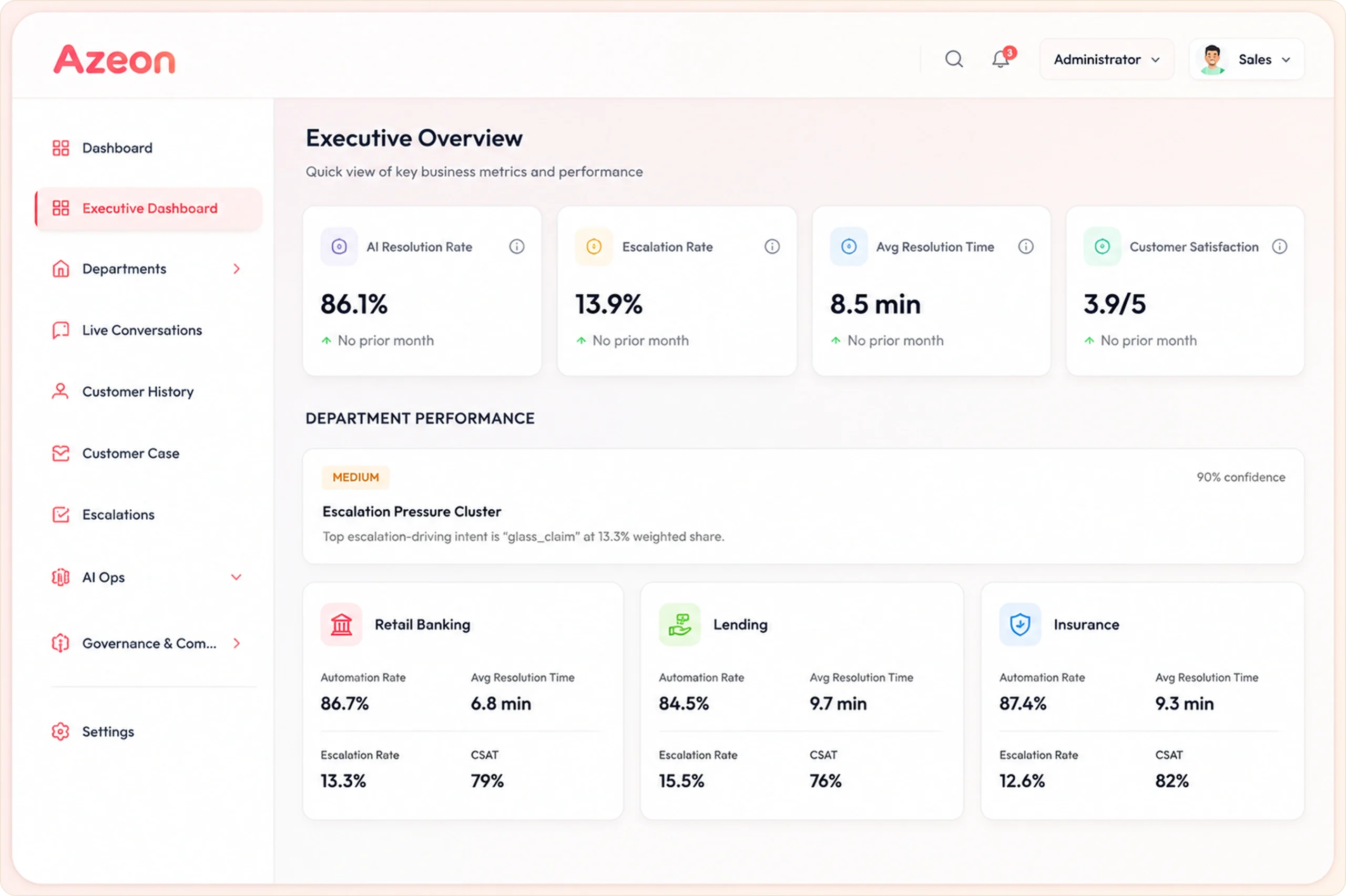
Azeon Dashboard

Key Features:

  • Agentic AI Customer Support: Moves beyond question answering to complete customer tasks and workflows.
  • Omnichannel Support: Supports chat, email, voice interactions, and ticket-based support.
  • Smart Knowledge Engine: Indexes documentation, FAQs, historical tickets, and knowledge assets.
  • Customer Context Management: Provides complete customer histories and interaction timelines.
  • Human-in-the-Loop Controls: Allows organizations to define approval workflows for sensitive actions.
  • Live Monitoring: Offers operational visibility and control through a centralized command center.
  • Context-Aware Escalations: Transfers complete customer context during handoffs.
  • Root Cause Analytics: Identifies recurring support issues and improvement opportunities.
  • Enterprise Security: Supports SOC 2, ISO 27001, GDPR, HIPAA, audit logs, and RBAC.
  • Extensive Integrations: Connects with CRMs, ERPs, help desks, payment systems, and custom applications.
| Proven Results from Live Environments |

Measured Outcomes Across Production Deployments

Metric
Outcome
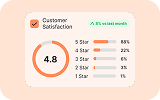
CSAT improvement (Retail case study)
3.7 → 4.8
Reduction in repeat contact rate
35%
Reduction in Average Handle Time (Logistics)
32%
Common queries resolved annually
250,000+
Ticket automation without SLA risk (SaaS)
96%
Customer Lifetime Value improvement
2X
Goal Completion Rate (GCR)
95%+
Semantic Accuracy
>92%
Guardrail Adherence
99.999%
Annual OpEx Reduction
Up to $250K

Pros:

  • Designed for resolution, not only conversations
  • Deterministic execution framework
  • Omnichannel support
  • Strong governance capabilities
  • No migration requirements
  • Human approval workflows
  • Enterprise-grade security
  • Outcome-based pricing model

Cons:

  • Enterprise-focused implementation
  • Advanced functionality may exceed SMB requirements

Pricing:

Azeon’s pricing model is called Result-as-a-Service – you pay per successfully resolved ticket, not per seat, per agent, per token, or per action.

While every other AI tools for customer support in this guide bills you for consumption, Azeon bills you for outcomes.

Azeon Pricing

Ready to See What Azeon Can Do for Your Support Team?

Book a Personalized Demo

2. Zendesk AI

Best for: Organizations already using Zendesk and looking to expand support automation without changing platforms.

Overview:

Zendesk AI is deeply integrated into the broader Zendesk ecosystem and powers customer service workflows through AI agents, copilots, intelligent routing, automation, and quality assurance capabilities. The platform supports customer interactions across chat, email, voice, and messaging channels while helping teams automate repetitive support tasks.

Over the last year, Zendesk has expanded its AI strategy significantly. The company has invested heavily in agentic AI capabilities, interoperability, voice automation, and cross-platform experiences. Its AI agents can now work across multiple channels while maintaining conversation context, helping enterprises create more consistent customer experiences. Zendesk has also introduced outcome-based AI pricing models, reflecting a broader shift toward measurable support results instead of usage-based billing.

Key Features:

  • AI agents for customer interactions
  • AI-powered ticket routing and triage
  • Agent copilot assistance
  • Generative replies and content suggestions
  • Voice AI support
  • Knowledge base recommendations
  • Workflow automation
  • Quality assurance monitoring
  • Omnichannel customer support
  • MCP-based interoperability initiatives

Pros:

  • Strong ecosystem for existing Zendesk customers
  • Mature ticketing and support infrastructure
  • Extensive marketplace integrations
  • Advanced routing and workflow capabilities
  • Supports enterprise-scale operations

Cons:

  • Costs can increase significantly with advanced AI add-ons
  • Larger deployments often require implementation planning
  • Some advanced AI capabilities sit behind premium plans

Pricing:

Zendesk pricing starts around $19–$25 per agent/month for entry-level plans, with advanced enterprise plans reaching significantly higher pricing tiers. Advanced AI functionality may require additional AI add-ons and per-resolution fees depending on deployment models. Enterprise customers typically engage through custom pricing discussions.

3. Intercom Fin

Best for: Fast-growing digital businesses prioritizing conversational customer support and AI-first experiences.

Overview:

Intercom Fin has become one of the most recognized AI customer support solutions in the market. Positioned as an AI agent rather than a traditional chatbot, Fin focuses on answering customer questions, resolving support requests, and reducing human workload through conversational automation. The platform integrates closely with Intercom’s helpdesk and messaging ecosystem.

A major reason many organizations evaluate Fin is its strong user experience. The platform emphasizes natural conversations, knowledge retrieval, multilingual support, and fast deployment. Fin can pull information from help centers, documentation, and internal knowledge assets to deliver highly contextual responses. For SaaS companies, technology businesses, and support-heavy digital products, Fin often serves as a strong front-line support layer.

Key Features:

  • AI customer service agent
  • Conversational automation
  • Knowledge base integration
  • Multilingual support
  • Agent assistance tools
  • Helpdesk integration
  • Automated ticket handling
  • Workflow automation
  • Customer messaging platform
  • AI performance analytics

Pros:

  • Excellent conversational experience
  • Fast deployment process
  • Strong knowledge retrieval quality
  • Modern user interface
  • Designed specifically around AI-first support

Cons:

  • Costs can scale quickly with high support volumes
  • Less workflow execution depth compared to some enterprise AI platforms
  • Heavy dependence on knowledge quality

Pricing:

Intercom Fin follows an outcome-based pricing model. Fin pricing starts at approximately $0.99 per resolution, while Intercom Helpdesk plans begin around $29 per seat per month. Additional analytics and AI management capabilities may require premium add-ons.

4. Freshdesk Freddy AI

Best for: Growing support teams seeking affordable AI-powered customer support automation.

Overview:

Freddy AI is Freshworks’ AI suite designed to improve support efficiency, automate repetitive work, and help agents resolve issues faster. It operates across Freshdesk and the broader Freshworks ecosystem, supporting ticket management, conversational AI, agent assistance, sentiment analysis, and workflow automation.

One of Freddy AI’s biggest advantages is accessibility. Many mid-sized businesses adopt Freshdesk because it offers a balance between affordability and functionality. Freddy AI extends those capabilities through AI copilots, ticket summarization, response generation, customer intent detection, and support analytics. Organizations seeking AI without large enterprise investments often shortlist Freshdesk.

Key Features:

  • AI copilot for agents
  • Ticket summarization
  • Generative email drafting
  • Sentiment analysis
  • AI-powered routing
  • Chatbot automation
  • Ticket classification
  • Knowledge suggestions
  • Workflow automation
  • Support analytics

Pros:

  • Easier learning curve than many enterprise platforms
  • Competitive pricing
  • Strong Freshworks ecosystem integration
  • Good balance of AI and support functionality
  • Suitable for scaling teams

Cons:

  • Enterprise orchestration capabilities are more limited
  • Advanced AI features may require additional purchases
  • High-volume automation can increase operational costs

Pricing:

Freshdesk plans start around $15 per agent per month, while Freddy AI Copilot add-ons begin around $29–$35 per agent monthly. AI sessions may also be billed separately depending on usage. Freshworks additionally offers session-based AI packages for automation-heavy deployments.

5. Salesforce Service Cloud Einstein

Best for: Large enterprises already operating within the Salesforce ecosystem.

Overview:

Salesforce Service Cloud Einstein brings AI directly into customer service operations through predictive insights, automation, workflow recommendations, and agent assistance. The platform leverages Salesforce’s massive CRM footprint to help organizations create highly personalized support experiences.

One of Einstein’s strongest advantages is access to customer data. Because Service Cloud operates alongside Sales Cloud, Marketing Cloud, and other Salesforce products, support teams gain visibility into the broader customer journey. This enables personalized interactions, intelligent routing, and proactive support experiences that connect customer service with revenue operations.

Key Features:

  • AI-powered case routing
  • Predictive recommendations
  • Agent assistance
  • Customer sentiment analysis
  • Workflow automation
  • CRM integration
  • Omnichannel support
  • Knowledge recommendations
  • Service analytics
  • Generative AI capabilities

Pros:

  • Deep CRM integration
  • Enterprise scalability
  • Strong customization capabilities
  • Extensive ecosystem
  • Rich customer data access

Cons:

  • Higher implementation complexity
  • Premium pricing
  • Requires Salesforce expertise

Pricing:

Salesforce Service Cloud pricing varies significantly depending on edition, AI capabilities, and deployment requirements. Einstein functionality is generally available through premium plans and enterprise agreements.

6. Ada

Best for: Enterprises looking for autonomous AI customer service automation across multiple support channels.

Overview:

Ada is one of the most established AI-first customer support platforms in the market. The company positions its solution as an AI customer service agent capable of autonomously resolving customer issues across chat, email, voice, and messaging channels. Rather than functioning as a traditional FAQ bot, Ada focuses on automated issue resolution, workflow execution, and personalized customer experiences.

A major differentiator is Ada’s enterprise-grade automation framework. The platform supports multilingual customer support, omnichannel engagement, customer identity continuity, and workflow integrations. Ada reports automated resolution rates as high as 83–84% in certain deployments, making it attractive for organizations seeking large-scale support automation.

Key Features:

  • AI customer service agents
  • Omnichannel support automation
  • Multilingual support
  • Customer identity continuity
  • Enterprise workflow integrations
  • AI performance optimization tools
  • Knowledge management
  • Customer authentication workflows
  • Analytics dashboards
  • Enterprise security controls

Pros:

  • Strong autonomous resolution capabilities
  • Enterprise-grade scalability
  • Excellent multilingual support
  • High automation potential
  • Strong customer experience focus

Cons:

  • Premium pricing structure
  • Implementation requires planning
  • Large-scale deployments may need dedicated resources
  • Cost can increase significantly with volume

Pricing:

Ada does not publicly publish standard pricing. Industry estimates suggest, entry-level enterprise deployments: ~$30,000–40,000/year, mid-market deployments: ~$70,000+/year, and large enterprise environments: $100,000–300,000+/year depending on ticket volume, automation scope, and integrations.

7. Forethought

Best for: Companies focused on AI-powered ticket deflection, support automation, and operational efficiency.

Overview:

Forethought is an AI-native customer support platform built around agentic AI and multi-agent orchestration. The platform learns from historical support tickets, knowledge bases, and customer interactions to automate support processes while improving resolution quality. Forethought operates across chat, email, voice, SMS, and internal support channels.

The company has gained significant attention for its Autoflows technology, which enables AI agents to understand customer intent, reason through workflows, and automate customer service tasks. Following Zendesk’s acquisition of Forethought in 2026, the platform has become especially attractive for organizations already invested in Zendesk environments.

Key Features:

  • AI support agents
  • Autoflows workflow automation
  • Ticket classification
  • Agent copilot
  • Knowledge retrieval
  • Omnichannel support
  • AI QA monitoring
  • Customer sentiment analysis
  • Advanced reporting
  • Multi-brand support

Pros:

  • Strong AI automation capabilities
  • Agentic AI architecture
  • Excellent ticket deflection
  • Strong Zendesk alignment
  • Good support analytics

Cons:

  • Pricing transparency is limited
  • Enterprise-focused deployment model
  • Setup can be complex
  • Requires sufficient support data for optimal performance

Pricing:

Forethought uses custom enterprise pricing. Market estimates indicate, team plans starts around $239/month in some configurations and enterprise deployments: ~$40,000–155,000+/year.

8. Gladly

Best for: Retail brands and customer-centric organizations focused on long-term customer relationships.

Overview:

Gladly approaches customer support differently from traditional ticket-based platforms. Instead of organizing support around cases, Gladly structures interactions around customers and their histories. This allows agents to view complete customer journeys, purchase histories, and previous conversations from one interface.

Many retail and ecommerce brands favor Gladly because customer loyalty often depends on personalized service experiences. Support teams can continue conversations across channels without losing context, creating smoother experiences for both customers and agents.

Key Features:

  • Customer-centered conversation timelines
  • Omnichannel support
  • Voice support
  • Messaging support
  • AI-powered assistance
  • Workflow automation
  • Customer journey visibility
  • Reporting and analytics

Pros:

  • Strong customer experience focus
  • Unified customer history
  • Excellent retail support workflows
  • Omnichannel continuity

Cons:

  • Higher enterprise pricing
  • Less emphasis on autonomous AI resolution
  • Better suited for customer-centric industries

Pricing:

Gladly typically uses custom enterprise pricing. Industry reports estimate deployments often start around: $150–180/user/month and enterprise agreements commonly exceed $50,000–100,000 annually depending on support volume and integrations.

9. Kustomer

Best for: Businesses seeking CRM-powered customer service operations with unified customer visibility.

Overview:

Kustomer combines CRM functionality with customer service management, allowing support teams to access customer history, account information, and support interactions through a centralized platform. Its timeline-based interface helps agents understand customer journeys without navigating multiple systems.

The platform is particularly valuable for organizations managing complex customer relationships. By centralizing data, Kustomer helps reduce context switching and enables more personalized customer interactions.

Key Features:

  • Unified customer timelines
  • CRM-powered support workflows
  • Omnichannel communication
  • AI assistance
  • Customer profiles
  • Workflow automation
  • Reporting dashboards
  • Agent productivity tools

Pros:

  • Excellent customer context visibility
  • Strong CRM integration
  • Centralized support operations
  • Good workflow flexibility

Cons:

  • Enterprise-oriented pricing
  • Implementation planning required
  • CRM alignment may take time

Pricing:

Kustomer primarily operates through custom pricing models. Estimated pricing ranges, professional plans starts from ~$89–139/user/month.

10. Gorgias

Best for: Ecommerce brands managing high volumes of customer inquiries.

Overview:

Gorgias is designed specifically for ecommerce support operations. The platform integrates closely with Shopify, Magento, BigCommerce, and other ecommerce systems, allowing support agents and AI workflows to access order information, shipping details, refunds, and customer histories directly within support conversations.

Its ecommerce specialization makes Gorgias highly effective for online retailers dealing with repetitive support requests such as order tracking, returns, exchanges, cancellations, and product inquiries.

Key Features:

  • Shopify integration
  • AI customer support
  • Order management access
  • Refund automation
  • Ticket automation
  • Ecommerce analytics
  • Customer history visibility
  • Workflow automation

Pros:

  • Purpose-built for ecommerce
  • Strong Shopify ecosystem integration
  • Fast implementation
  • Effective support automation

Cons:

  • Limited appeal outside ecommerce
  • Scaling costs can rise quickly
  • Less enterprise workflow orchestration

Pricing:

Current plans typically include: basic starts from ~$10–60/month, pro costs around ~$300+/month, and advanced ecommerce support plans can exceed $900+/month depending on ticket volume and automation usage.

How to Choose the Right AI Tool for Customer Support

Define Your Automation Goals

Start by identifying the outcomes you want to achieve. Some organizations prioritize ticket reduction, while others focus on faster resolutions, lower costs, or better customer experiences.

Evaluate Omnichannel Requirements

Customers rarely stay on one channel. Choose a platform that supports chat, email, voice, messaging, and ticketing while preserving context.

Review Integration Needs

The best AI tool should fit into your existing environment rather than forcing major infrastructure changes.

Assess Governance Requirements

Organizations in regulated industries should prioritize auditability, access controls, compliance certifications, and approval workflows.

Compare Pricing Models

Some vendors charge per seat. Others charge based on usage. Outcome-based models often align costs more closely with business value.

Measure Resolution Rates

Response speed is important. Resolution quality creates the larger impact. Focus on platforms that help customers achieve their goals.

Test Human Handoff Workflows

Escalations should feel seamless. Agents should receive complete context, sentiment history, and recommended next actions.

Validate Analytics Capabilities

Strong analytics help identify recurring issues, operational bottlenecks, and customer experience opportunities.

Final Verdict

The market for AI tools for customer support has matured significantly. Organizations now have access to platforms capable of automating interactions, assisting agents, improving service quality, and reducing operational costs.

Each solution on this list serves different needs.

Choose Zendesk AI if you already operate within Zendesk.

Choose Intercom Fin if conversational support is your primary focus.

Choose Gorgias if ecommerce support is your priority.

Choose Salesforce Service Cloud Einstein if Salesforce is at the center of your technology stack.

Choose Azeon If

  • You want AI that resolves issues rather than simply answering questions.
  • You need support across chat, email, voice, and tickets.
  • You require governance and approval controls.
  • You want extensive integrations without migration.
  • You need operational analytics and root cause visibility.
  • You prefer a pricing model aligned with outcomes.

Why Azeon is Best AI Tool for Customer Support?

Every platform on this list brings valuable capabilities to customer support teams. Some excel at conversational AI, some focus on ticket management, while others help automate specific workflows.

Azeon stands out because it approaches customer support differently.

Instead of functioning as another chatbot layered on top of existing systems, Azeon operates as an intelligent execution layer that connects conversations, workflows, business systems, and operational decision-making.

It understands customer intent, accesses the right information, triggers actions, and helps drive issues toward resolution.

Overall, if your goal is simply adding AI-powered conversations, several platforms on this list can help.

But if your goal is reducing support workload, automating customer resolutions, connecting fragmented systems, and creating a scalable support operation, Azeon deserves serious consideration.

Ready to see what Azeon can do for your support team?

Connect with our team to explore how Azeon can fit into your existing support ecosystem, evaluate your current workflows, and discover how many customer issues can be resolved autonomously.

Schedule a Personalized Demo

Experience how Azeon can help your team resolve more, escalate less, and deliver exceptional customer experiences.

Book a Demo

FAQs: AI Tools for Customer Support

What are AI tools for customer support?

AI tools for customer support use artificial intelligence to automate customer interactions, answer questions, assist agents, analyze support data, and improve service efficiency. Modern platforms can also automate workflows, process requests, and resolve issues without human intervention.

Which is the best AI tool for customer support?

The best AI tool depends on your business requirements. Organizations looking for enterprise-grade automation, workflow execution, omnichannel support, and governance often prefer Azeon. Businesses already using Zendesk, Salesforce, or HubSpot may benefit from solutions within those ecosystems.

Can AI replace human customer support agents?

AI can automate a significant percentage of repetitive customer interactions. Human agents remain essential for complex situations, relationship management, sensitive conversations, and exception handling. The strongest support strategies combine AI automation with human expertise.

How much do AI customer support tools cost?

Pricing varies widely. Some vendors charge per seat, while others use usage-based pricing. Enterprise solutions often provide custom pricing based on support volume, integrations, and deployment requirements. Outcome-based models are becoming increasingly popular.

What features should I look for in AI customer service software?

Important capabilities include omnichannel support, workflow automation, knowledge management, integrations, analytics, human handoff functionality, governance controls, and security compliance.

Glossary

1. Agentic AI: AI systems capable of planning, reasoning, and completing tasks to achieve defined goals.

2. Customer Support Automation: Technology used to automate support processes and customer interactions.

3. Omnichannel Support: A support strategy that delivers consistent experiences across multiple channels.

4. Knowledge Base: A centralized repository of information used to answer customer questions.

5. Human-in-the-Loop: A governance approach where human approval is required for specific actions.

Questions about Azeon?

Connect with our team to explore use cases, workflows, and deployment possibilities.