Skip to content

Top 10 AI-Driven Customer Support Platforms for SaaS Companies in 2026

Top 10 AI-Driven Customer Support Platforms for SaaS Companies in 2026

SaaS companies evaluating AI-driven customer support platforms are typically looking for one thing: a solution that can handle growing support volumes without adding proportional headcount.

Today’s market offers dozens of AI customer support tools, from AI chatbots and agent assistants to autonomous support platforms capable of resolving customer issues across multiple systems. The challenge is identifying which platform aligns with your support operations, customer expectations, and growth goals.

To help simplify your evaluation process, we’ve compared the best AI-driven customer support platforms for SaaS companies based on automation capabilities, integrations, scalability, governance, deployment flexibility, and overall business value.

Criteria We Used to Evaluate AI-Driven Customer Support Software for SaaS Companies

To identify the best AI-driven customer support platforms for SaaS companies, we evaluated each solution across the following criteria:

AI Capabilities

We assessed how effectively each platform can understand customer intent, automate conversations, generate responses, and support end-to-end issue resolution.

SaaS-Specific Use Cases

We looked at how well each platform supports common SaaS workflows, including onboarding assistance, subscription management, billing inquiries, account changes, feature adoption, and technical support.

Integrations and Connectivity

Modern support operations depend on multiple systems. We evaluated each platform’s ability to connect with CRMs, help desks, communication channels, knowledge bases, billing platforms, and business applications.

Customer Context and Memory

We considered how effectively each solution captures and utilizes customer history, previous interactions, account information, and conversation context to deliver personalized support experiences.

Automation and Workflow Execution

Beyond answering questions, we assessed whether the platform can take actions, trigger workflows, automate processes, and assist with operational tasks.

Human Oversight and Governance

For growing SaaS businesses, visibility and control remain essential. We reviewed escalation workflows, approval mechanisms, auditability, and agent collaboration capabilities.

Scalability and Deployment

We evaluated how easily each platform can scale alongside growing customer volumes and how quickly organizations can deploy and realize value.

Pricing and Business Value

Finally, we compared pricing models, transparency, and overall value relative to the capabilities offered.

Top 10 AI-Driven Customer Support Platforms for SaaS Companies in 2026

Platform Best For AI Capabilities Integrations Pricing Model
Azeon SaaS companies seeking autonomous customer support operations Advanced Extensive Resolution-Based
Intercom Fin AI Conversational support automation Advanced Strong Usage-Based
Zendesk AI Existing Zendesk customers Advanced Strong Seat + Usage
Freshdesk Freddy AI Growing SaaS businesses Moderate Strong Tier-Based
Salesforce Agentforce Salesforce-centric enterprises Advanced Extensive Custom Enterprise
Ada Customer self-service automation Advanced Strong Custom
Forethought Ticket automation and agent assistance Advanced Strong Custom
Help Scout AI Small and mid-sized SaaS teams Moderate Moderate Subscription
Tidio AI Startups and small SaaS companies Moderate Moderate Subscription
HubSpot Service Hub AI HubSpot ecosystem users Moderate Strong Tier-Based

1. Azeon

Best for: SaaS companies looking to automate customer interactions, access customer and product data, execute actions across business systems, and resolve support requests without increasing support headcount.

Overview:

Azeon is an Agentic AI-driven customer support platform purpose-built for SaaS companies that need to scale customer support alongside rapid user growth. Rather than functioning as another chatbot or ticketing layer, Azeon operates as an intelligence layer that connects customer conversations, business systems, support workflows, and organizational knowledge into a unified support operation.

What differentiates Azeon from many AI customer support software is its ability to move beyond conversation automation. The platform can understand customer intent, access relevant account information, retrieve context from connected systems, execute approved workflows, and coordinate actions across support operations while maintaining governance and visibility.

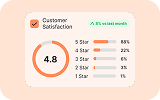
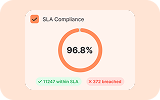
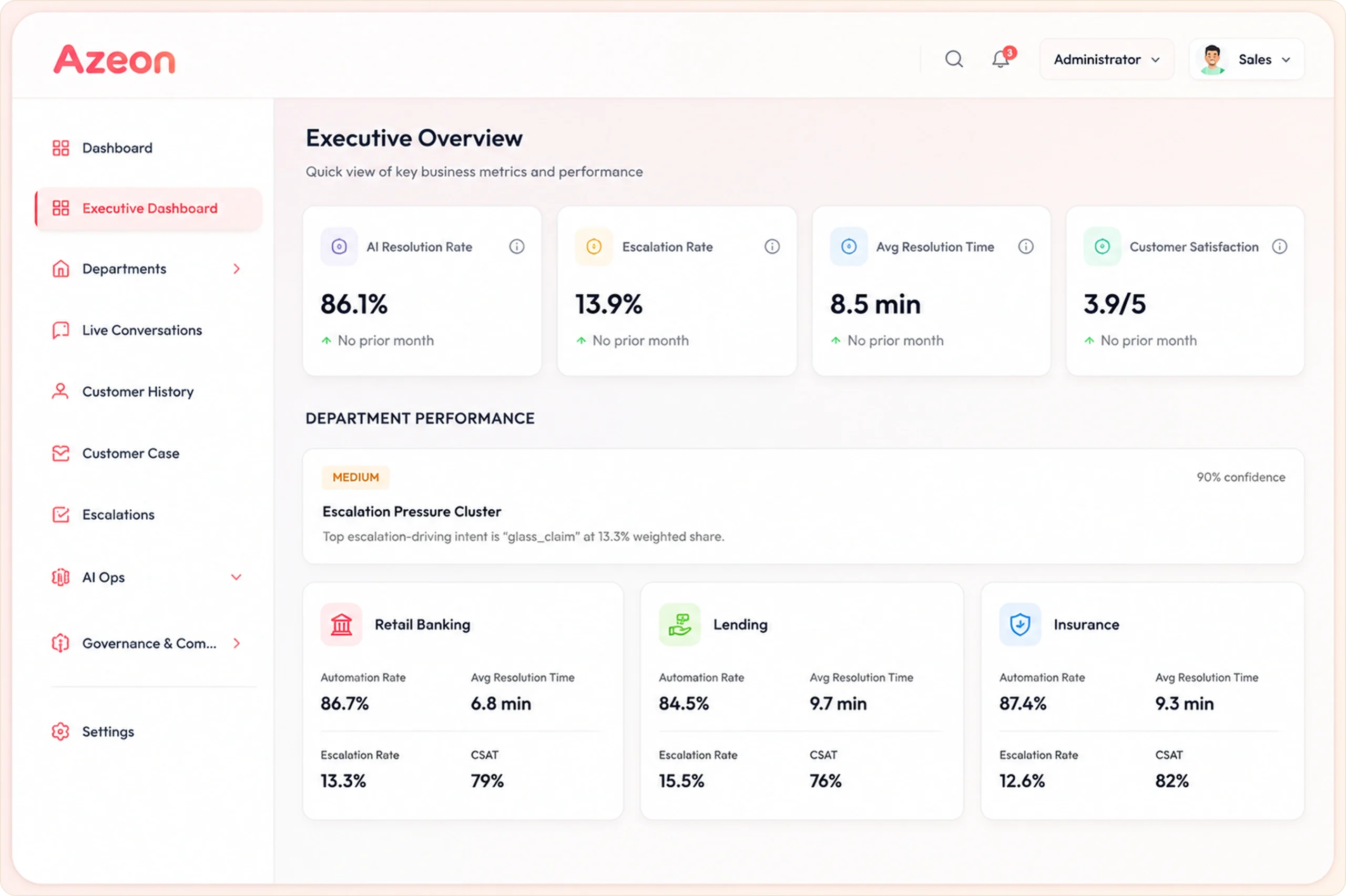
Azeon Executive Dashboard

Key Features:

  • Omnichannel Support: Supports customer conversations across chat, email, voice, and ticketing channels.
  • Shared Customer Memory: Maintains customer history, previous interactions, and account context across conversations.
  • Human-in-the-Loop Governance: Enables approvals and oversight for sensitive customer actions.
  • Context-Aware Escalations: Transfers conversation history, customer information, and recommended next steps during handoffs.
  • Workflow Automation & Execution: Performs actions across CRM, billing, subscription management, support, and operational systems.
  • AI Reasoning Engine: Understands customer intent, urgency, and business context before responding.
  • Knowledge Integration: Connects product documentation, knowledge bases, policies, and internal resources.
  • Root Cause Analytics: Identifies recurring support issues, product friction points, and operational bottlenecks.
  • Auditability & Traceability: Provides visibility into AI actions, decisions, and workflows.
  • Flexible Deployment Options: Supports enterprise deployment requirements across various environments.
  • Extensive Integrations: Connects with CRM platforms, help desks, SaaS applications, communication channels, and business systems.
  • Result-Based Pricing: Aligns platform costs with successful customer resolutions rather than AI consumption or seat counts.
| Proven Results from Live Environments |

Measured Outcomes Across Production Deployments

Metric
Outcome
CSAT improvement (Retail case study)
3.7 → 4.8
Reduction in repeat contact rate
35%
Reduction in Average Handle Time (Logistics)
32%
Common queries resolved annually
250,000+
Ticket automation without SLA risk (SaaS)
96%
Customer Lifetime Value improvement
2X
Goal Completion Rate (GCR)
95%+
Semantic Accuracy
>92%
Guardrail Adherence
99.999%
Annual OpEx Reduction
Up to $250K

Pros:

  • Built specifically for customer support operations
  • Well-suited for SaaS onboarding, billing, account management, and product support use cases
  • Combines AI reasoning with workflow execution
  • Shared customer memory across channels and systems
  • Human oversight and approval workflows
  • Strong governance, auditability, and visibility controls
  • Works with existing support infrastructure
  • Extensive integration capabilities
  • Supports growing support volumes without proportional headcount growth
  • Outcome-focused pricing model

Cons:

  • Enterprise-grade functionality may be more extensive than required for very early-stage startups
  • Advanced support workflows typically benefit from implementation planning

Pricing:

Azeon uses a Result-as-a-Service pricing model where SaaS companies pay for successfully resolved customer issues rather than seats, AI usage, tokens, integrations, or conversation volume.

Pricing of Azeon

David Pridgen
David Pridgen
National Account Manager

Discover What Azeon AI Agents Can Do

Experience how Azeon AI agents understand intent, access customer context, and take action across your support operation.

Book a Personalized Demo →

2. Intercom Fin AI

Best for: SaaS companies that want AI-powered conversational support integrated with a modern customer communication platform.

Overview:

Intercom positions Fin AI as an AI agent designed to resolve customer questions across chat, email, tickets, WhatsApp, and other channels. The platform combines AI automation with Intercom’s help desk, inbox, and customer messaging tools.

For SaaS businesses, Fin AI is particularly appealing when customer conversations, onboarding questions, billing inquiries, and product support are already managed inside the Intercom ecosystem. The AI agent can answer questions, draft responses, transfer conversations to human agents, and take certain actions in connected systems.

Key Features:

  • AI-powered customer support agent
  • Omnichannel support across chat, email, tickets, WhatsApp, and SMS
  • AI agent assistance for support teams
  • Knowledge base integration
  • Conversation routing and automation
  • Action execution within connected systems
  • Customizable AI responses and tone
  • Seamless handoff to human agents

Pros:

  • Strong conversational AI experience
  • Mature customer communication platform
  • Fast deployment for existing Intercom users
  • Excellent omnichannel capabilities
  • Integrated inbox and support workflows
  • Strong knowledge base integration

Cons:

  • Most effective within the Intercom ecosystem
  • Usage-based pricing can increase with support volume
  • Advanced workflows may require additional configuration

Pricing:

  • Essential Plan: Starts at $29 per seat/month
  • Advanced Plan: Starts at $85 per seat/month
  • Expert Plan: Starts at $132 per seat/month
  • Fin AI Agent: Approximately $0.99 per successful resolution

3. Zendesk AI

Best for: SaaS companies already using Zendesk and looking to add AI-powered automation and support capabilities.

Overview:

Zendesk AI extends Zendesk’s customer service platform with AI agents, intelligent automation, agent assistance, and omnichannel support capabilities. The platform is designed to help support teams improve efficiency while delivering faster and more personalized customer experiences.

For SaaS organizations already operating within Zendesk, AI features can be added directly into existing ticketing, workflow automation, knowledge management, and customer support processes without introducing a new support platform.

Key Features:

  • AI-powered customer service agents
  • Omnichannel support across chat, email, voice, and messaging
  • Agent assistance and recommendations
  • Intelligent ticket routing
  • Knowledge base integration
  • Workflow automation
  • Conversation context continuity
  • Reporting and analytics

Pros:

  • Strong enterprise support ecosystem
  • Extensive integration marketplace
  • Mature help desk capabilities
  • Good omnichannel support coverage
  • AI integrated into existing workflows
  • Suitable for scaling SaaS organizations

Cons:

  • Costs can increase significantly as teams grow
  • Advanced AI capabilities often require premium plans
  • Best suited for organizations already invested in Zendesk

Pricing:

  • Support Team: Starts at $25/agent/month
  • Suite Team: Starts at $69/agent/month
  • Suite Professional: Starts at $149/agent/month
  • Suite Enterprise: Custom pricing

4. Freshdesk Freddy AI

Best for: Growing SaaS companies looking for affordable AI support automation within the Freshworks ecosystem.

Overview:

Freshdesk Freddy AI combines help desk functionality with AI-powered automation, agent assistance, and customer support capabilities. The platform helps support teams automate repetitive work while improving agent productivity and customer response times.

For SaaS teams already using Freshworks products, Freddy AI can automate ticket handling, assist agents with response generation, and support customer interactions across multiple channels.

Key Features:

  • AI-powered customer support automation
  • Ticket classification and prioritization
  • AI-generated response assistance
  • Workflow automation
  • Knowledge base integration
  • Agent copilot capabilities
  • Analytics and reporting
  • Freshworks ecosystem integration

Pros:

  • Easy onboarding and implementation
  • Competitive pricing
  • Strong integration within Freshworks products
  • Useful agent productivity tools
  • Good fit for SMB and mid-market SaaS businesses
  • Flexible AI add-ons

Cons:

  • Advanced AI features often require add-ons
  • Enterprise-level workflows may require customization
  • AI session costs can affect pricing predictability

Pricing:

  • Growth: Starts at $15/agent/month
  • Pro: Starts at $49/agent/month
  • Enterprise: Starts at $79/agent/month
  • Freddy AI Copilot: Approximately $29/agent/month

5. Salesforce Agentforce

Best for: Enterprise SaaS organizations operating heavily within the Salesforce ecosystem.

Overview:

Salesforce Agentforce is Salesforce’s AI-powered service automation platform that combines customer data, workflows, AI agents, and enterprise automation capabilities into a unified support experience.

For SaaS companies already using Salesforce CRM and Service Cloud, Agentforce extends existing customer data and service workflows with AI-powered support automation and customer engagement capabilities.

Key Features:

  • Agentic AI for customer service
  • Deep Salesforce CRM integration
  • Workflow automation
  • Real-time customer context access
  • Omnichannel support capabilities
  • AI-powered voice support
  • Analytics and performance monitoring
  • MuleSoft integration support

Pros:

  • Extensive enterprise functionality
  • Deep Salesforce integration
  • Powerful automation ecosystem
  • Suitable for large-scale support operations
  • Unified customer data architecture
  • Advanced governance capabilities

Cons:

  • Complex implementation process
  • Premium enterprise pricing
  • Best suited for Salesforce-centric organizations

Pricing:

Consumption-based pricing

6. Ada

Best for: Large SaaS companies focused on AI-powered self-service and customer experience automation.

Overview:

Ada provides AI-powered customer service agents that automate customer interactions, answer questions, and resolve support issues across multiple channels. The platform focuses on delivering scalable self-service experiences for high-volume support environments.

For SaaS organizations, Ada helps automate common support requests, improve customer response times, and reduce support workloads through AI-driven automation.

Key Features:

  • AI customer service agents
  • Automated self-service workflows
  • Omnichannel customer support
  • Knowledge base integration
  • Action-oriented automation
  • Analytics and optimization
  • Enterprise scalability
  • Continuous AI learning

Pros:

  • Strong automation capabilities
  • Designed for large-scale deployments
  • Excellent omnichannel support
  • Enterprise-focused architecture
  • Action-taking AI agents
  • Suitable for high-volume environments

Cons:

  • Pricing is not publicly available
  • Requires vendor engagement for implementation
  • May be excessive for smaller SaaS teams

Pricing:

Pricing based on support volume, channels, and business requirements.

7. Forethought

Best for: Enterprise SaaS support teams focused on ticket reduction, AI automation, and agent assistance.

Overview:

Forethought is a customer service AI platform that learns from historical tickets, customer interactions, and knowledge base content to automate support experiences and improve resolution efficiency.

For SaaS organizations, Forethought helps automate repetitive inquiries, improve support productivity, and provide AI-powered assistance across support operations.

Key Features:

  • AI agents trained on historical support data
  • Knowledge base learning
  • Multi-agent AI architecture
  • Ticket deflection automation
  • Agent assistance tools
  • Personalized customer support
  • Workflow automation
  • Analytics and monitoring

Pros:

  • Strong AI training from support data
  • Enterprise-grade architecture
  • Effective ticket reduction capabilities
  • Useful agent assistance tools
  • Multi-agent support workflows
  • Personalized customer experiences

Cons:

  • No transparent public pricing
  • Enterprise-focused implementation
  • Can be expensive for smaller organizations

Pricing:

Custom pricing only. But typical enterprise contracts often range from $40,000 to $160,000+ annually.

8. Help Scout AI

Best for: Small and mid-sized SaaS teams looking for simple AI assistance and customer support management.

Overview:

Help Scout combines shared inbox functionality, help center management, live chat, and AI-powered support features within an easy-to-use customer support platform.

For SaaS businesses, Help Scout AI helps agents respond faster, summarize conversations, and improve support efficiency while maintaining a customer-centric support experience.

Key Features:

  • Shared inbox and ticket management
  • AI-generated response assistance
  • Conversation summaries
  • Help center and knowledge base
  • Live chat support
  • Customer context management
  • Team collaboration tools
  • Reporting and analytics

Pros:

  • Easy to use and deploy
  • Clean user experience
  • Strong collaboration features
  • Good fit for growing SaaS teams
  • Useful AI assistance capabilities
  • Unlimited users on many plans

Cons:

  • Limited enterprise automation features
  • Less advanced workflow orchestration
  • AI functionality focuses on assistance rather than autonomy

Pricing:

  • Standard: Starts at $50/month
  • Plus: Starts at $75/month
  • Pro: Custom pricing
  • AI Answers: Approximately $0.75 per resolution

9. Tidio AI

Best for: Startups and small SaaS companies seeking affordable AI-powered customer support.

Overview:

Tidio combines AI chatbots, live chat, multichannel messaging, and customer support automation into a platform designed for growing businesses.

For SaaS startups, Tidio offers a quick deployment path for AI support automation, allowing teams to automate common customer questions while maintaining live support options.

Key Features:

  • AI chatbot (Lyro)
  • Live chat support
  • Multichannel messaging
  • Automation workflows
  • Help desk functionality
  • Visitor tracking
  • Analytics and reporting
  • Website integration

Pros:

  • Affordable pricing
  • Free plan available
  • Fast implementation
  • Strong live chat experience
  • Useful automation features
  • Excellent value for startups

Cons:

  • Limited enterprise capabilities
  • Smaller integration ecosystem
  • Less advanced AI functionality than enterprise-focused competitors

Pricing:

  • Starter: $29/month
  • Growth: $59/month
  • Plus: Starts at $749/month
  • Premium: Custom pricing

10. HubSpot Service Hub AI

Best for: SaaS companies already using HubSpot CRM and customer platform products.

Overview:

HubSpot Service Hub AI adds AI-powered customer support, automation, ticket management, and knowledge base functionality to HubSpot’s unified customer platform.

For SaaS businesses already operating within HubSpot, Service Hub AI provides customer support automation while maintaining visibility across sales, marketing, and customer success teams.

Key Features:

  • AI-generated customer responses
  • Ticket management and routing
  • Knowledge base integration
  • CRM-powered customer context
  • Workflow automation
  • Omnichannel support
  • Reporting and analytics
  • Integration with HubSpot’s customer platform

Pros:

  • Unified customer data platform
  • Strong CRM integration
  • Easy adoption for HubSpot users
  • Useful workflow automation
  • Cross-functional visibility
  • Scalable ecosystem

Cons:

  • Advanced features require higher-tier plans
  • Best value within HubSpot ecosystem
  • AI capabilities are less specialized than dedicated AI support platforms

Pricing:

  • Starter Customer Platform: Starts at $20/month
  • Professional: Starts at $100/month
  • Enterprise: Starts at $150/month and above

How to Choose the Right AI-Driven Customer Support Platform for SaaS Companies?

When evaluating customer support solutions for SaaS companies, focus on the outcomes you want to achieve rather than the number of AI features advertised.

Consider the following questions:

Can the Platform Understand Customer Context?

Customer conversations rarely happen in isolation. The best platforms connect historical conversations, account information, product usage data, and support history.

Can it Take Actions or Only Answer Questions?

Many AI tools can provide answers. Fewer platforms can execute workflows such as subscription updates, account modifications, billing actions, or support processes.

Will it Work with Your Existing Stack?

Deployment speed matters. Look for platforms that integrate with your current tools rather than forcing migration projects.

What Governance Controls are Available?

Support teams need visibility, approvals, escalation controls, audit trails, and human oversight.

How Does Pricing Scale?

Understand whether you are paying for users, conversations, AI consumption, tickets, or business outcomes.

Final Verdict

There is no shortage of AI customer support software for SaaS companies today.

Many solutions excel at conversational automation, ticket management, or self-service experiences.

However, SaaS businesses seeking a platform that combines customer context, reasoning, workflow execution, governance, and measurable support outcomes should take a close look at Azeon.

Its agentic AI architecture, shared memory layer, omnichannel orchestration, deterministic execution framework, and resolution-based pricing model make it particularly compelling for SaaS organizations looking to scale support operations without continuously scaling support teams.

Resolve More Support Requests With Less Effort

Discover how Azeon helps SaaS teams automate support while maintaining visibility and control..

FAQs

What is an AI-driven customer support platform?

An AI-driven customer support platform uses artificial intelligence to automate customer interactions, assist support teams, and improve resolution efficiency. These platforms can understand customer intent, access relevant information, provide personalized responses, and streamline support operations across channels such as chat, email, and voice. Many modern solutions also support workflow automation and customer context management.

Why do SaaS companies use AI customer support software?

SaaS companies use AI customer support software to handle growing support volumes without increasing support headcount at the same pace. AI helps automate repetitive inquiries, improve response times, reduce operational costs, and deliver consistent customer experiences across onboarding, billing, account management, and product support workflows.

What features should SaaS companies look for in AI-driven customer support platforms?

When evaluating AI-driven customer support platforms for SaaS companies, key features include omnichannel support, workflow automation, customer context management, knowledge base integration, CRM connectivity, analytics, human oversight controls, and scalable deployment options. The best platforms help teams resolve customer issues faster while maintaining visibility and governance.

Can AI-driven customer support platforms integrate with existing SaaS tools?

Yes. Most modern AI customer support platforms integrate with existing SaaS applications, including CRM systems, help desks, communication channels, knowledge bases, billing platforms, and business applications. These integrations help AI access customer data, automate workflows, and provide more accurate and personalized support experiences.

How do AI-driven customer support platforms improve customer experience?

AI-driven customer support platforms improve customer experience by delivering faster responses, reducing wait times, providing personalized assistance, and maintaining context across interactions. Many platforms can automatically resolve common issues, allowing support teams to focus on complex customer requests and high-value conversations.

Questions about Azeon?

Connect with our team to explore use cases, workflows, and deployment possibilities.