
Skip to content

AI Readiness Framework for Scalable Customer Support Teams

AI Readiness Framework for Scalable Customer Support Teams

A customer support leader decides to introduce AI after seeing rising ticket volumes, slower response times, and growing pressure on support teams.

The AI platform gets implemented. Automations go live. Chat assistants start handling conversations.

A few weeks later, the support team begins noticing gaps.

Some AI responses pull outdated information from the knowledge base. Ticket routing becomes inconsistent because issue categories were never standardized. Agents spend extra time correcting AI-generated summaries. Reporting remains fragmented across systems, making it difficult to measure actual impact.

So, was this really an AI problem – or a support operation that was never fully prepared for AI?

This is exactly where an AI readiness framework helps enterprises assess the foundation behind successful customer support AI adoption.

An AI readiness framework for customer support helps enterprises assess whether their support data, workflows, systems, governance, and teams are prepared for AI adoption. It creates a structured way to identify operational gaps before deployment begins.

This blog covers the key components of an AI readiness framework, explains why each area matters, and outlines how enterprises can identify readiness gaps before scaling AI initiatives.
The 8-Layer AI Readiness Framework for Customer Support

AI Readiness Framework for Customer Support Operations

The AI Readiness Framework Breakdown

Framework Layer
What It Evaluates
Key Questions
Business Goals Alignment AI objectives and support outcomes What operational goals should AI improve?
Support Data Readiness Knowledge base, ticket history, CRM data Is the support data structured and accessible?
Workflow & Process Maturity Routing, escalation, SLA workflows Are support operations standardized?
Technology & Integration Layer Helpdesk, APIs, omnichannel systems Can systems support AI integration?
AI Use Case Prioritization High-impact automation opportunities Which workflows deliver the fastest ROI?
Governance & Security Readiness Privacy, compliance, human oversight Are controls defined for AI usage?
Team & Change Management Agent readiness and adoption Are teams prepared for AI-assisted support?
KPI & Continuous Optimization Performance tracking and improvement How will AI success be measured?

AI Readiness Scoring Model

Organizations can score each framework layer from 1–5 to identify maturity gaps.

Score
Readiness Level
1 Initial
2 Developing
3 Structured
4 Advanced
5 AI-Optimized

This scoring system creates a practical baseline before AI implementation begins.

For example, a support organization may score highly in technology readiness while still lacking governance policies or workflow consistency.

Example of Assessment Structure

Layer Score Readiness Status
Business Goals 4 Strong alignment
Data Readiness 2 Knowledge gaps exist
Workflow Maturity 3 Partially standardized
Technology 4 Integration-ready
Governance 2 Policies need definition
Team Readiness 3 Moderate adoption readiness

This type of assessment helps enterprises prioritize operational improvements before scaling AI initiatives.

How the AI Readiness Framework for Customer Support Works?

Phase 1 – Assess

Evaluate:

  • Support workflows
  • Data quality
  • Ticket operations
  • Integration maturity
  • Governance policies
  • Team readiness

The goal is to identify operational bottlenecks that may impact AI performance later.

Phase 2 – Prioritize

Focus on high-impact AI use cases first.

Typical starting points include:

  • AI chat support
  • Ticket summarization
  • Intelligent routing
  • Agent copilots
  • Suggested responses

Organizations usually achieve faster ROI when they automate repetitive workflows before moving into complex customer interactions.

Phase 3 – Implement

Deploy AI gradually across selected workflows instead of attempting large-scale automation immediately.

A phased rollout helps teams:

  • Validate AI performance
  • Improve workflow accuracy
  • Train support agents
  • Optimize escalation handling
  • Reduce operational disruption

Phase 4 – Optimize

AI readiness is an ongoing operational process.

Support teams should continuously monitor:

  • Response quality
  • Escalation trends
  • Agent adoption
  • Customer satisfaction
  • Workflow performance

Key support KPIs often include:

  • CSAT
  • First response time
  • Resolution time
  • Deflection rate
  • Escalation reduction
  • Agent productivity

Why Enterprises Choose Azeon for AI-Powered Customer Support?

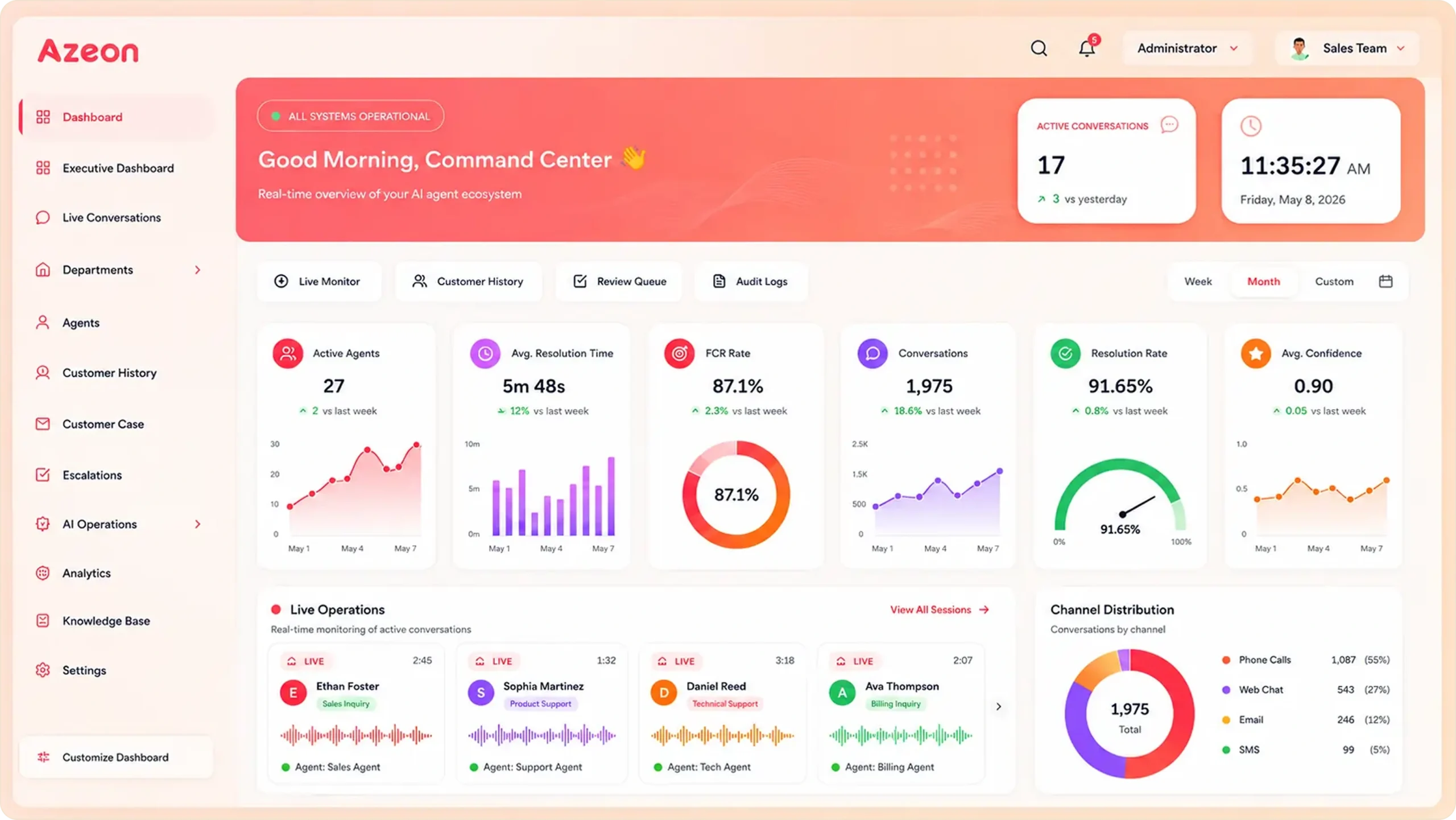
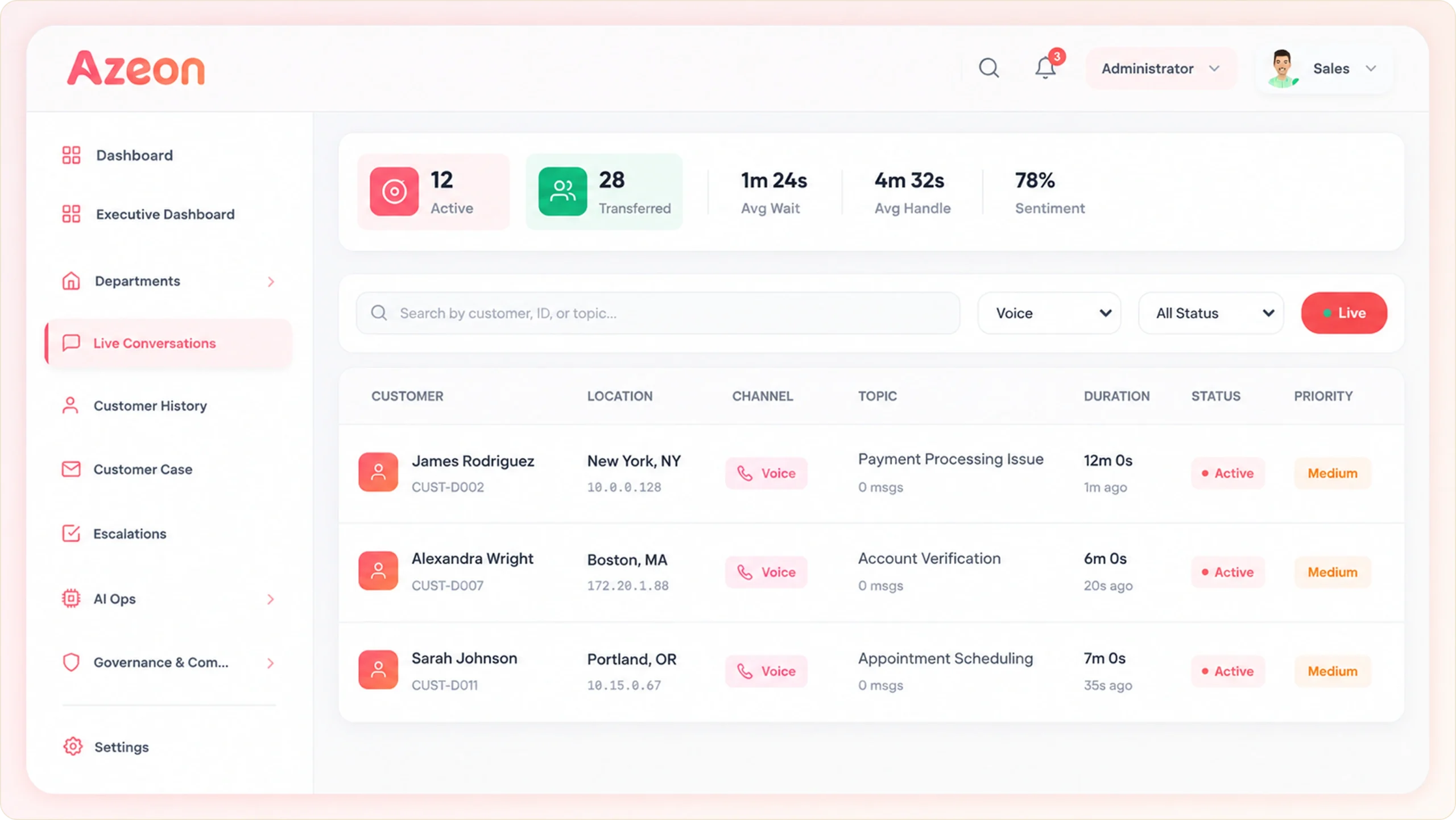
Azeon helps enterprises operationalize AI across customer support with their purpose-built AI agents designed for high-volume, multi-channel support environments.

From intelligent ticket handling and agent copilots to workflow automation and support orchestration, Azeon enables support teams to reduce repetitive workload while improving response quality and operational efficiency.

Built with enterprise support operations in mind, Azeon supports:

  • AI-powered customer conversations
  • Intelligent ticket routing
  • Agent assistance workflows
  • Automated support operations
  • Knowledge-driven responses
  • Omnichannel support experiences
  • Scalable enterprise integrations

For organizations building long-term AI support strategies, Azeon provides the operational flexibility needed to move from experimentation to scalable AI-powered customer support.

Connect with the Azeon team for a personalized demo and explore how AI agents can support your customer service operations at scale.

Experience Azeon for Customer Support

See how AI agents streamline support workflows, ticket handling, and customer conversations.

Book a Demo

FAQs: AI Readiness Framework for Customer Support

What is an AI readiness framework for customer support?

An AI readiness framework for customer support is a structured model used to evaluate whether support operations are prepared for AI adoption. It assesses areas such as workflows, support data, integrations, governance, and team readiness. Enterprises use these frameworks to identify operational gaps before deploying AI-powered customer support systems.

Why is AI readiness important before implementing customer support AI?

AI readiness helps organizations improve implementation success by ensuring systems, workflows, and support data are prepared for automation. Without readiness assessment, enterprises may face poor AI response accuracy, workflow inconsistencies, and low adoption rates. A structured readiness approach supports scalable and efficient AI deployment.

What are the key layers of an AI readiness framework?

Most AI readiness frameworks for customer support include business goals alignment, support data readiness, workflow maturity, technology infrastructure, governance, AI use case prioritization, team readiness, and KPI tracking. These layers help enterprises evaluate operational maturity across customer support environments.

How do enterprises measure AI readiness in customer support?

Enterprises typically use readiness scoring models to assess support operations across multiple categories. Each layer is scored based on maturity, process consistency, integration readiness, and operational structure. This helps organizations prioritize improvements before scaling AI initiatives.

What KPIs should enterprises track for customer support AI?

Enterprises commonly track KPIs such as CSAT, first response time, resolution time, deflection rate, escalation reduction, and agent productivity. These metrics help support leaders in measuring AI performance and identifying optimization opportunities over time.

Glossary

1. AI Readiness Framework: A structured approach used to evaluate whether customer support operations, systems, workflows, and teams are prepared for AI adoption and automation.

2. AI Customer Support: The use of artificial intelligence technologies to automate support interactions, improve response quality, and optimize customer service operations across channels.

3. AI Agent: An AI-powered support system capable of handling customer conversations, resolving common issues, and assisting enterprise customer support teams.

4. Agent Copilot: An AI assistant designed to support customer service agents with response suggestions, ticket summaries, knowledge recommendations, and workflow assistance.

5. Intelligent Ticket Routing: An AI-driven process that automatically assigns support tickets to the right team or agent based on issue type, customer context, priority, or sentiment.

Questions about Azeon?

Connect with our team to explore use cases, workflows, and deployment possibilities.