Skip to content

Why AI in Support Ticket Resolution is Becoming a Priority?

Why AI in Support Ticket Resolution is Becoming a Priority?

AI in support ticket resolution refers to the use of AI systems to understand customer requests, retrieve account and interaction data, execute workflows across business systems, and resolve issues with minimal human intervention.

Instead of simply generating responses, modern AI (e.g., Agentic AI) can verify orders, process refunds, update accounts, retrieve information, trigger workflows, and escalate complex cases when necessary.

This shift is changing how support organizations measure success. Resolution rate, first-contact resolution, cost per resolution, and escalation rates are becoming more important than response times and ticket volumes.

This article explores how AI resolves support tickets, where it fits within modern support operations, and how agentic AI platforms like Azeon help teams improve resolution without replacing their existing support stack.
What the Data Says About AI Ticket Resolution?

  • 78% of organizations expect AI agents to handle customer support interactions within the next 18 months. (Adobe)
  • 33% of organizations using AI report improvements in first-contact resolution.
  • AI-native support platforms achieve 55%–70% first-contact resolution rates. (Lorikeet)
  • 90% of Tier-1 support issues can be resolved without human intervention.
  • 98% of Contact Centers are using AI (Business Wire)

These numbers highlight:

Organizations are no longer evaluating AI based on how well it answers questions. They are evaluating AI based on how effectively it resolves tickets.

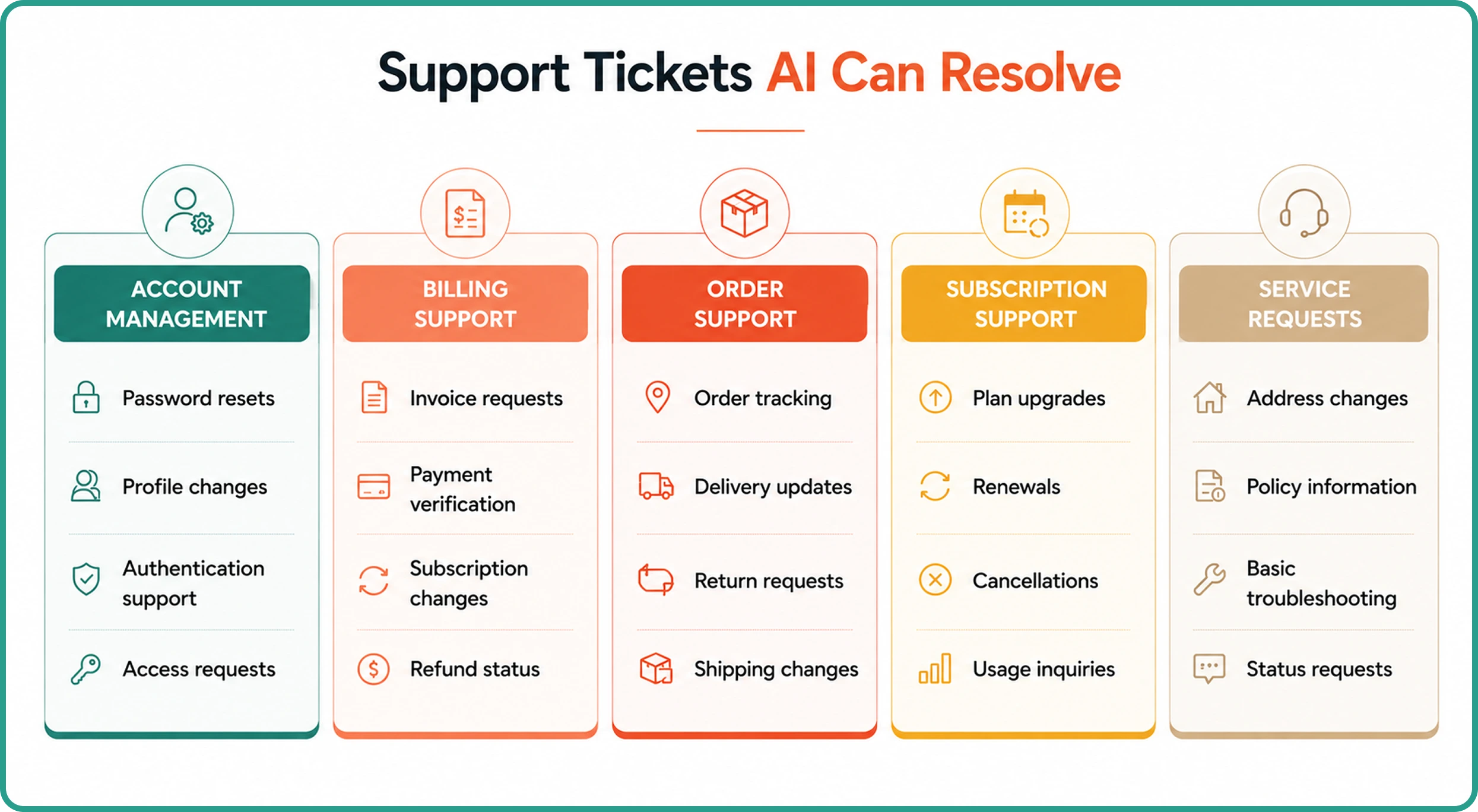
Which Support Tickets Can AI Resolve?

Many organizations find that L1 tickets offer the greatest opportunity for AI-driven ticket resolution because they follow repeatable workflows.

For example:

Support Tickets AI Can Resolve

Account Management

  • Password resets
  • Profile changes
  • Authentication support
  • Access requests

Billing Support

  • Invoice requests
  • Payment verification
  • Subscription changes
  • Refund status

Order Support

  • Order tracking
  • Delivery updates
  • Return requests
  • Shipping changes

Subscription Support

  • Plan upgrades
  • Renewals
  • Cancellations
  • Usage inquiries

Service Requests

  • Address changes
  • Policy information
  • Basic troubleshooting
  • Status requests

How AI in Support Ticket Resolution Works?

In most support environments, agents spend their time gathering information, switching between systems, validating requests, and performing operational tasks.

AI in support ticket resolution follows a very similar workflow.

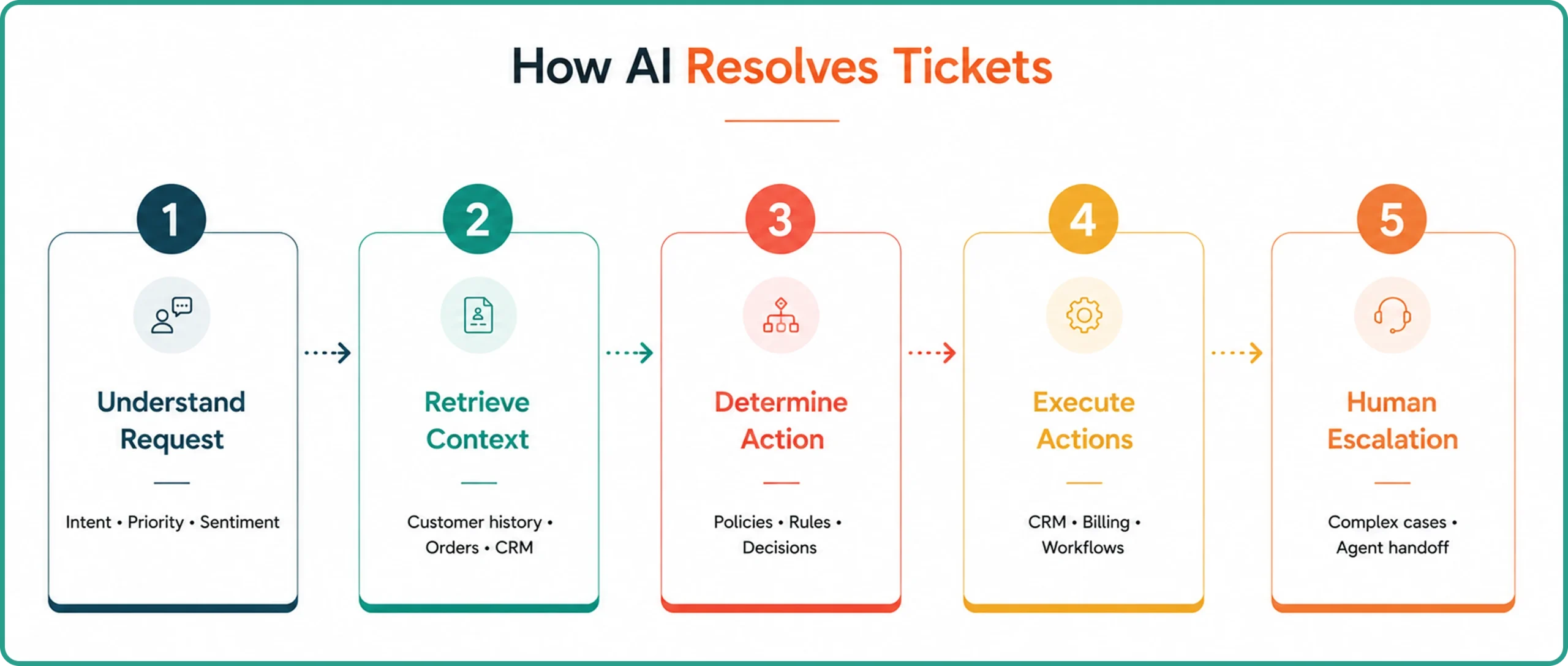
How AI in Support Ticket Resolution Works

1. Understanding the Customer Request

Every resolution starts with understanding what the customer actually needs.

The AI identifies customer intent, issue category, priority level, sentiment, urgency, etc.

This allows the system to determine the appropriate resolution path before any actions are taken.

2. Retrieving Customer Context

Support agents rarely resolve tickets using the ticket alone.

They review:

  • Previous conversations
  • Account information
  • Order history
  • Subscription status
  • Recent transactions
  • Customer entitlements

AI performs the same process automatically.

Instead of asking customers to repeat information, the system gathers context from connected applications and builds a complete view of the customer before making decisions.

3. Determining the Next Action

Once the issue and customer context are available, the AI determines the appropriate action.

Examples include:

  • Issue a refund
  • Update account information
  • Reset credentials

This decision process often follows business rules, company policies, and operational workflows.

4. Executing Actions Across Business Systems

This is where AI ticket resolution differs from traditional chatbots.

The AI can:

  • Update CRM records
  • Change subscription settings
  • Trigger refunds
  • Create service requests
  • Modify customer accounts
  • Update order information
  • Open internal workflows

The customer receives an outcome rather than a response.

5. Escalating Complex Cases to Human Agents

Not every ticket should be fully automated.

Cases involving fraud investigations, technical issues, compliance concerns, or high-value accounts may require human involvement.

AI can summarize the issue, gather supporting information, and route the case to the appropriate team.

This reduces average handling time (AHT) while allowing agents to focus on complex problems.

What an AI Resolution Architecture Looks Like?

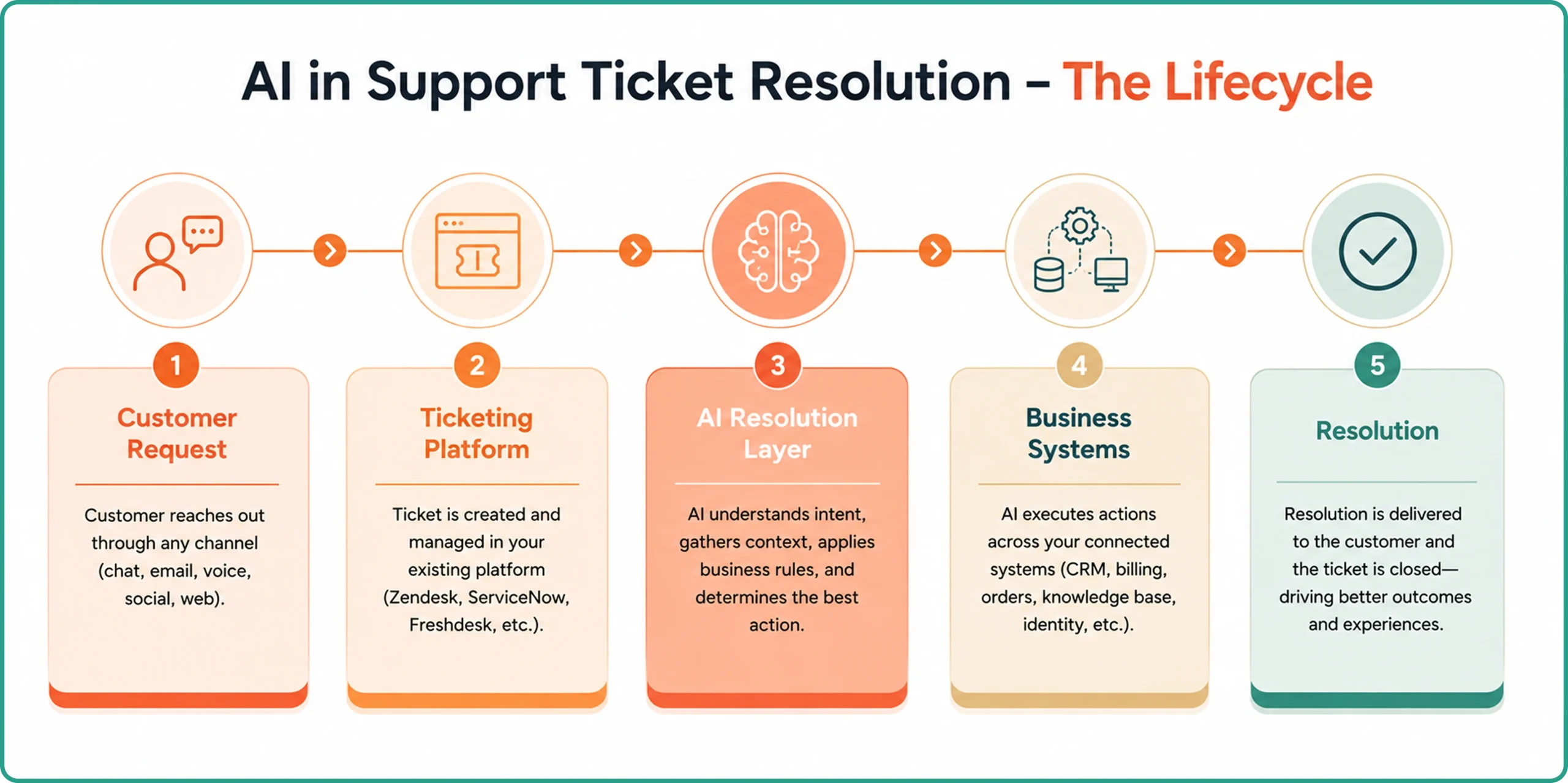
Most support organizations already have the systems they need to run customer operations. The challenge is enabling those systems to work together during ticket resolution.

A modern AI resolution architecture introduces an intelligence and execution layer between customer requests and business systems.

Lifecycle of AI in Support Ticket Resolution

How to Identify AI Resolution Opportunities in Your Support Operation?

Most support teams already have enough ticket volume to justify AI. The question is where to start.

Review your last 90 days of ticket data and look for the following patterns.

High-Volume Ticket Categories

Identify the top reasons customers contact support.

Common examples include password resets, order status requests, billing inquiries, refund requests, shipping issues, etc.

If a ticket category represents a large percentage of your monthly volume, it is a strong candidate for AI resolution.

High Escalation Rates

Many Tier-1 tickets reach Tier-2 teams because agents need access to systems or approvals.

For example, refund approvals, account changes, subscription modifications, payment issues, etc.

If agents frequently escalate these requests, AI can handle many of these workflows using predefined rules.

Long Resolution Times

Review tickets with the highest resolution times.

These tickets often require agents to:

  • Access multiple systems
  • Verify customer information
  • Check policies
  • Update records
  • Coordinate between teams

These repetitive workflows are suitable for AI.

High Repeat Contact Rates

Customers contacting support multiple times for the same issue usually indicates incomplete resolution.

This may include refund status, delivery issues, subscription requests, account updates, etc.

AI can reduce repeat contacts by completing the required actions during the first interaction.

High Agent Workload

Review how much time agents spend on:

  • Looking up information
  • Updating systems
  • Processing requests
  • Performing routine tasks

These activities create opportunities for AI-driven resolution.

Why Companies are Choosing an AI Layer Instead of Replacing Their Support Stack?

Most support organizations already operate mature environments built around platforms such as Zendesk, ServiceNow, and Salesforce.

These systems support:

  • Existing workflows
  • Agent processes
  • SLAs and reporting
  • Integrations
  • Internal automations

Replacing them often introduces migration cost, operational risk, and change management challenges.

Modern AI platforms increasingly work alongside existing support systems rather than replacing them. An AI resolution layer like Azeon can connect to current tools, execute workflows, and improve resolution rates while preserving existing investments.

This is why many organizations prefer adding AI to their support stack instead of rebuilding it.

Key Capabilities to Look for in AI Ticket Resolution Platforms

Not every AI solution can resolve support tickets. Organizations should evaluate platforms based on the following capabilities:

  • Existing stack integrations to work with current support systems.
  • Shared customer memory to maintain context across interactions.
  • Workflow execution to perform actions, not just generate responses.
  • Human approvals for exceptions and sensitive decisions.
  • Governance controls to enforce business rules.
  • Auditability to track decisions and actions.
  • Multi-system actions to coordinate workflows across applications.
  • Cross-channel support to maintain consistent customer experiences.

These capabilities determine whether AI can participate in ticket resolution or simply assist agents during conversations.

How to Implement AI Without Replacing Existing Systems?

Most support teams already have the systems required for AI ticket resolution.

The implementation challenge is not replacing Zendesk or ServiceNow. The challenge is enabling AI to participate in existing workflows.

Start with Repetitive Tickets

Begin with high-volume requests such as password resets, billing inquiries, order status requests, and account updates. These tickets follow predictable workflows and deliver faster results.

Connect Existing Systems

Allow AI to access ticketing platforms, CRM systems, billing applications, order systems, and knowledge bases so it can retrieve information and perform actions during resolution.

Define Business Rules

Configure rules for approvals, refund limits, customer eligibility, escalation conditions, and other operational policies that guide AI decisions.

Add Human Approvals

Route sensitive requests, compliance cases, large refunds, and complex issues to agents while allowing AI to resolve routine requests automatically.

Measure Resolution Outcomes

Track metrics such as resolution rate, first-contact resolution, escalation rate, resolution time, and cost per resolution to evaluate performance.

How Azeon Approaches AI Support Ticket Resolution?

Many AI solutions focus on conversation.

Azeon focuses on resolution.

Azeon operates as an agentic AI layer that works alongside existing support systems such as Zendesk, ServiceNow, Salesforce, CRM platforms, billing systems, and internal business applications.

This approach allows you to preserve your existing workflows while introducing AI-driven resolution capabilities.

With Azeon, organizations can:

  • Resolve repetitive support requests automatically
  • Access customer context across multiple systems
  • Execute workflows across CRM, billing, and operational applications
  • Maintain shared customer memory across interactions
  • Apply business rules and approval workflows
  • Escalate complex issues to agents with complete context

If your support operation is dealing with repetitive tickets, rising escalation rates, or increasing support costs, our team can help you evaluate where AI fits within your existing support stack and identify opportunities to improve ticket resolution.

Talk to our team to explore how Azeon can work alongside your existing support operation.

Calculate the ROI of AI Ticket Resolution

Understand the impact on resolution rates, costs, and agent productivity before implementing AI.

FAQs

What is AI in support ticket resolution?

AI in support ticket resolution refers to the use of AI systems to understand customer requests, retrieve customer information, execute workflows, and resolve support issues with minimal human intervention. Unlike traditional chatbots, AI resolution systems can perform actions across business applications and support platforms.

What is the difference between AI chatbots and AI ticket resolution?

Traditional chatbots answer questions and provide information. AI ticket resolution platforms can retrieve customer context, execute workflows, update systems, and resolve issues across multiple applications.

What KPIs should organizations track for AI ticket resolution?

Common customer support KPIs includes:

  • Resolution rate
  • First-contact resolution (FCR)
  • Escalation rate
  • Average resolution time
  • Cost per resolution
  • Customer satisfaction
  • Repeat contact rate

These metrics help measure the operational impact of AI.

What is agentic AI in customer support?

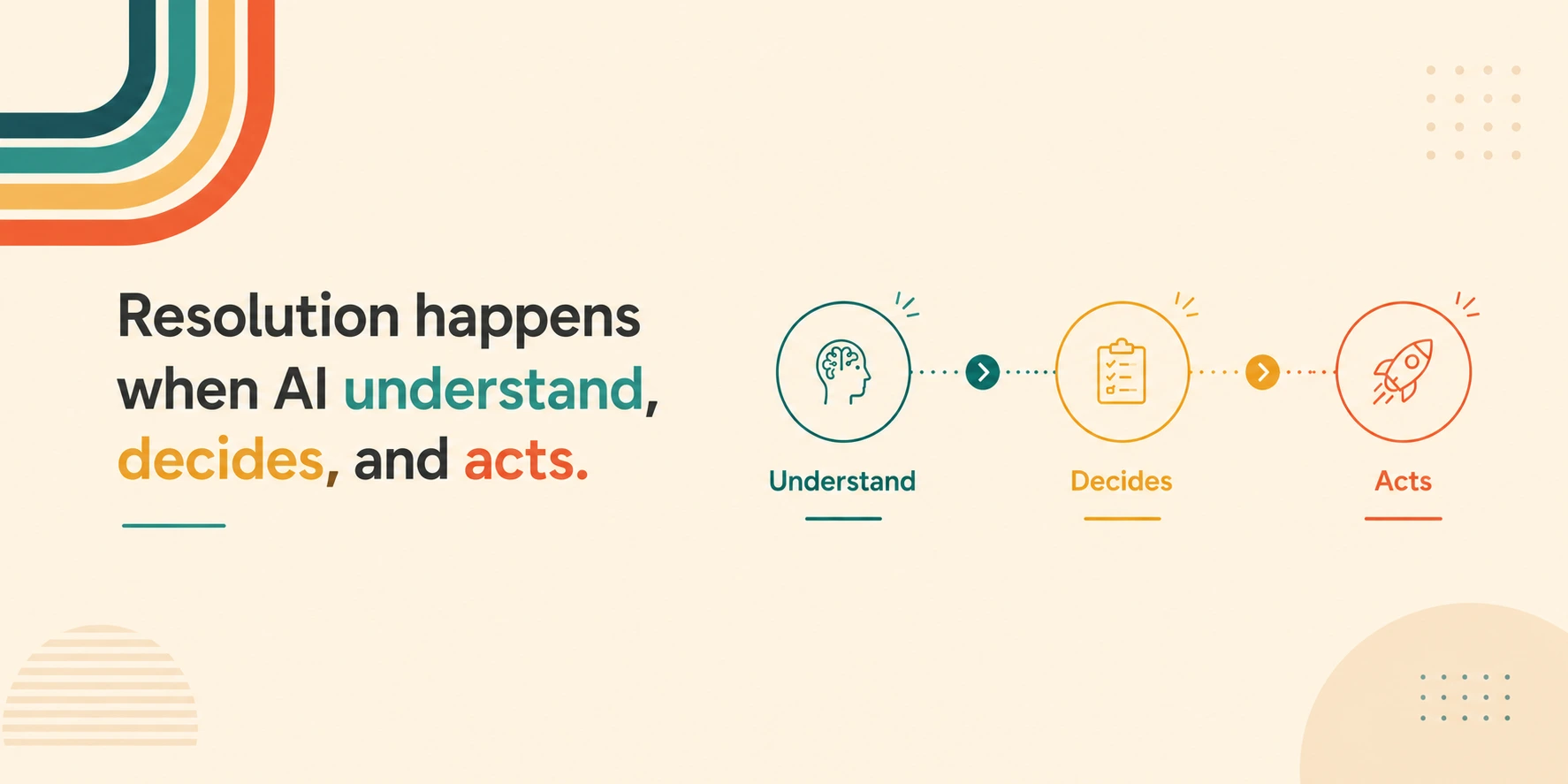
Agentic AI refers to AI systems that can understand requests, make decisions, execute actions, and complete workflows. In customer support, agentic AI can participate directly in ticket resolution instead of only assisting agents.

How does Azeon support AI ticket resolution?

Azeon operates as an agentic AI layer that works alongside existing support platforms such as Zendesk, ServiceNow, and Salesforce. The platform helps organizations retrieve customer context, execute workflows, apply business rules, and resolve support requests without replacing existing systems.

David works closely with enterprise organizations to help them modernize customer support operations through AI-driven automation. With experience in strategic account management, customer engagement, and technology consulting, David focuses on aligning business objectives with scalable support solutions that improve efficiency, customer experience, and operational performance.

David Pridgen
Solution Consultant

Questions about Azeon?

Connect with our team to explore use cases, workflows, and deployment possibilities.