
Customer support decisions depend on context assembled from dozens of enterprise systems.
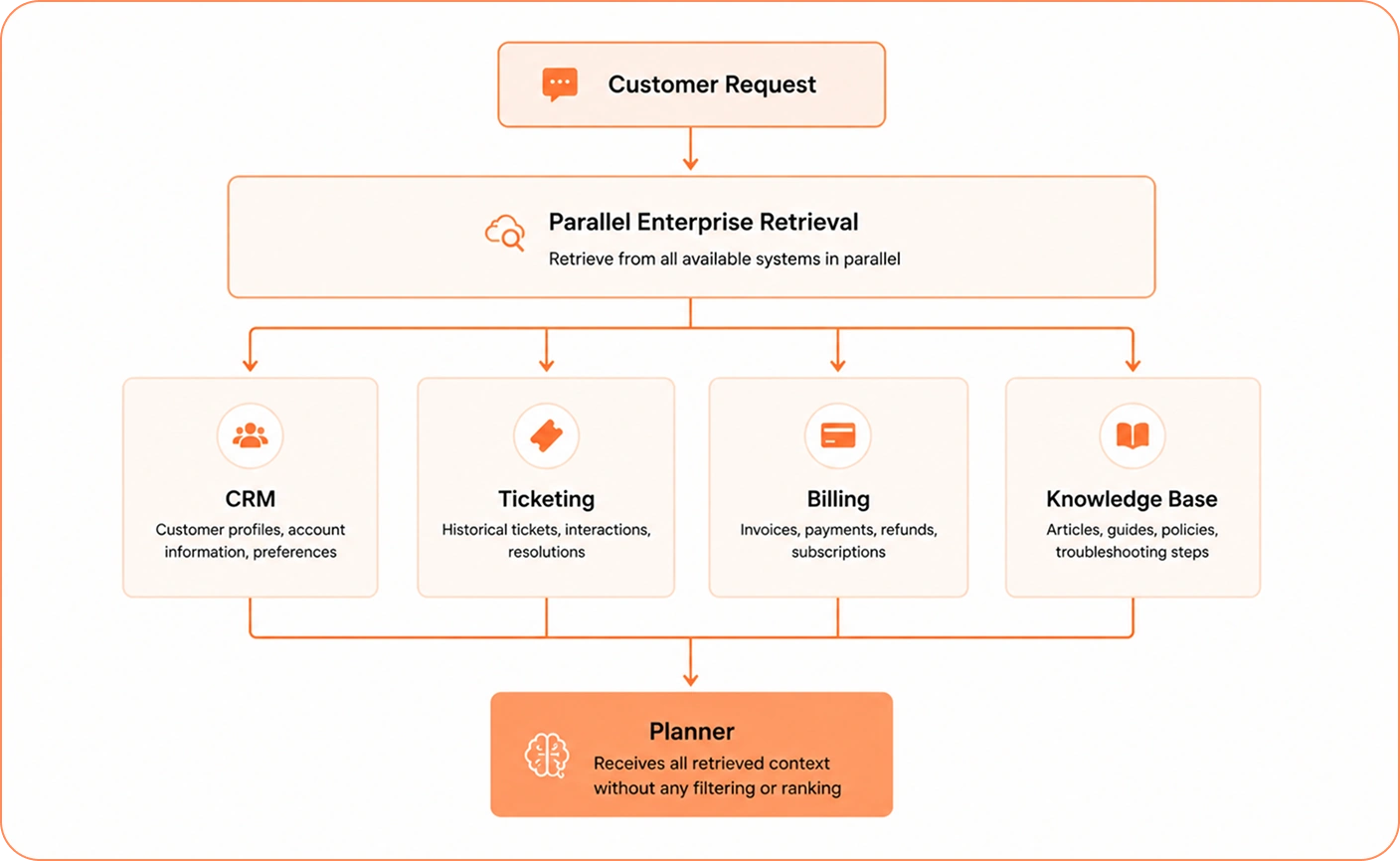
Our initial architecture approached retrieval with a simple objective: collect everything that could be relevant and let the reasoning engine determine what mattered.
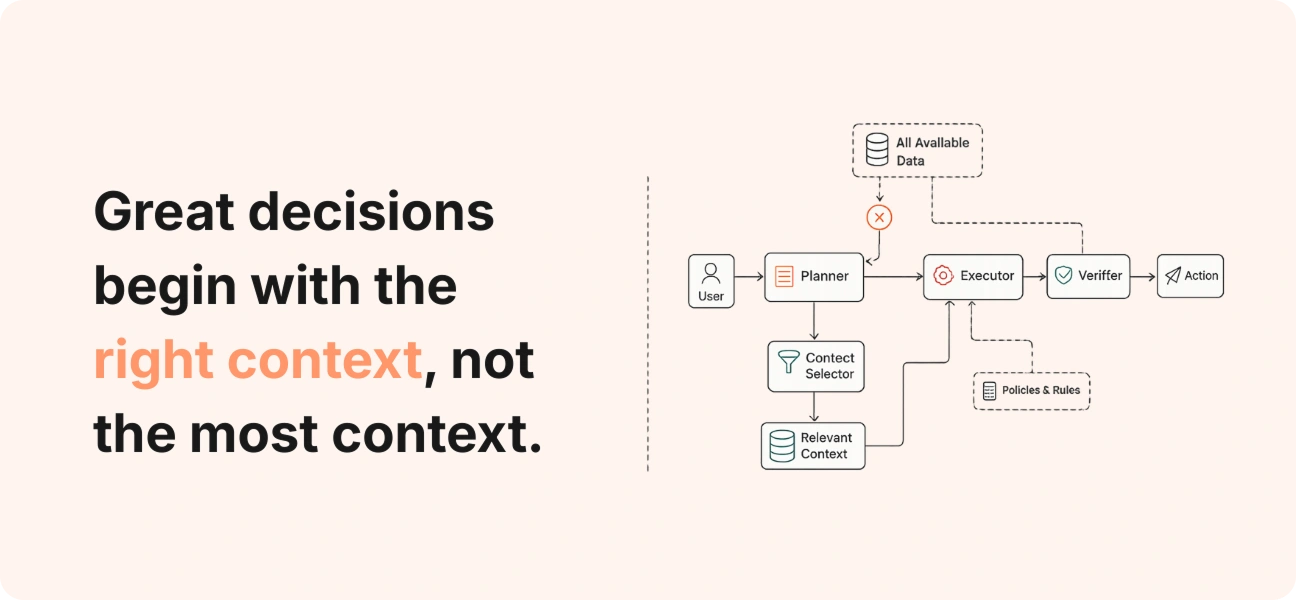
Retrieval executed across connected systems, assembled data, and forwarded the resulting context directly to the planner.
The assumption was straightforward. More context would produce better decisions.
However, it didn’t.
Planning quality stopped improving long before retrieval coverage did. As more enterprise systems became connected, the planner received duplicate records, outdated documentation, conflicting customer state, and historical information unrelated to the active request.
Instead of reasoning about resolution, the planner spent an increasing portion of its inference budget identifying which information could actually be trusted.
That observation changed how we designed context retrieval inside Azeon.
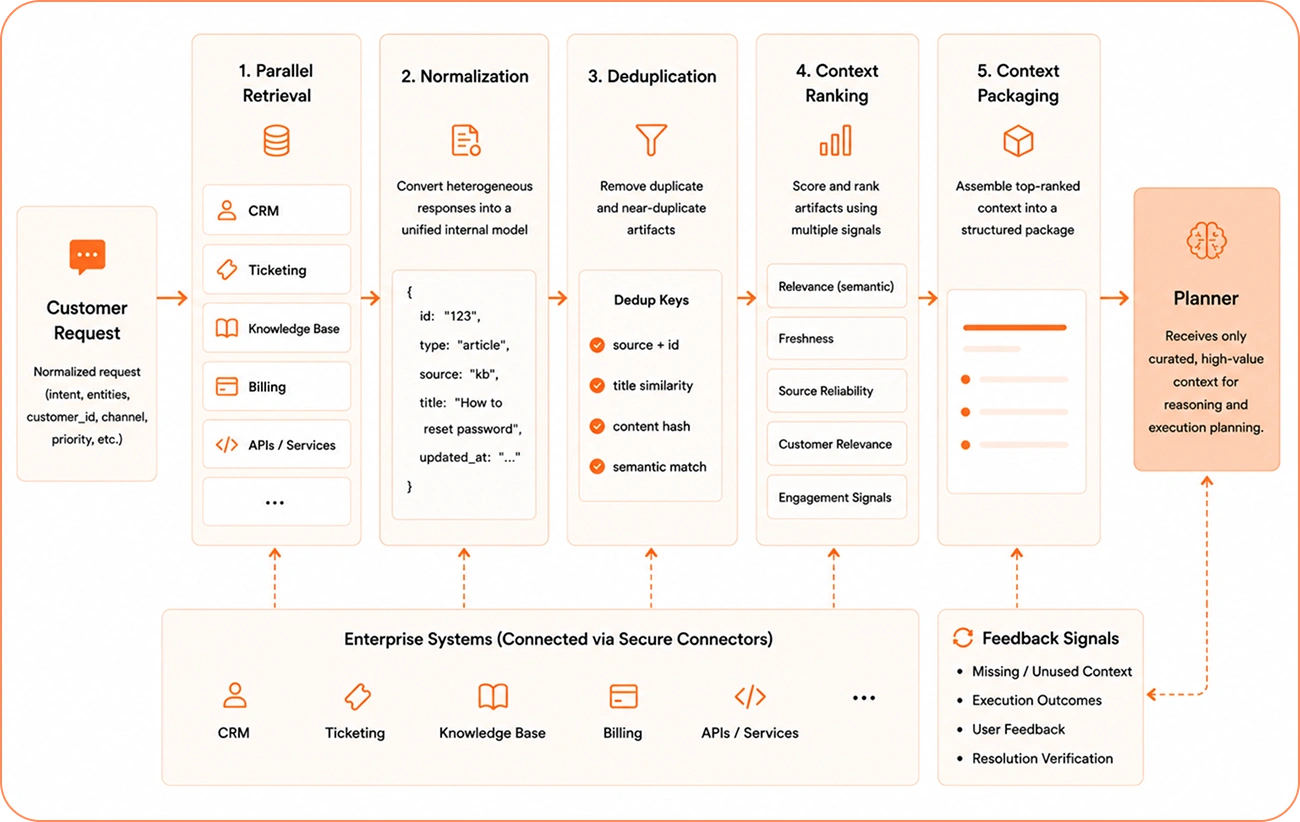
Rather than optimizing retrieval volume, we focused on reducing uncertainty before reasoning begins.
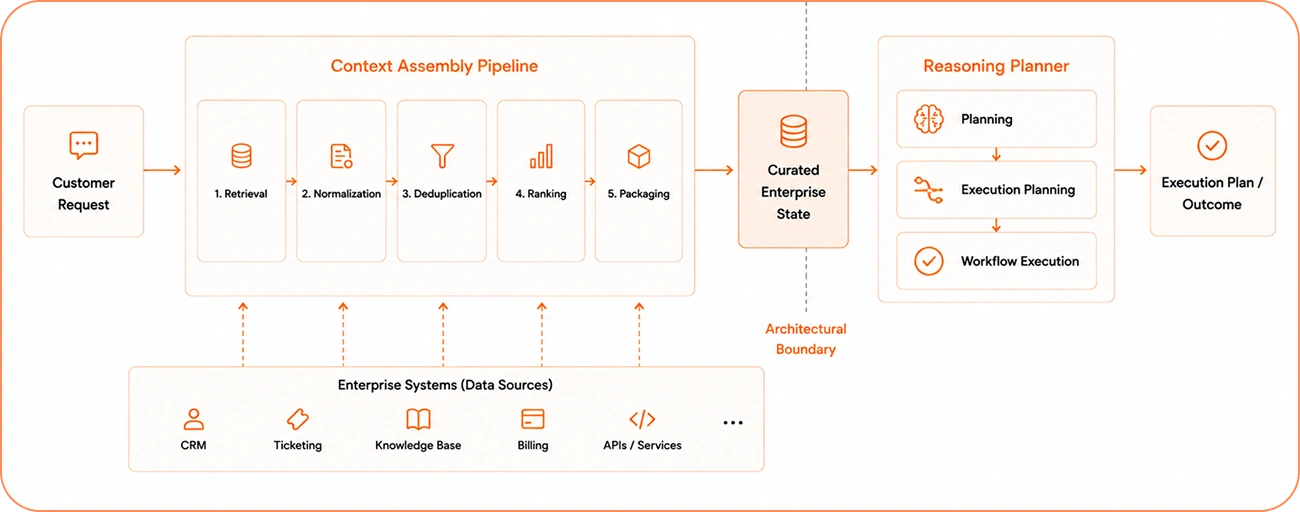
Today, every customer request passes through a dedicated Context Assembly Pipeline that determines what information deserves the planner’s attention and filters everything else before planning starts.