Skip to content

State of AI Customer Service 2026: Trends, Adoption & Future Outlook

State of AI Customer Service 2026: Trends, Adoption & Future Outlook

2026 marks the transition from AI-assisted support to AI-operated support.

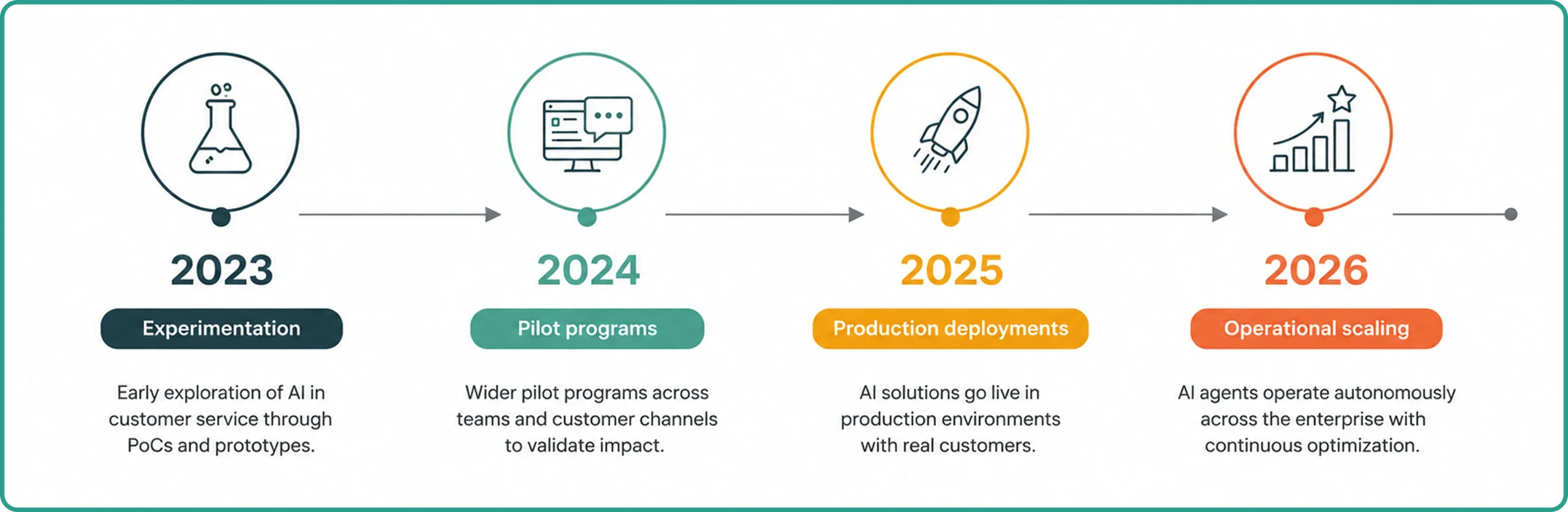
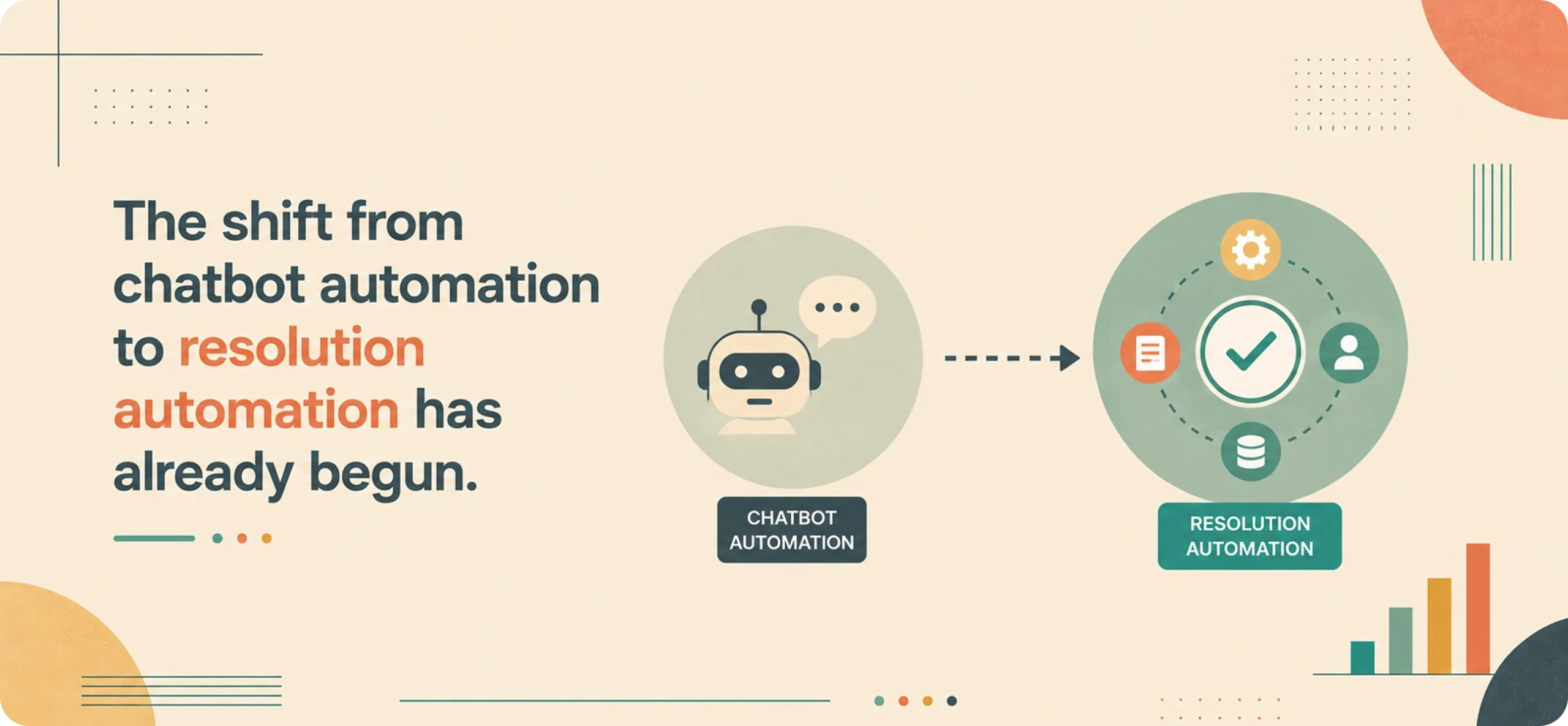
Between 2023 and 2025, most organizations experimented with chatbots, copilots, and generative AI assistants. In 2026, leading enterprises across North America and Europe focus on a different objective: resolution automation.

In fact, research from Gartner shows AI adoption has become a board-level priority, with 91% of customer service leaders reporting executive pressure to implement AI initiatives in 2026.

Gartner also expects conversational AI to become the primary entry point for many customer journeys over the next few years.

The 2026 AI Customer Service Landscape

The customer service AI market has entered a rapid expansion phase.

Several industry analyses estimate:

Metric 2026 Status
Global AI Customer Service Market ~$15.1 Billion
Generative AI Spending in Customer Service Growing at 40%+ CAGR
Call Center AI Market ~$3 Billion
Largest Regional Market North America

What Changed Since 2025?

In 2025 most deployments focused on:

  • FAQ automation
  • Chatbots
  • Agent copilots
  • Knowledge retrieval

In 2026 investment focuses on:

  • Agentic AI
  • Resolution automation
  • Workflow execution
  • Multi-system orchestration
  • Autonomous service operations

This shift represents the emergence of what many vendors now describe as AI Service Agents rather than traditional chatbots.

North America Leads the AI-Powered Customer Support Adoption Curve

North America remains the most mature AI customer service market.

Several factors contribute:

Higher Labor Costs

Organizations face rising support costs, talent shortages, and 24/7 service expectations.

AI offers immediate operational leverage.

Strong Enterprise Software Ecosystem

Most enterprises already operate Salesforce, ServiceNow, Zendesk, Microsoft Dynamics, Genesys, NICE, etc.

These systems provide fertile ground for AI deployment.

AI Budget Expansion

Gartner predicts more than half of customer service organizations will double technology spending by 2028.

Importantly, technology spending growth does not necessarily imply proportional workforce reduction. Instead, organizations are redesigning workforce responsibilities.

Europe Takes a Governance-First Approach for AI Customer Support

Europe shows strong AI adoption momentum, though implementation patterns differ from North America.

European organizations generally prioritize:

Regulatory Alignment

Key considerations include GDPR, AI Act compliance, Data residency, Explainability, and Auditability.

Human Oversight

European enterprises frequently require:

  • Human approval checkpoints
  • Escalation governance
  • Transparency requirements

Trust-Centered Deployments

Many organizations prefer:

  • AI-assisted decisions
  • Controlled autonomy
  • Gradual expansion of AI authority

Research covering 35 European countries shows AI adoption is accelerating, though adoption levels vary significantly across countries and industries. Workplace digital maturity and employee training strongly influence adoption rates.

The Rise of Agentic Customer Service

The biggest shift in 2026 is the emergence of Agentic AI.

And Gartner predicts that it’ll autonomously resolve a large portion of common customer service issues by the end of the decade.

Capability Traditional Customer Service AI Agentic Customer Service AI
Primary Purpose Answer customer questions Resolve customer issues end-to-end
Knowledge Access Searches FAQs and knowledge bases Accesses knowledge, customer history, policies, and business context
Decision Making Follows predefined conversation flows Evaluates context and determines the next best action
System Integration Limited integrations Works across CRM, ticketing, billing, ERP, and workflow platforms
Workflow Execution Escalates requests to humans Triggers workflows and completes tasks automatically
Customer Context Session-based understanding Maintains persistent customer memory across channels
Typical Actions Provide answers, links, and guidance Issue refunds, update accounts, create tickets, modify subscriptions, and more
Success Metric Containment rate and response time Resolution automation rate and customer outcomes
Business Impact Reduces support workload Accelerates resolution, lowers operational cost, and improves customer experience

The Evolution of Customer Service KPIs in the Age of AI

The rise of Agentic AI has introduced a new measurement framework focused on outcomes rather than interactions.

In 2026, enterprises across North America and Europe increasingly assess AI customer service initiatives based on how effectively AI resolves customer issues, executes workflows, and reduces human involvement.

The table below compares the most important customer support KPIs and their relevance in the era of AI-powered support operations.

Support Metric What It Measures Strategic Value in 2026
Average Response Time How quickly a customer receives a reply Measures speed, not outcomes
Containment Rate Percentage of conversations that stay within AI channels Indicates chatbot usage but not successful resolution
Deflection Rate Reduction in tickets reaching human agents Highlights workload reduction
First Contact Resolution (FCR) Issues resolved during the first interaction Strong customer experience indicator
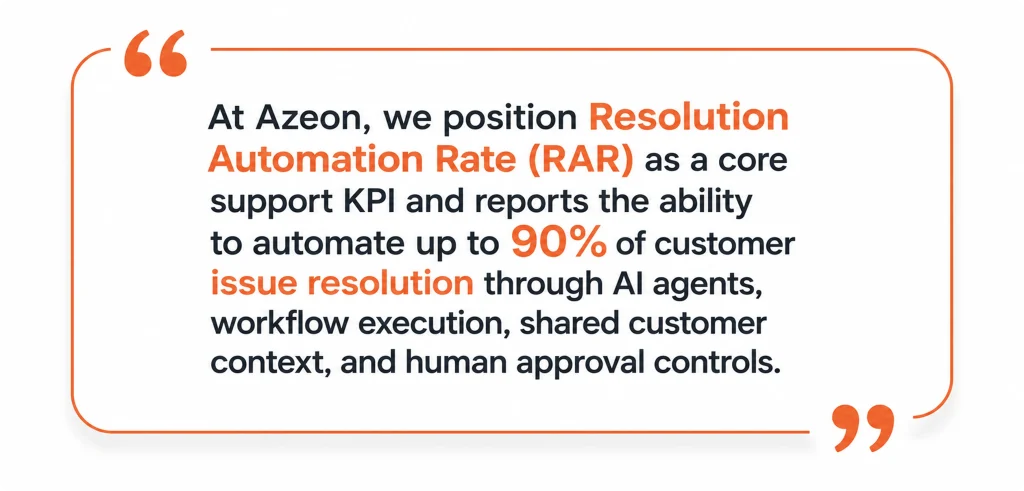
Resolution Automation Rate (RAR) Percentage of customer issues fully resolved by AI without human intervention Emerging benchmark for AI-powered support operations
Cost per Resolution Cost required to successfully resolve a customer issue Directly connects support performance to business outcomes

What High-Performing Support Organizations Look Like in 2026

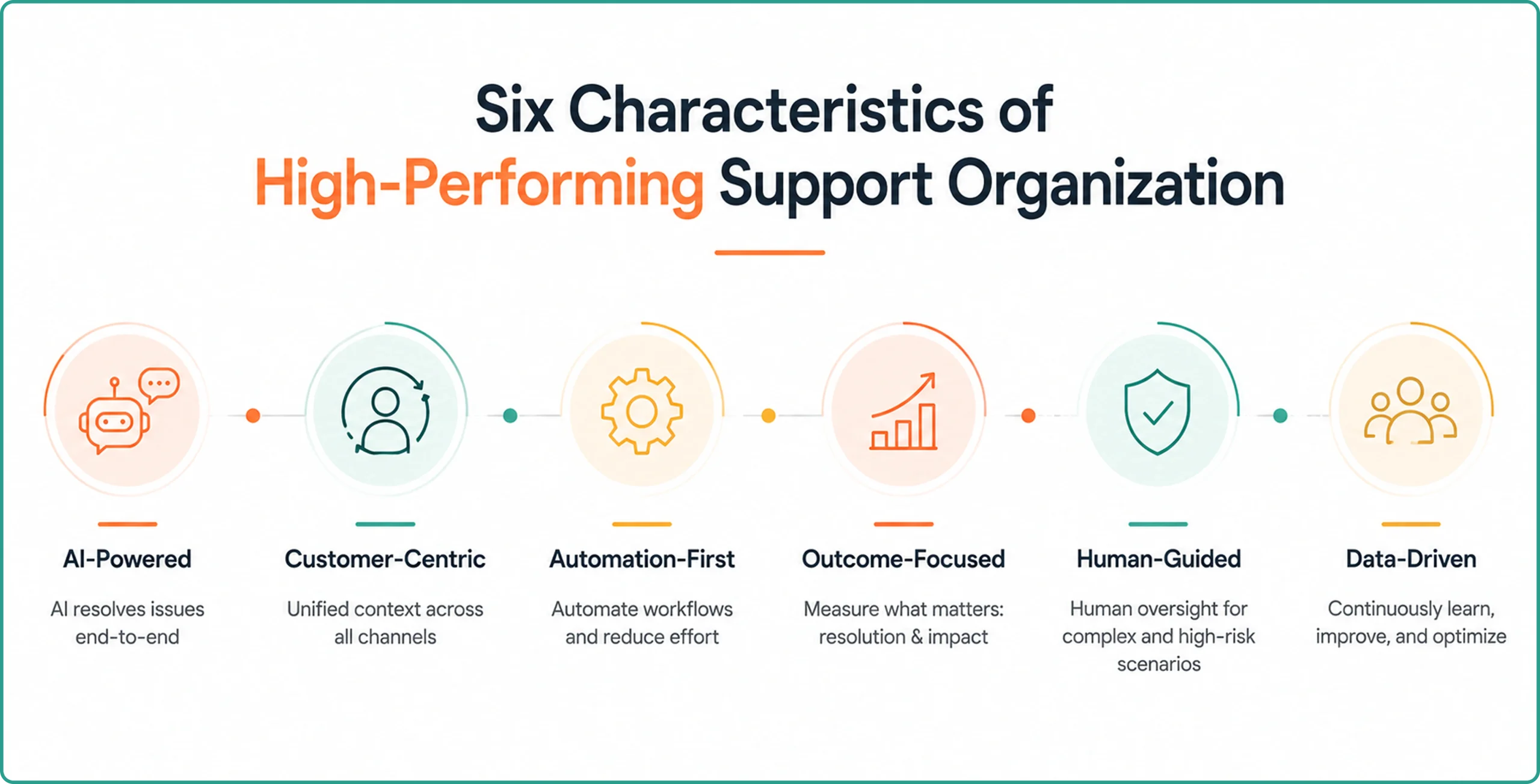
The most advanced organizations share six characteristics:

Six Characteristics of High-Performing Support Organizations

1. AI Handles Tier-1 Resolution

AI resolves routine customer requests such as account updates, order tracking, and billing inquiries, freeing support teams to focus on complex cases.

2. Unified Customer Memory

Customer history, preferences, and previous interactions remain accessible across channels, creating seamless support experiences.

3. Workflow Automation

AI executes actions across CRM, billing, ticketing, and business systems to complete requests without manual intervention.

4. Human Approval Controls

Sensitive decisions and high-risk actions follow human review workflows to maintain trust, governance, and accountability.

5. Continuous Evaluation

Every interaction contributes to ongoing measurement of AI accuracy, resolution quality, customer satisfaction, and operational performance.

6. Outcome-Based Metrics

Success is measured through resolution rates, customer satisfaction, cost efficiency, and time to resolution rather than conversation volume.

The Current Challenge of AI-Powered Customer Support in 2026

Most AI support platforms stop at conversations.

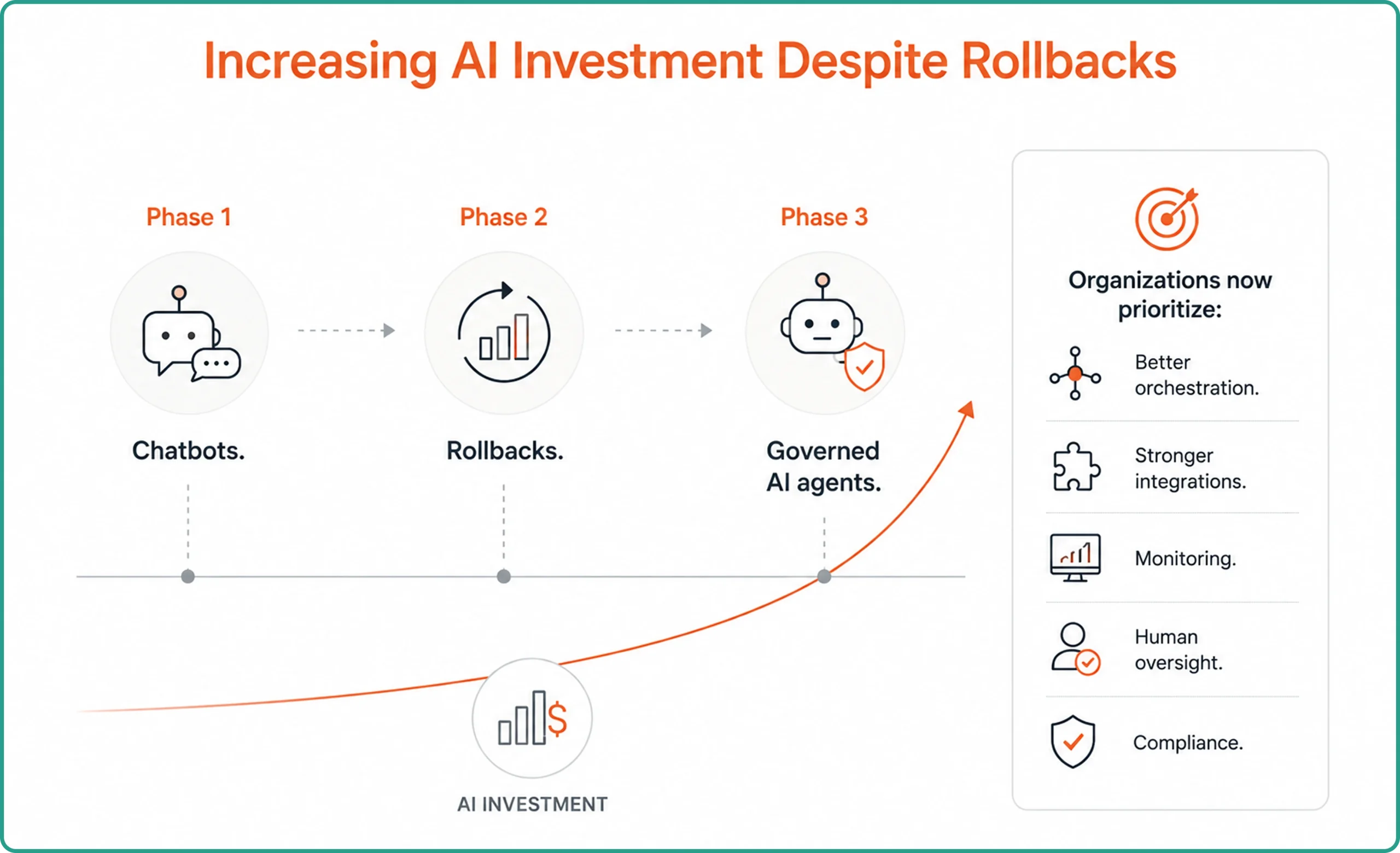
Many organizations have deployed chatbots, copilots, and AI assistants over the last few years. Yet a significant gap remains between answering customer questions and actually resolving customer issues.

Support teams often struggle with disconnected customer data, fragmented workflows, limited automation capabilities, and AI systems that require human agents to complete the final steps of resolution.

As customer expectations continue to rise, enterprises need AI that can understand intent, access business context, execute actions, and close the loop across their existing support ecosystem.

This is where the next generation of customer service platforms is beginning to differentiate itself.

How Azeon Aligns with the Future of Customer Service

Azeon is an Agentic AI customer support platform designed for organizations that want to move beyond conversational automation and toward resolution automation.

It combines AI agents, shared customer memory, workflow orchestration, and human oversight within a single platform that works alongside existing CRM, ticketing, and business systems.

Instead of simply generating responses, Azeon understands customer intent, accesses relevant business context, executes workflows, updates systems, and drives issues toward resolution.

The platform supports the six characteristics of high-performing support organizations in 2026 – from Tier-1 automation and unified customer memory to workflow execution, governance controls, continuous evaluation, and outcome-based operations.

As enterprises increasingly measure success through Resolution Automation Rate (RAR), customer satisfaction, and cost per resolution, platforms such as Azeon help support teams build the operational foundation required to achieve those outcomes at scale.

See How Azeon Delivers Resolution Automation

Experience AI-powered resolution, workflow execution, and seamless customer experiences from a single platform.

FAQs

What is AI customer service?

AI customer service uses artificial intelligence technologies such as machine learning, natural language processing, and AI agents to understand customer requests, provide support, automate workflows, and resolve issues across multiple channels.

How is AI transforming customer service in 2026?

AI is transforming customer service by moving beyond chatbot interactions toward resolution automation. Modern AI systems can access customer data, execute workflows, update business systems, and resolve common support issues with minimal human intervention.

What is Agentic AI in customer service?

Agentic AI refers to AI systems that can understand customer intent, make decisions, execute actions, and complete support tasks across business applications. Unlike traditional chatbots, Agentic AI focuses on issue resolution rather than conversation management.

What are the benefits of AI in customer support?

AI helps organizations reduce response times, automate repetitive tasks, improve customer satisfaction, lower support costs, increase agent productivity, and provide 24/7 support across digital channels.

What industries are adopting AI customer service solutions?

Industries with strong AI customer service adoption include financial services, insurance, healthcare, retail, eCommerce, telecommunications, travel, SaaS, and technology companies.

David works closely with enterprise organizations to help them modernize customer support operations through AI-driven automation. With experience in strategic account management, customer engagement, and technology consulting, David focuses on aligning business objectives with scalable support solutions that improve efficiency, customer experience, and operational performance.

David Pridgen
Solution Consultant

Questions about Azeon?

Connect with our team to explore use cases, workflows, and deployment possibilities.