Skip to content

Best AI Virtual Assistant for Customer Service in 2026

Best AI Virtual Assistant for Customer Service in 2026

Finding the best AI virtual assistant for customer service gets surprisingly messy once every vendor starts promising smarter conversations, faster replies, and magical automation.

At some point, every landing page begins to sound like it was written by the same person.

So we did the tab-hopping for you.

We compared the top 10 AI virtual assistants for customer service using the buying criteria that matter most – automation depth, integrations, readiness, pricing models, and customer support capabilities.

By the time you reach the end, you’ll have a shortlist worth sharing with your team instead of another 15 tabs to keep open.

How We Picked These 10 AI Virtual Assistants

Instead of counting how many AI buzzwords appeared on a homepage (trust us, there were plenty), we compared the things buyers like you actually care about once the demo calls start.

We looked at:

  • How well it resolves customer issues instead of simply generating replies.
  • Omnichannel support across chat, email, voice, and messaging apps.
  • CRM and helpdesk integrations that work with existing tools.
  • Workflow automation for refunds, account updates, ticket routing, and more.
  • Human handoffs that keep conversation context intact.
  • Analytics and reporting that help teams improve support performance.
  • Enterprise security and compliance for growing and regulated businesses.
  • Pricing transparency so you know what happens after the sales call.
  • Scalability for teams handling hundreds or hundreds of thousands of conversations.

The result is a shortlist that covers startups, ecommerce brands, SaaS companies, enterprises, and support teams looking for an AI virtual assistant they can actually put to work.

Top 10 AI Virtual Assistants for Customer Service

Platform Best Suited For AI Capability Key Strength Pricing
Azeon Enterprises seeking end-to-end AI customer support automation Agentic AI with reasoning, workflow execution, shared customer memory, and human governance Works across existing support systems without migration while focusing on verified customer resolutions Custom (Result-as-a-Service)
Intercom Fin SaaS businesses already using Intercom AI support agent with knowledge-based conversations and live chat automation Excellent SaaS experience with resolution-based AI support Resolution-based
Zendesk AI Organizations already invested in Zendesk AI Agents, Copilot, Context Graph, Voice AI, and workflow automation Deep native automation with persistent customer context Custom
Ada Large enterprises with structured support operations No-code AI automation with multilingual customer support Strong self-service experiences with enterprise scalability Custom
Freshdesk Freddy AI Small and medium businesses AI ticketing, agent assistance, sentiment analysis, and workflow automation Affordable AI built directly into Freshdesk's helpdesk platform Paid Plans
Salesforce Agentforce Salesforce customers and enterprise CRM teams Autonomous AI agents across CRM workflows Deep Salesforce integration for service operations Custom
Helpshift Mobile-first businesses and gaming companies Mobile AI support with predictive analytics and ticket automation Excellent in-app customer support experience Seat-based
Tidio Small businesses and ecommerce stores Lyro AI chatbot with live chat and ecommerce automation Affordable customer support automation with quick setup Free + Paid
LivePerson Large contact centers Conversational AI across messaging channels with workforce analytics Enterprise-scale messaging and customer engagement Custom
IBM Watson Assistant Regulated industries Enterprise conversational AI with advanced NLP and compliance controls Strong security and flexible enterprise deployment Monthly + Enterprise

1. Azeon

Intelligence & Reasoning in Azeon

Best for: Enterprises looking for an AI virtual assistant that resolves customer issues across existing support systems without replacing their infrastructure.

Overview:

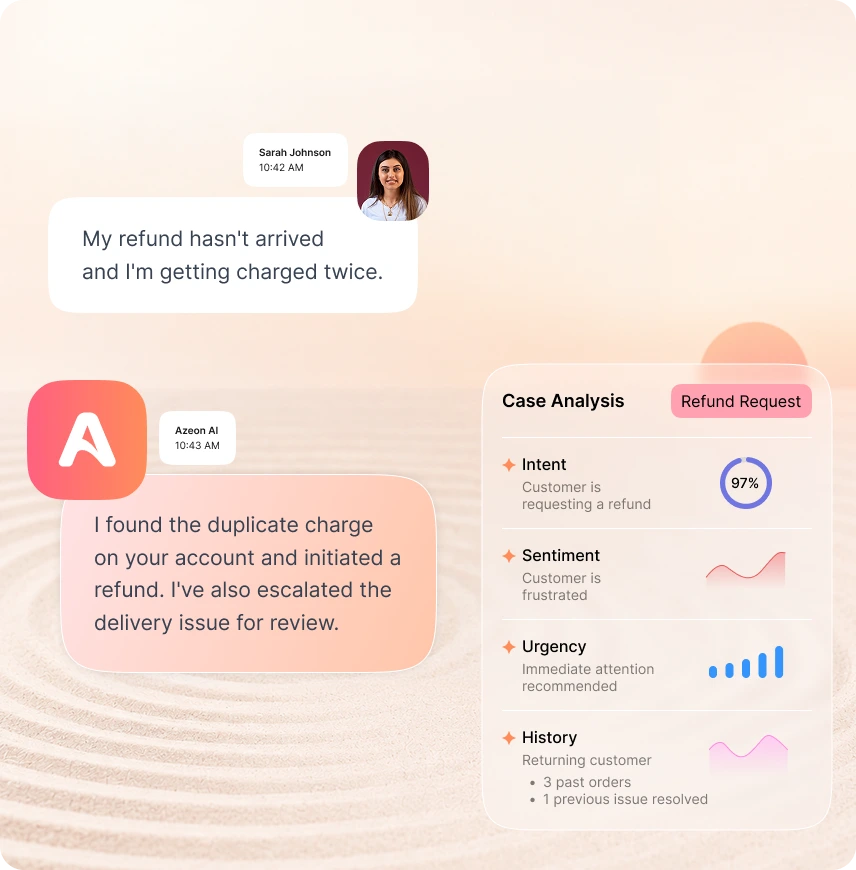
Azeon stands apart because it functions as an agentic AI platform rather than a traditional chatbot. Instead of answering isolated questions, it reasons through customer requests, retrieves context from connected systems, executes approved workflows, and delivers complete resolutions.

One of Azeon’s biggest strengths is its intelligence layer architecture. Businesses keep their CRM, helpdesk, billing platforms, and internal systems exactly as they are while Azeon operates across them. That removes lengthy migration projects while allowing organizations to automate high-volume customer service operations.
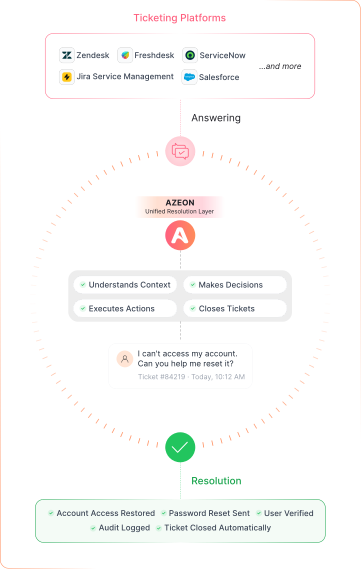
Azeon Supercharge Your Existing Support Operations

Unlike traditional AI virtual assistants that stop after generating responses, Azeon is engineered around outcomes. Its architecture lets LLMs handle conversational intelligence while deterministic systems govern business rules, workflow execution, and operational decisions.

Businesses can launch Agentic AI in customer support without migration, preserve existing workflows, and connect Azeon directly with existing systems through native integrations. It is particularly well suited for financial and insurance services, retail, consumer goods, and SaaS organizations that need accuracy, governance, and scalability alongside customer experience.

Key Features:

  • Omnichannel Support: Deliver connected customer experiences across chat, email, voice, calls, and ticketing channels from a unified support layer.
  • Zero Migration Deployment: Add AI to your existing support stack without replacing your CRM, helpdesk, workflows, or infrastructure.
  • Deterministic Workflow Execution: Let AI handle conversations while business rules govern workflow execution, approvals, and operational decisions.
  • System-Native Integrations: Connect with CRM platforms, billing systems, communication tools, ERP software, and custom business applications without disrupting existing operations.
  • Human-in-the-Loop Governance: Automatically involve human agents when conversations become sensitive or complex while preserving complete context.
  • Knowledge Retrieval & Reasoning: Pull answers from enterprise documentation, knowledge bases, and internal systems for accurate, context-aware responses.
  • Conversation Continuity: Preserve customer context across every interaction to reduce repeated explanations and improve support efficiency.
  • Outcome-Centric Automation: Resolve customer requests through guided workflows instead of stopping at response generation.

Pros:

  • No rip-and-replace of existing customer support infrastructure.
  • Built around issue resolution rather than conversation generation.
  • Deterministic execution improves governance and operational control.
  • Enterprise-ready compliance with SOC 2 Type II, GDPR, HIPAA, and ISO 27001-aligned deployment.
  • Native integrations allow faster adoption across existing business systems.
  • Result-as-a-Service pricing aligns spending with measurable business outcomes.

Cons:

  • Enterprise deployments typically involve implementation planning.
  • Advanced capabilities are designed primarily for medium and large organizations.

Pricing:

Instead of charging per seat, token, API call, or idle AI capacity, Azeon follows a Result-as-a-Service pricing philosophy where businesses pay for successful resolution.

Ready to Resolve More Than Just Reply?

Explore how Azeon fits into your existing support operations without changing the tools you already use.

Book a Demo →

2. Intercom Fin

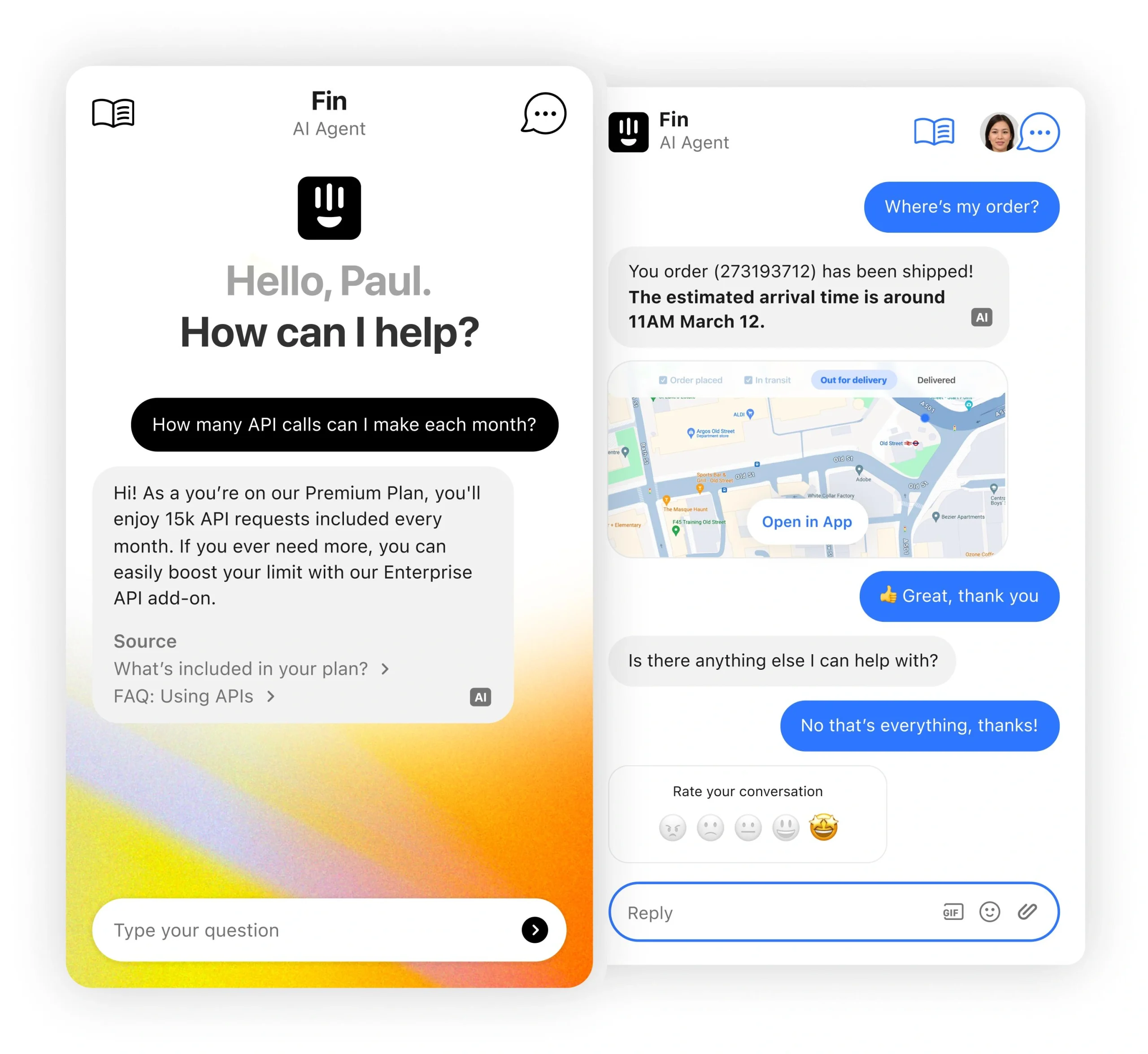
Fin AI Agent

Best for: SaaS businesses already using Intercom.

Overview:

Intercom Fin is one of the most recognized AI customer service assistants for SaaS companies that want to automate support without losing the conversational experience customers expect. Built directly into Intercom’s customer communication platform, Fin combines live chat, help center automation, and AI-powered conversations to answer customer questions using company knowledge instead of relying on generic responses.

The platform is particularly strong for digital businesses with high chat volumes. Fin can resolve common support requests, assist human agents with conversation summaries, and surface relevant knowledge articles automatically. Its resolution-based pricing model makes it attractive for growing SaaS companies, although costs can increase as AI-handled conversations scale.

Key Features:

  • AI customer support agent
  • Help Center integration
  • Live chat automation
  • Workflow builder
  • CRM and app integrations
  • Conversation summaries
  • AI inbox assistance
  • Multilingual customer support

Pros:

  • Excellent experience for SaaS businesses
  • Fast implementation inside Intercom
  • Strong live chat automation
  • Helpful AI agent assistance
  • Built-in knowledge management
  • Modern and intuitive interface

Cons:

  • Pricing increases with higher AI usage
  • Best suited for existing Intercom users
  • Enterprise costs can grow significantly

Pricing:

Resolution-based pricing with custom enterprise options.

3. Zendesk AI

Zendesk AI

Best for: Organizations already invested in the Zendesk ecosystem.

Overview:

Zendesk AI extends one of the world’s largest customer service platforms with AI agents, Copilot assistance, voice automation, and intelligent ticket management. Rather than functioning as a standalone chatbot, Zendesk AI works throughout the support lifecycle, helping customers resolve issues while assisting agents with faster case handling.

A standout capability is Context Graph, which gives AI persistent access to customer history, previous conversations, tickets, and account context. Combined with no-code automation tools and enterprise governance, Zendesk AI is a natural fit for businesses that already rely on Zendesk for support operations.

Key Features:

  • AI Agents
  • Context Graph
  • AI Copilot
  • Voice AI
  • No-code automation builder
  • Ticket automation
  • Multilingual support
  • Workflow orchestration

Pros:

  • Native Zendesk experience
  • Strong enterprise capabilities
  • Excellent customer context continuity
  • Voice automation support
  • Mature ecosystem
  • Highly scalable

Cons:

  • Best suited for Zendesk customers
  • Enterprise pricing structure
  • Advanced AI features require premium plans

Pricing:

Custom pricing based on deployment size and enterprise requirements.

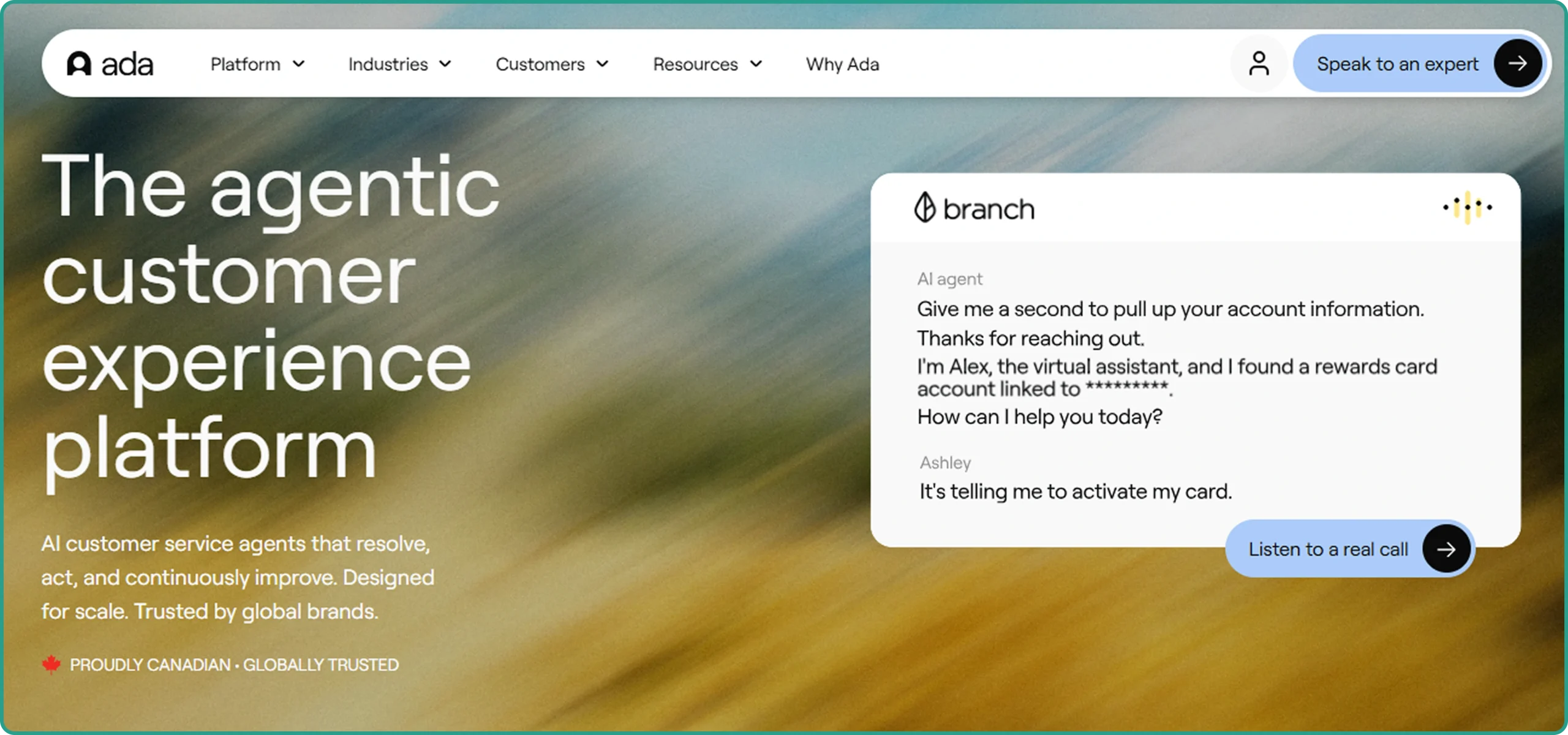
4. Ada

Ada

Best for: Large enterprises with structured customer support operations.

Overview:

Ada is an enterprise AI customer service platform built around self-service automation and multilingual customer experiences. Instead of requiring extensive coding, Ada allows support teams to build AI-powered conversations through no-code tools, making deployment faster for organizations managing large customer bases.

The platform is widely adopted by enterprises that prioritize scalable automation across multiple languages and regions. Its strength lies in handling repetitive customer inquiries while allowing businesses to maintain consistent support experiences across digital channels.

Key Features:

  • No-code AI builder
  • Multilingual AI support
  • Self-service automation
  • CRM integrations
  • Workflow automation
  • Customer analytics
  • Omnichannel support
  • Enterprise governance controls

Pros:

  • Easy deployment
  • Excellent multilingual capabilities
  • Enterprise-ready platform
  • Strong self-service experiences
  • Flexible workflows
  • Scalable for global businesses

Cons:

  • Custom pricing only
  • Less flexible for highly dynamic workflows
  • Enterprise onboarding process

Pricing:

Custom pricing available upon request.

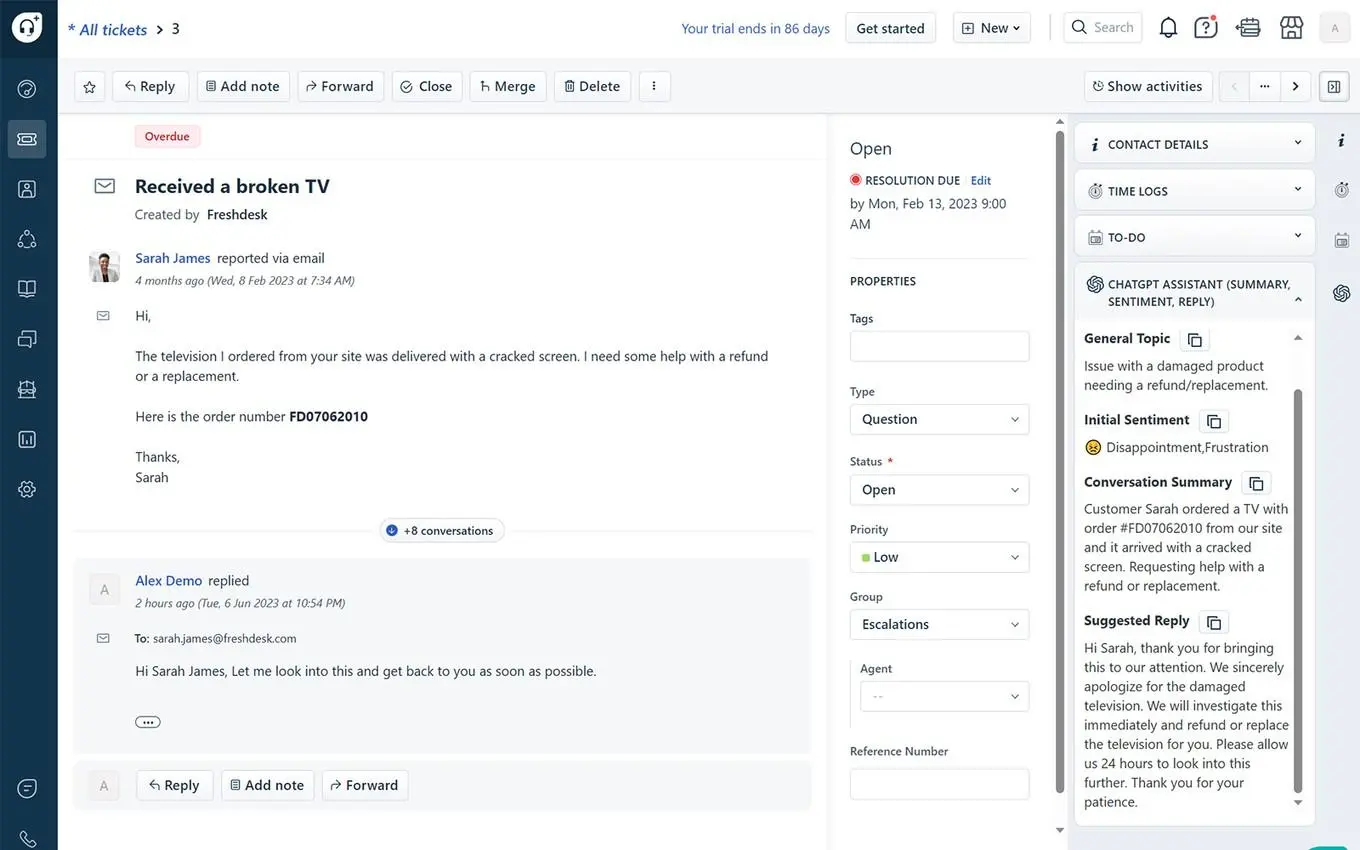
5. Freshdesk Freddy AI

Freshdesk

Best for: Small and medium businesses looking for affordable AI support.

Overview:

Freddy AI brings artificial intelligence directly into Freshdesk’s helpdesk platform, making it easier for growing support teams to automate common customer interactions without adopting an entirely new system. It combines ticket automation, sentiment analysis, email assistance, and knowledge management within the Freshworks ecosystem.

Its biggest advantage is accessibility. Businesses already using Freshdesk can introduce AI-powered workflows with minimal setup while giving agents tools that reduce repetitive work and improve response quality.

Key Features:

  • AI ticket automation
  • Sentiment analysis
  • AI agent assistance
  • Workflow automation
  • Knowledge base integration
  • Omnichannel support
  • Customer analytics
  • Email automation

Pros:

  • Affordable for growing teams
  • Easy onboarding
  • Strong SMB fit
  • Reliable helpdesk platform
  • Built-in AI capabilities
  • Simple workflow automation

Cons:

  • Enterprise capabilities are limited
  • Advanced AI requires higher plans
  • Best within the Freshworks ecosystem

Pricing:

Available through paid Freshdesk plans.

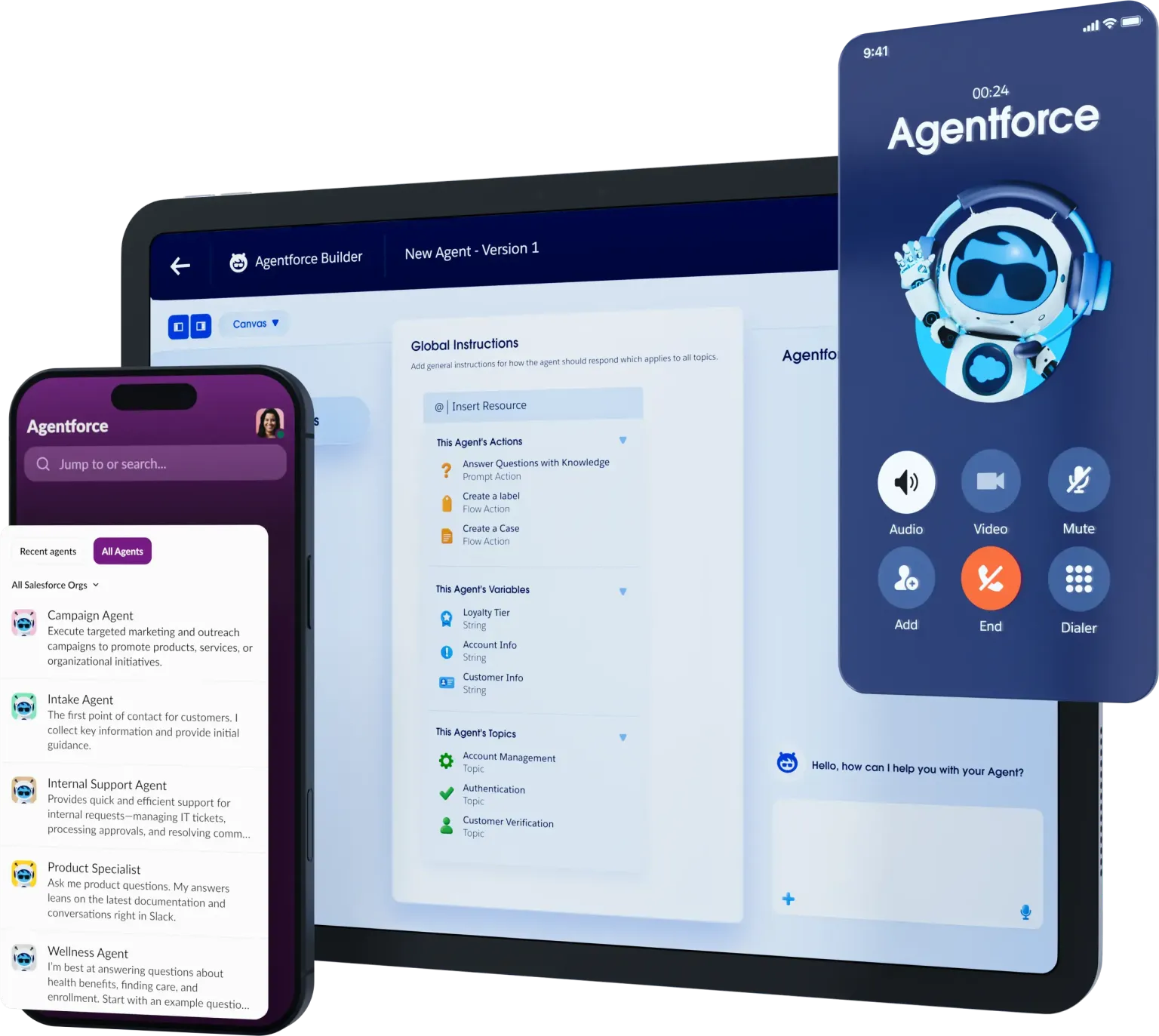
6. Salesforce Agentforce

Salesforce Agentforce

Best for: Enterprises already using Salesforce CRM.

Overview:

Salesforce Agentforce brings autonomous AI agents directly into Salesforce’s customer service ecosystem. Rather than functioning as a standalone assistant, Agentforce works across CRM records, workflows, knowledge articles, and customer history to automate service operations while keeping customer context connected.

Organizations already invested in Salesforce benefit from deep integration across Service Cloud, Sales Cloud, and enterprise workflows. Its AI agents can retrieve information, recommend actions, and automate repetitive service tasks while operating within Salesforce’s governance framework.

Key Features:

  • Autonomous AI agents
  • CRM-native automation
  • Workflow execution
  • Customer history access
  • Enterprise analytics
  • Omnichannel support
  • Knowledge retrieval
  • Governance controls

Pros:

  • Deep Salesforce integration
  • Enterprise-grade platform
  • Powerful automation
  • Rich customer context
  • Highly scalable
  • Extensive workflow capabilities

Cons:

  • Salesforce dependency
  • Custom enterprise pricing
  • Complex implementation

Pricing:

Custom enterprise pricing based on usage, integrations, and deployment needs.

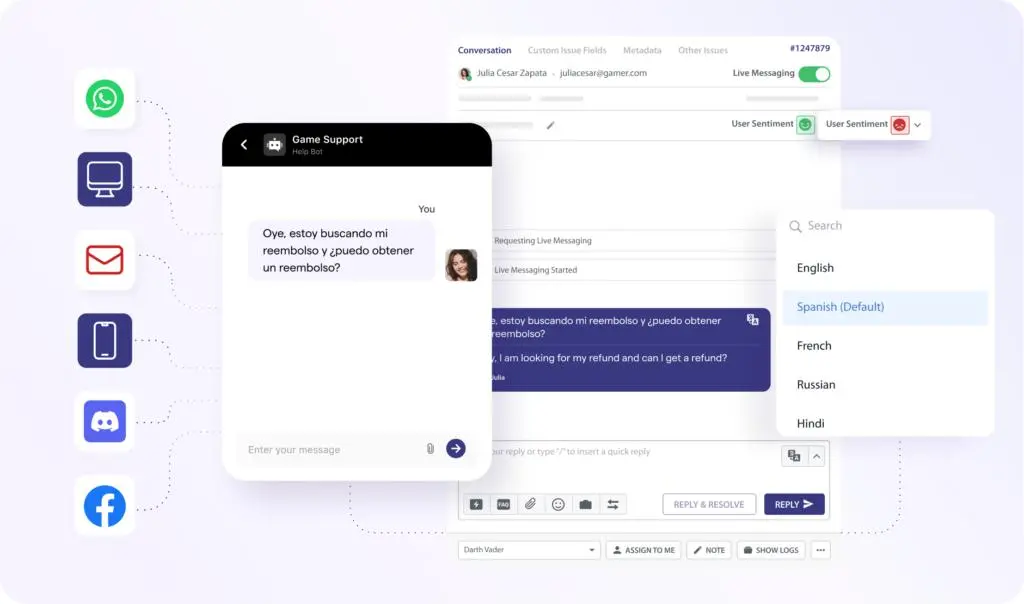
7. Helpshift

Helpshift

Best for: Mobile-first businesses and gaming companies.

Overview:

Helpshift specializes in mobile customer support, making it one of the strongest AI platforms for businesses where customers primarily interact through mobile apps. It combines AI-powered ticket automation, predictive analytics, and messaging-based support to reduce support workloads while maintaining in-app customer experiences.

Gaming companies, consumer apps, and mobile-first brands often choose Helpshift because it keeps customers inside the app instead of redirecting them to external support channels.

Key Features:

  • Mobile-first support
  • Predictive analytics
  • AI ticket automation
  • Omnichannel messaging
  • Natural language processing
  • Workflow automation
  • Customer analytics
  • Knowledge management

Pros:

  • Excellent mobile experience
  • Strong automation
  • Predictive customer insights
  • Good scalability
  • Omnichannel messaging
  • Reliable platform

Cons:

  • Mobile-first focus
  • Enterprise pricing
  • Less attractive for small teams

Pricing:

Seat-based enterprise pricing.

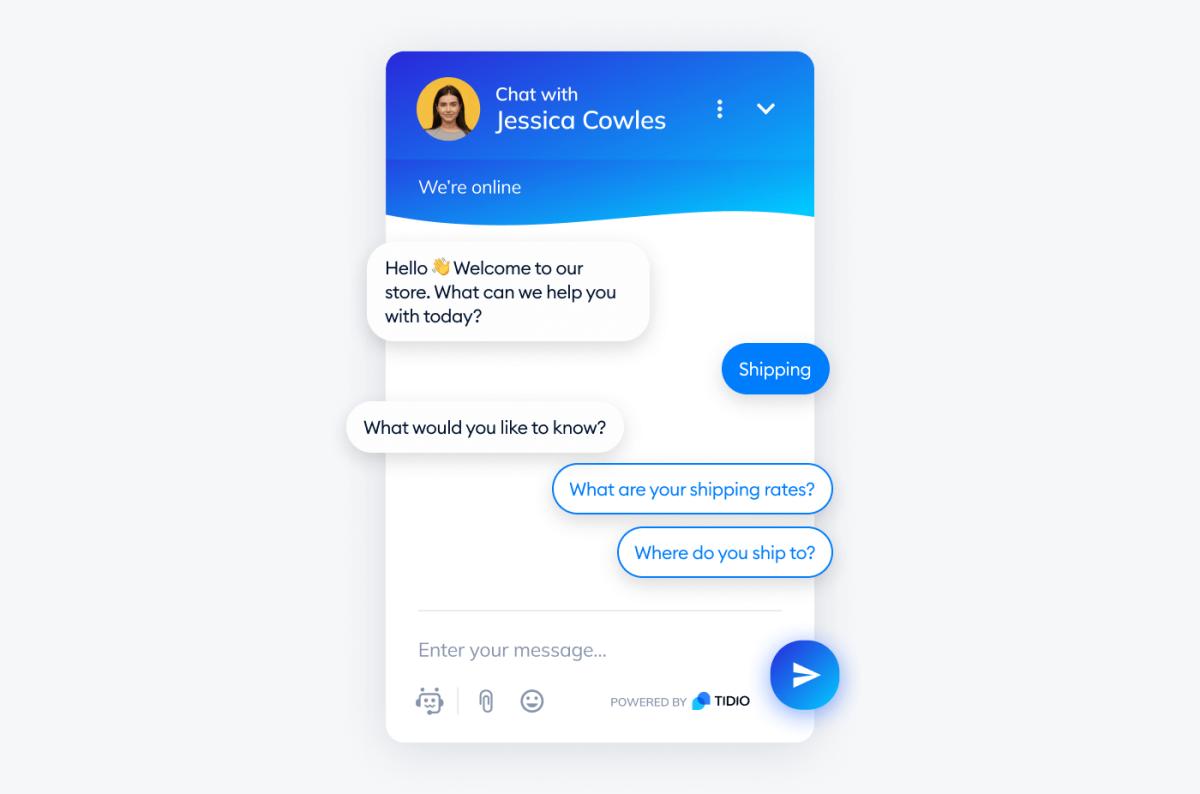
8. Tidio

Tidio

Best for: Small businesses and ecommerce stores.

Overview:

Tidio combines live chat with its Lyro AI assistant to help smaller businesses automate customer conversations without a lengthy implementation project. It focuses on website support, ecommerce conversations, and lead generation while keeping setup simple for businesses with limited technical resources.

Its affordability and free plan make it particularly attractive for startups, online stores, and small support teams looking for quick wins through AI-powered customer service.

Key Features:

  • Lyro AI chatbot
  • Live chat
  • Email support
  • Visitor tracking
  • Workflow automation
  • Ecommerce integrations
  • Analytics dashboard
  • Lead generation tools

Pros:

  • Affordable pricing
  • Easy setup
  • Ecommerce-friendly
  • Good chatbot experience
  • Live chat included
  • Free plan available

Cons:

  • Limited enterprise capabilities
  • Advanced automation costs more
  • Better suited for smaller teams

Pricing:

Free plan with paid upgrades.

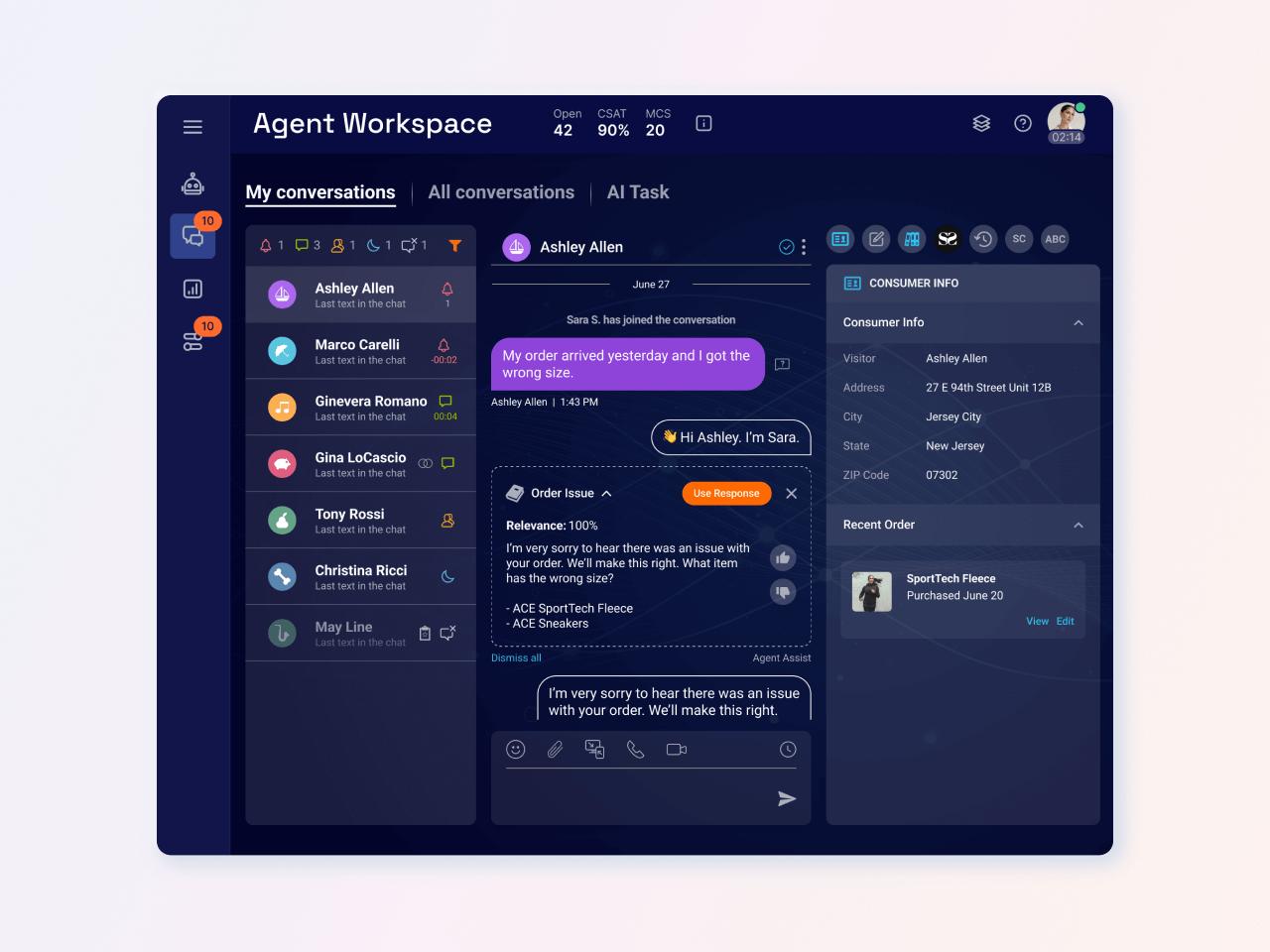
9. LivePerson

LivePerson

Best for: Large contact centers handling high conversation volumes.

Overview:

LivePerson focuses on conversational AI across messaging channels, helping enterprises automate customer interactions while supporting agents with workforce insights and operational analytics. The platform has long been a major player in enterprise messaging and customer engagement.

Its strengths lie in managing large-scale customer conversations, integrating with enterprise systems, and providing analytics that help organizations improve customer support performance over time.

Key Features:

  • Conversational AI
  • Omnichannel messaging
  • AI chatbots
  • Workforce analytics
  • CRM integrations
  • Workflow automation
  • Customer reporting
  • Enterprise messaging platform

Pros:

  • Enterprise-ready
  • Strong messaging capabilities
  • Helpful analytics
  • Workforce visibility
  • Highly scalable
  • Reliable platform

Cons:

  • Enterprise pricing
  • Complex implementation
  • Better suited for large organizations

Pricing:

LivePerson provides custom pricing based on organization size and deployment requirements.

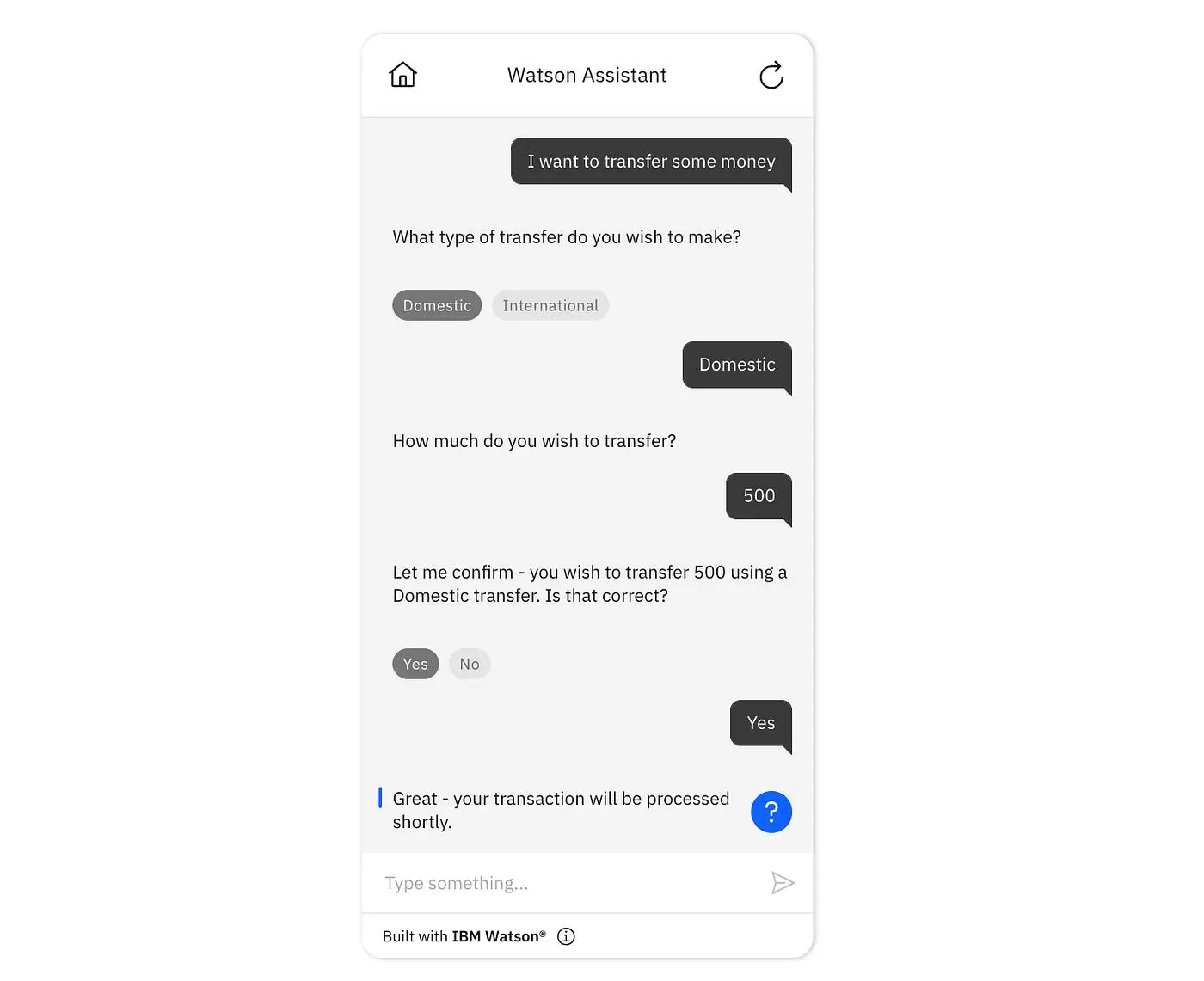
10. IBM Watson Assistant

IBM Watson Assistant

Best for: Regulated industries that prioritize security and compliance.

Overview:

IBM Watson Assistant remains one of the strongest AI virtual assistants for organizations that require enterprise governance, advanced natural language processing, and secure deployments. It is particularly popular in healthcare, banking, insurance, and government environments where compliance plays a significant role in technology decisions.

The platform combines conversational AI with enterprise integrations, voice capabilities, and flexible deployment options, allowing organizations to build AI-powered customer support while maintaining strict security standards.

Key Features:

  • Advanced NLP
  • Enterprise security
  • Voice AI
  • AI chatbots
  • Knowledge search
  • Customer analytics
  • Enterprise integrations
  • Compliance controls

Pros:

  • Strong compliance capabilities
  • Enterprise-grade security
  • Mature NLP technology
  • Flexible deployment options
  • Voice support
  • Reliable platform

Cons:

  • Learning curve
  • Higher enterprise pricing
  • Best suited for larger organizations

Pricing:

Monthly pricing with enterprise plans available.

How to Choose the Right AI Virtual Assistant for Customer Service?

By now, you’ve probably narrowed your list to two or three platforms. Good. That’s where the actual buying decision starts.

Instead of choosing the tool with the longest feature list, choose the one that fits how your support operation works today – and where you want it to be six months from now.

Can it Resolve Customer Issues, Not Just Answer Questions?

Many AI assistants generate impressive replies. The stronger platforms complete actions like updating accounts, processing refunds, routing tickets, and executing workflows across your business systems.

Will it Work with Your Existing Support Stack?

The last thing most teams want is another migration project. Look for a platform that integrates with your CRM, help desk, billing system, knowledge base, and communication tools without disrupting current operations.

Does it Preserve Customer Context?

Customers shouldn’t have to repeat their issue every time they switch from chat to email or reach a human agent. Shared customer history and conversation continuity make a noticeable difference.

How Does it Handle Human Handoffs?

When AI reaches its limit, the transition matters. The best platforms pass along conversation summaries, customer history, sentiment, and next steps so agents can continue the conversation immediately.

Is Governance Built into the Platform?

For industries like banking, insurance, healthcare, and SaaS, AI should work within business rules. Features like approval workflows, audit logs, and traceable decisions help teams maintain control over sensitive actions.

Does Pricing Grow with Business Value?

Some vendors charge per seat, others by usage, and some price based on outcomes. Understanding how costs scale with support volume helps avoid surprises later.

Final Verdict

Each platform on this list earns its place for a different reason.

Intercom Fin is a strong fit for SaaS teams. Zendesk AI shines for existing Zendesk users. Ada stands out for multilingual self-service, while Salesforce Agentforce works best inside the Salesforce ecosystem.

If you’re looking for an AI virtual assistant that fits into your existing support operation instead of asking you to rebuild it, Azeon deserves a spot at the top of your shortlist.

It combines agentic AI, deterministic workflow execution, omnichannel support, and native integrations with CRM and helpdesk tools to help businesses resolve customer issues, not just respond to them.

And perhaps the biggest difference comes after deployment: Azeon keeps pricing tied to customer outcomes rather than seats, tokens, or idle AI capacity.

This makes Azeon a compelling option for organizations that want measurable value as support operations scale.

Ready to See Azeon in Action?

Book a personalized demo to see how Azeon fits into your existing support stack and resolves customer issues across every channel.

Schedule a Demo →

FAQs

What is the best AI virtual assistant for customer service?

The best AI virtual assistant for customer service depends on your business needs, existing support tools, and automation goals. Enterprise platforms like Azeon focus on end-to-end issue resolution, while Intercom Fin, Zendesk AI, and Ada excel in specific ecosystems. Look for a solution that combines AI reasoning, workflow automation, and seamless integrations instead of only generating replies.

How does an AI virtual assistant improve customer service?

An AI virtual assistant improves customer service by handling repetitive inquiries, retrieving customer context, automating workflows, and providing instant responses across multiple channels. It also helps reduce response times, improves first-contact resolution, and allows human agents to focus on more complex customer issues.

Which AI virtual assistant works with existing CRM and helpdesk systems?

Several platforms integrate with existing business tools, including Azeon, Zendesk AI, Salesforce Agentforce, Intercom Fin, and Freshdesk Freddy AI. The strongest solutions connect with CRM, billing, ERP, and communication systems without requiring businesses to replace their current support infrastructure.

What features should I look for in an AI virtual assistant for customer service?

Prioritize features like omnichannel support, AI reasoning, workflow automation, shared customer context, CRM integrations, human-in-the-loop governance, analytics, and enterprise security. These capabilities help create faster resolutions while maintaining consistent customer experiences across every channel.

How much does an AI virtual assistant for customer service cost?

Pricing varies widely depending on the platform. Some vendors charge per user or per conversation, while others use resolution-based or custom enterprise pricing. Businesses should evaluate how pricing scales with support volume and whether costs align with measurable customer support outcomes.

Tarak Joshi leads growth strategy and market expansion for agentic AI-powered customer support solutions. With 20+ years of experience in business strategy, IT consulting, and operational excellence, he focuses on helping enterprises improve support outcomes, reduce operational costs, and adopt AI with measurable business impact. His expertise spans customer experience transformation, AI-led service operations, and aligning technology investments with business goals.

Tarak Joshi
VP - Sales

Questions about Azeon?

Connect with our team to explore use cases, workflows, and deployment possibilities.