Skip to content

10 Best Tidio Alternatives You Should Consider in 2026

10 Best Tidio Alternatives You Should Consider in 2026

Tidio combines live chat, ticketing, automation, and Lyro AI Agent.

But different support teams need different things from their customer service software.

Some need AI that can resolve issues end to end. Others need deeper helpdesk capabilities, ecommerce workflows, CRM integration, or a pricing model that scales differently.

In this blog, we compared the best Tidio alternatives across AI capabilities, automation, integrations, omnichannel support, human handoff, scalability, and pricing approach.

Best Tidio Alternatives at a Glance

Platform Best Suited For AI Capability Key Strength Pricing
Azeon High-volume customer support teams looking to automate support from conversation to resolution. Agentic AI that understands intent, uses customer context, retrieves knowledge, executes workflows, and takes system actions. Adds an intelligence layer across existing support systems, enabling AI to resolve requests and complete actions with human oversight. Result-based pricing: from $0.05/assist, $0.50/resolution, or $1/completed action.
Intercom SaaS and product-led businesses managing customer support and engagement. Fin AI Agent handles customer questions, resolves issues, and automates support workflows. Combines AI support, messaging, ticketing, help center, and customer engagement in one platform. Plans from $29/seat/month; Fin AI priced separately by outcome.
Zendesk Enterprise teams managing complex customer service operations. AI agents, intelligent triage, automated responses, and agent assistance. Mature helpdesk with advanced ticketing, omnichannel support, reporting, workflows, and integrations. Plans from $19/agent/month; advanced AI features vary by plan.
Gorgias Ecommerce brands managing customer service across sales and support channels. AI Agent automates customer conversations and handles common support requests. Strong ecommerce workflows for orders, returns, refunds, shipping, and customer information. Plans from $10/month; AI usage priced separately.
Freshdesk Growing businesses looking for an omnichannel helpdesk. Freddy AI supports automated responses, ticket assistance, and AI-powered service workflows. Combines ticketing, omnichannel support, automation, knowledge management, and reporting. Free plan available; paid plans from $19/agent/month.
Help Scout Small and mid-sized teams focused on straightforward customer support. AI-powered answers, summaries, drafting, and knowledge-based assistance. Simple shared inbox, knowledge base, customer management, and support workflows. Plans from $25/user/month.
Crisp Small and mid-sized businesses managing omnichannel customer conversations. AI Agent, AI Copilot, knowledge-based responses, and workflow automation. Shared inbox with omnichannel messaging, ticketing, automation, AI, and integrations. Free plan; paid plans from $45/month per workspace.
LiveChat Businesses focused on website live chat and real-time customer engagement. AI-powered support, automated answers, and agent assistance. Strong live-chat experience with visitor tracking, routing, reporting, and engagement tools. Plans from $20/user/month.
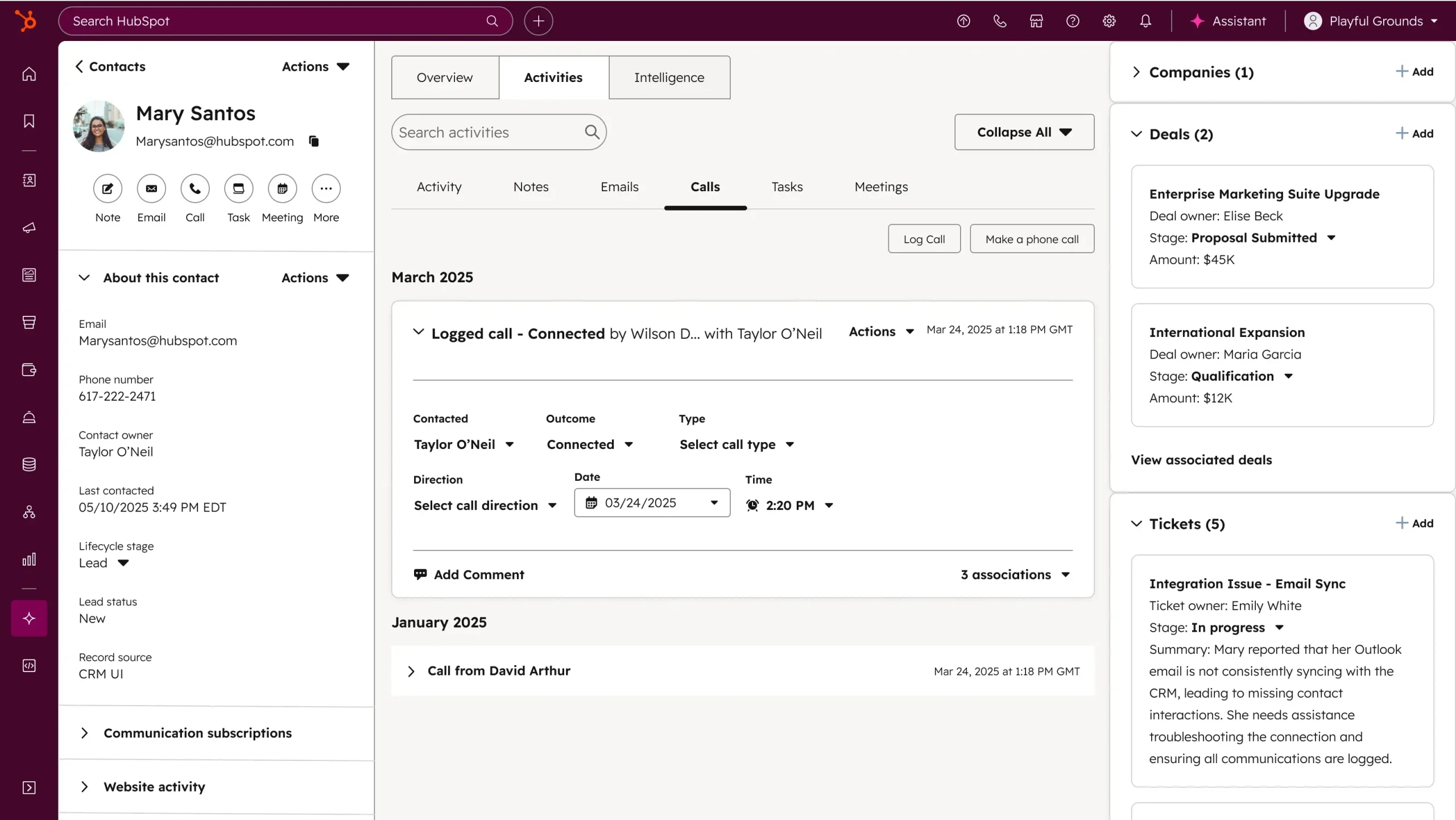
HubSpot Service Hub Businesses that want customer support connected to their CRM. AI agents, conversation intelligence, automation, and service assistance. Connects customer service with CRM data, sales, marketing, customer success, and reporting. Free tools available; paid plans vary by tier.
Chatbase Businesses looking for an AI-first chatbot or AI agent for customer support. AI agents trained on company knowledge with automated conversations, actions, and integrations. AI-first platform for deploying customizable support agents across websites and connected channels. Free plan available; paid plans from $32/month.

Top 10 Tidio Alternatives You Should Consider in 2026

Here are the leading Tidio alternatives compared by AI capabilities, support features, pricing, integrations, and the type of customer support operation they best fit.

1. Azeon

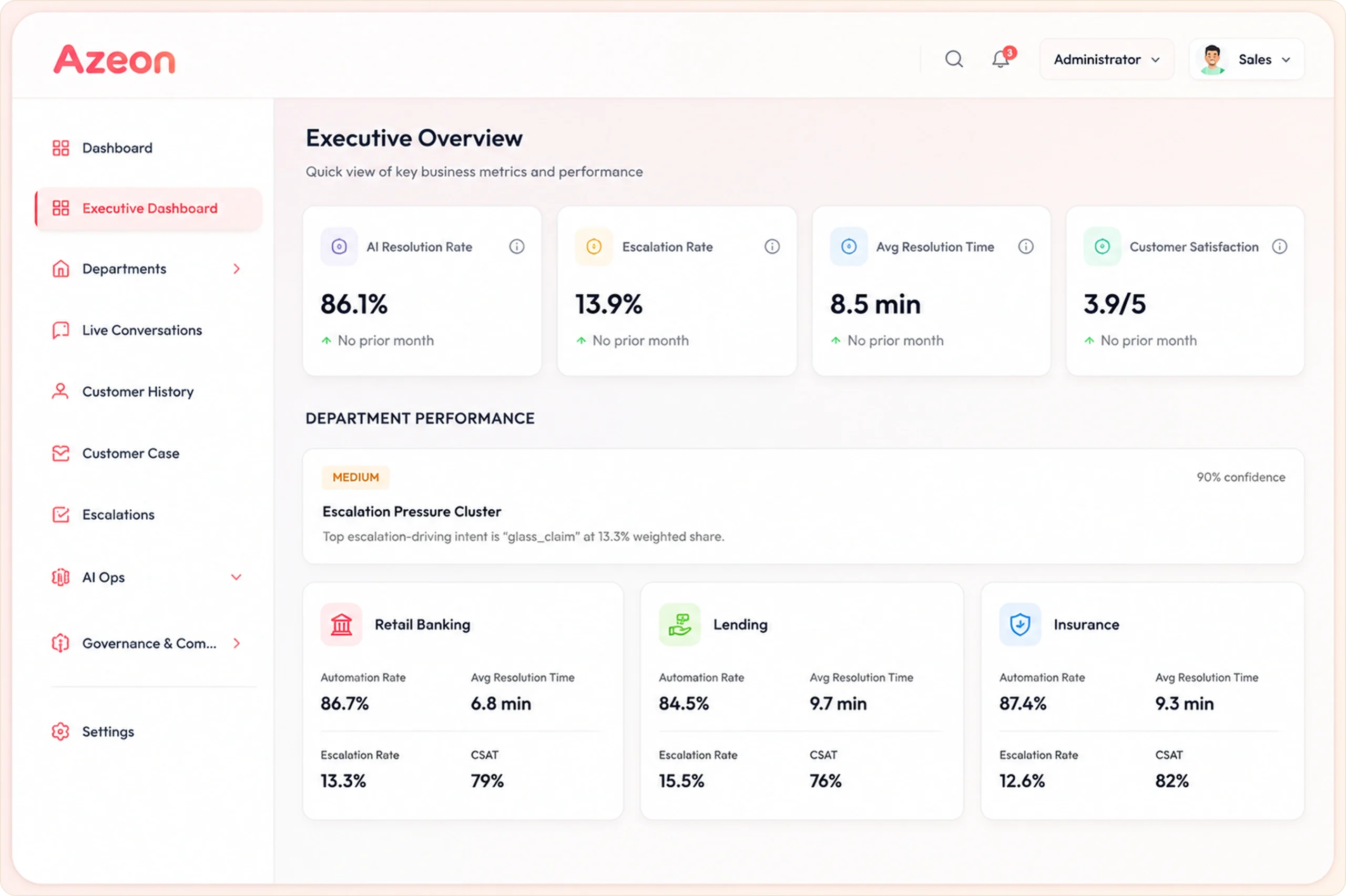
Azeon Executive Dashboard

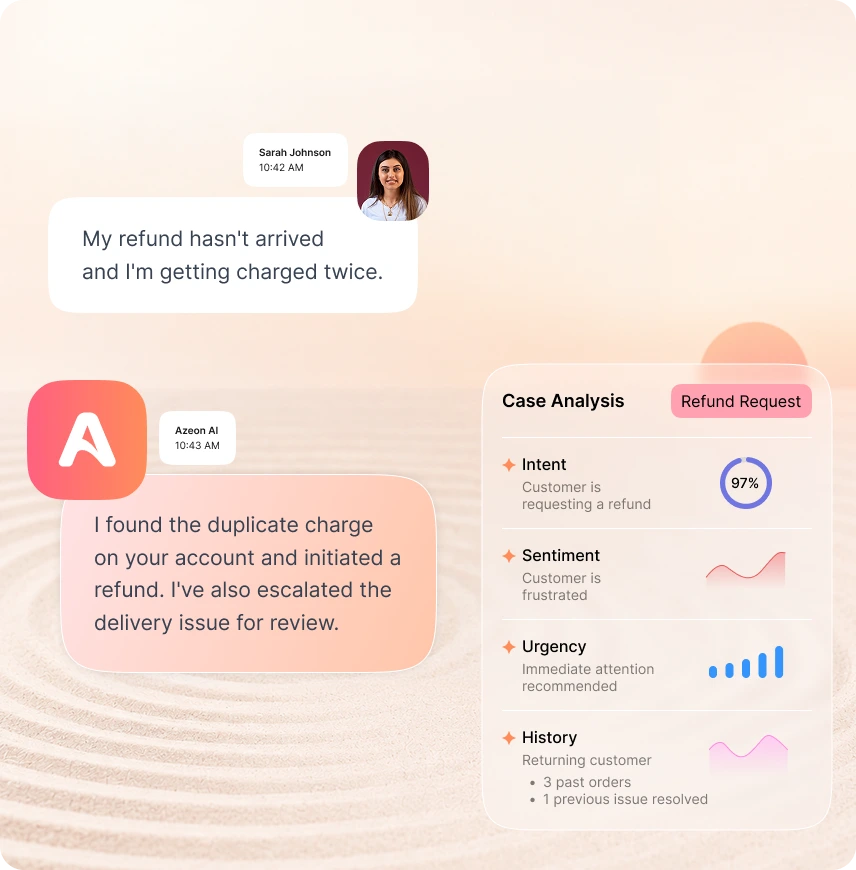
If you are evaluating Tidio alternatives because you want AI to handle more of the actual support workload, Azeon is built for that next step.

It combines AI reasoning, customer context, system actions, human escalation, and operational intelligence so support teams can move from automated conversations to automated resolutions.

Intelligence & Reasoning in Azeon

What Makes Azeon Different?

  • AI that can reason and act: Azeon agents understand customer intent, urgency, and sentiment, retrieve relevant business and customer information, reason through the request, and execute actions across connected systems.
  • Works with your existing support stack: Azeon sits across the systems your support operation already uses. Teams can introduce AI without rebuilding their existing support infrastructure.
  • Customer context across interactions: Azeon’s customer memory brings conversation history and relevant customer information into the resolution process.
  • Operational visibility for support leaders: Azeon provides an executive view of AI Resolution Rate, Escalation Rate, Average Resolution Time, and Customer Satisfaction. Leaders can also drill into department-level performance to compare automation, resolution time, escalations, and CSAT across support functions.
  • Understand what drives escalations: Azeon’s analytics can identify escalation pressure clusters, highlighting the intents creating the greatest escalation pressure and their weighted share.
  • Governed AI execution: Azeon combines AI reasoning with controlled system execution, human approvals, escalation paths, monitoring, and auditability.

Pricing:

Azeon uses a result-based pricing approach, with pricing tied to assists, resolutions, or completed actions rather than requiring a traditional seat-based model.

  • AI Copilot: Starts at $0.05 per assist for agent recommendations, knowledge retrieval, reasoning, and human-in-the-loop support.
  • AI-Resolved Queries: Starts at $0.50 per resolution for autonomous query resolution, multi-step reasoning, confidence scoring, escalation workflows, and governance.
  • AI-Completed Actions: Starts at $1 per completed action for workflow execution, system updates, business process automation, and multi-system orchestration.

Why Consider Azeon?

Tidio brings live chat, ticketing, automation, and Lyro AI together for customer support.

Azeon extends the model toward agentic customer service, where AI can understand the situation, access customer and business context, take action in connected systems, complete the resolution, and show leaders how that automation is performing.

For support organizations managing high interaction volumes across multiple systems, Azeon provides a path from AI-assisted support to measurable AI-led resolution.

Its result-based pricing model also aligns cost with outcomes, with options based on assists, resolutions, or completed actions rather than a traditional seat-only structure.

2. Intercom

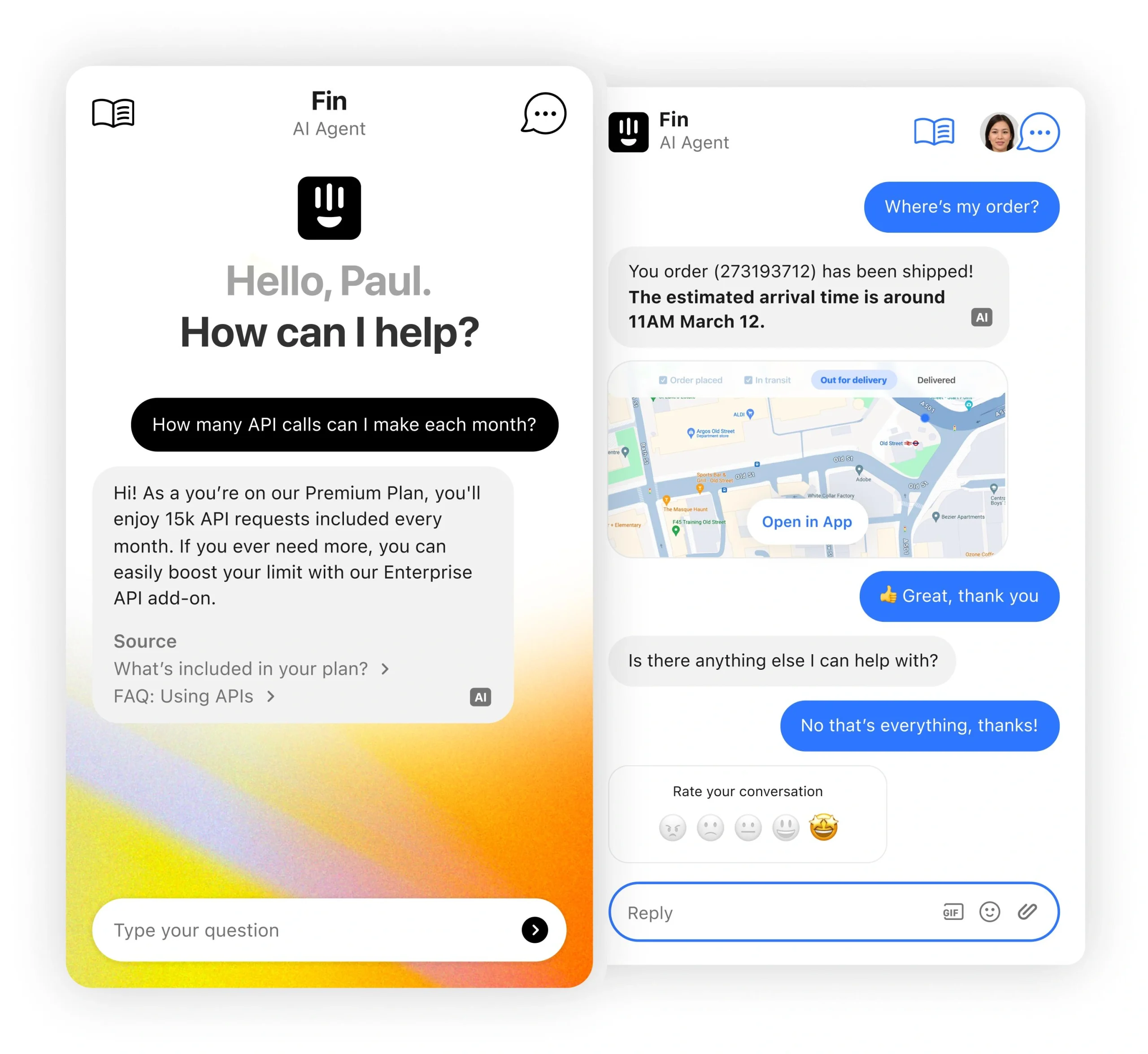
Fin AI Agent

Intercom is a strong Tidio alternative for SaaS, software, and product-led companies that want customer support closely connected with product engagement.

Its AI product, Fin, is designed to handle customer conversations using a company’s existing support content and can work alongside human agents.

Intercom combines this AI capability with its broader customer service platform, including a shared inbox, ticketing, help center, outbound messaging, and customer engagement tools.

What Intercom offers?

  • Fin AI Agent: Fin can answer customer questions and resolve support conversations using the company’s knowledge and support content.
  • Customer service workspace: Support teams can manage conversations, tickets, customer information, and agent workflows from the same environment.
  • Help center integration: Intercom connects AI support with its knowledge base, allowing customers to find answers through self-service while giving Fin a source of information to work from.
  • Customer engagement: Intercom extends beyond support into proactive messaging and product engagement, making it useful for SaaS companies that want support and customer communication in the same platform.
  • Human handoff: Conversations can move from AI to human agents when additional assistance is required.

Pricing:

Intercom’s Essential plan starts at $29/seat/month when billed annually, with Advanced at $85 and Expert at $132 per seat/month. Fin AI Agent is available across plans and costs $0.99 per outcome for chat and email.

3. Zendesk

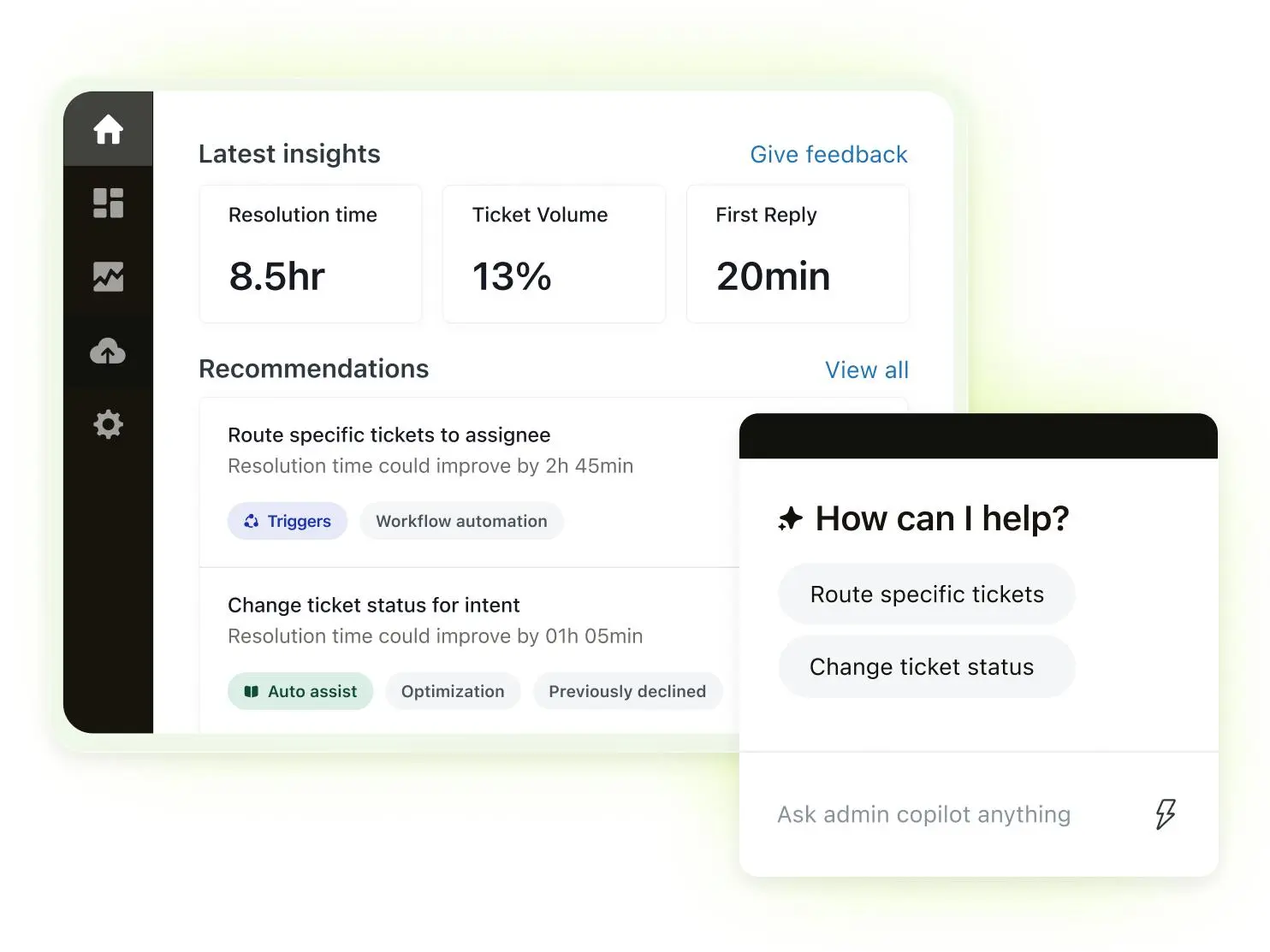
Zendesk AI

Zendesk is a natural Tidio alternative for companies that need a more extensive customer service management environment.

Zendesk combines ticketing, messaging, voice, reporting, workflow automation, knowledge management, and AI capabilities in a platform designed for larger and more complex support operations.

Its AI capabilities include AI Agents, intelligent triage, automated responses, agent assistance, and actions across connected systems.

What Zendesk Offers?

  • AI Agents: Zendesk AI Agents can handle customer requests across channels and automate support interactions.
  • Intelligent triage: AI can classify and route incoming requests based on factors such as intent and context.
  • AI-powered agent assistance: Human agents can receive AI-generated suggestions and support while working on customer conversations.
  • Actions and workflows: Zendesk allows AI capabilities to work with business processes and connected systems, extending automation beyond simple answers.
  • Omnichannel support: Email, messaging, voice, and other support channels can be managed through the same customer service environment.
  • Enterprise reporting and administration: Zendesk provides extensive analytics, permissions, workflows, and administrative controls for larger support organizations.

Pricing:

Zendesk’s Support Team plan starts at $19/agent/month when billed annually. Its Suite Team plan starts at $55/agent/month and adds AI Agents, Knowledge Base, and Action Builder. AI Agent usage follows an outcome-based pricing model, with resolution allowances included in eligible plans.

4. Gorgias

Gorgias

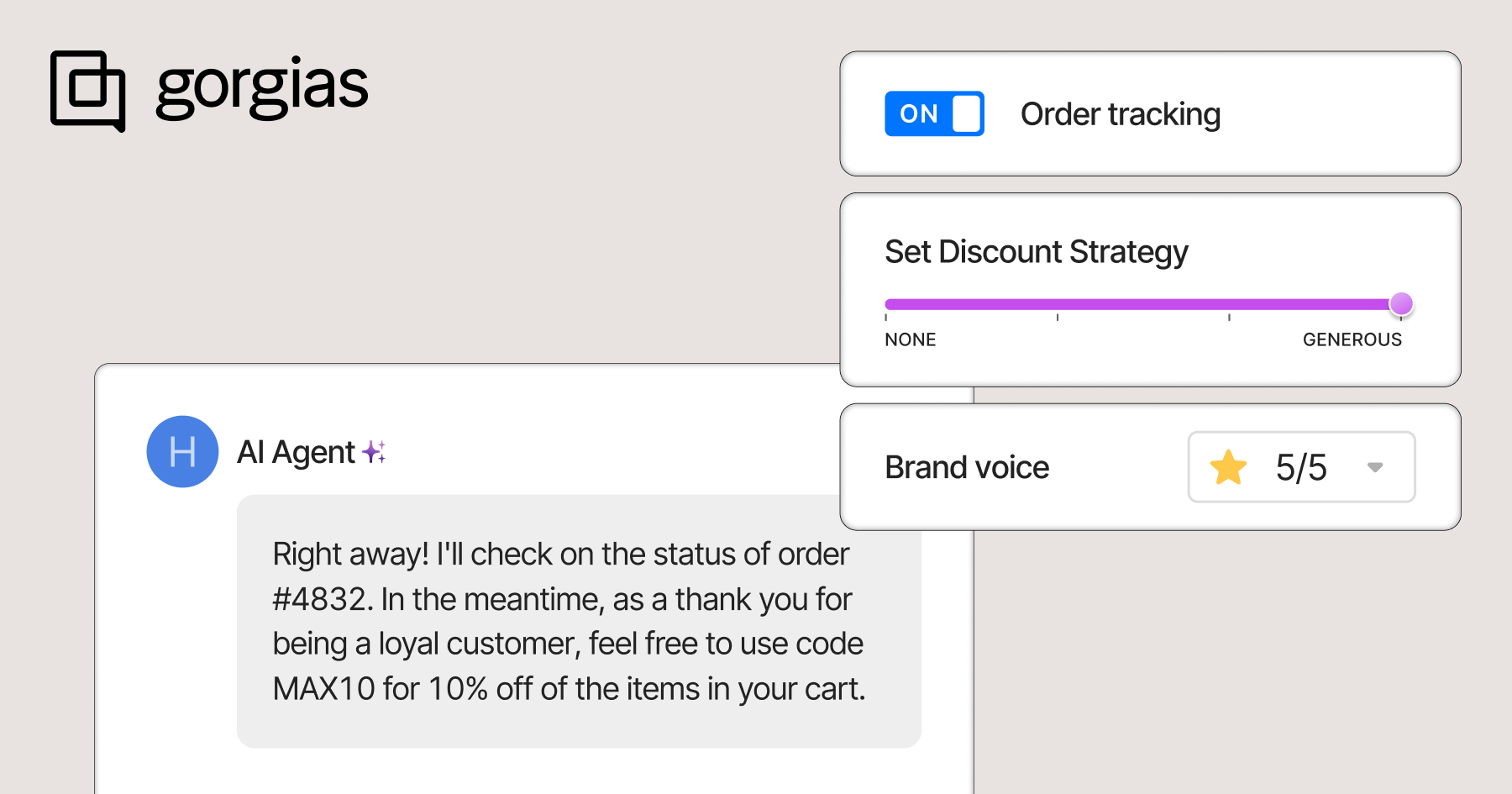
Gorgias is built specifically around ecommerce customer conversations, making it one of the strongest alternatives for Shopify and other ecommerce brands.

Gorgias combines its helpdesk with AI Agent, which can handle customer conversations across email, chat, SMS, and social channels. Its AI can manage common ecommerce requests such as order tracking, returns, cancellations, and missing items.

What Gorgias Offers?

  • Ecommerce-focused AI: AI Agent is designed around the types of conversations ecommerce support teams handle every day.
  • Order and post-purchase support: AI can handle requests related to returns, order changes, cancellations, shipping updates, and missing items.
  • Shopping assistance: The same AI Agent can support pre-purchase conversations by helping shoppers find products and make purchasing decisions.
  • Actions: AI Agent can take actions in connected systems, such as cancelling an order or processing a return.
  • Multiple channels: Gorgias AI Agent works across email, chat, SMS, and social media.
  • Human handoff: Conversations can be transferred to human agents when AI reaches a situation requiring human involvement.

Pricing:

Gorgias uses ticket-volume pricing rather than per-agent pricing, with plans scaling from 50 to 5,000 tickets per month. AI Agent is available across plans and is charged only when it resolves a conversation.

5. Freshdesk

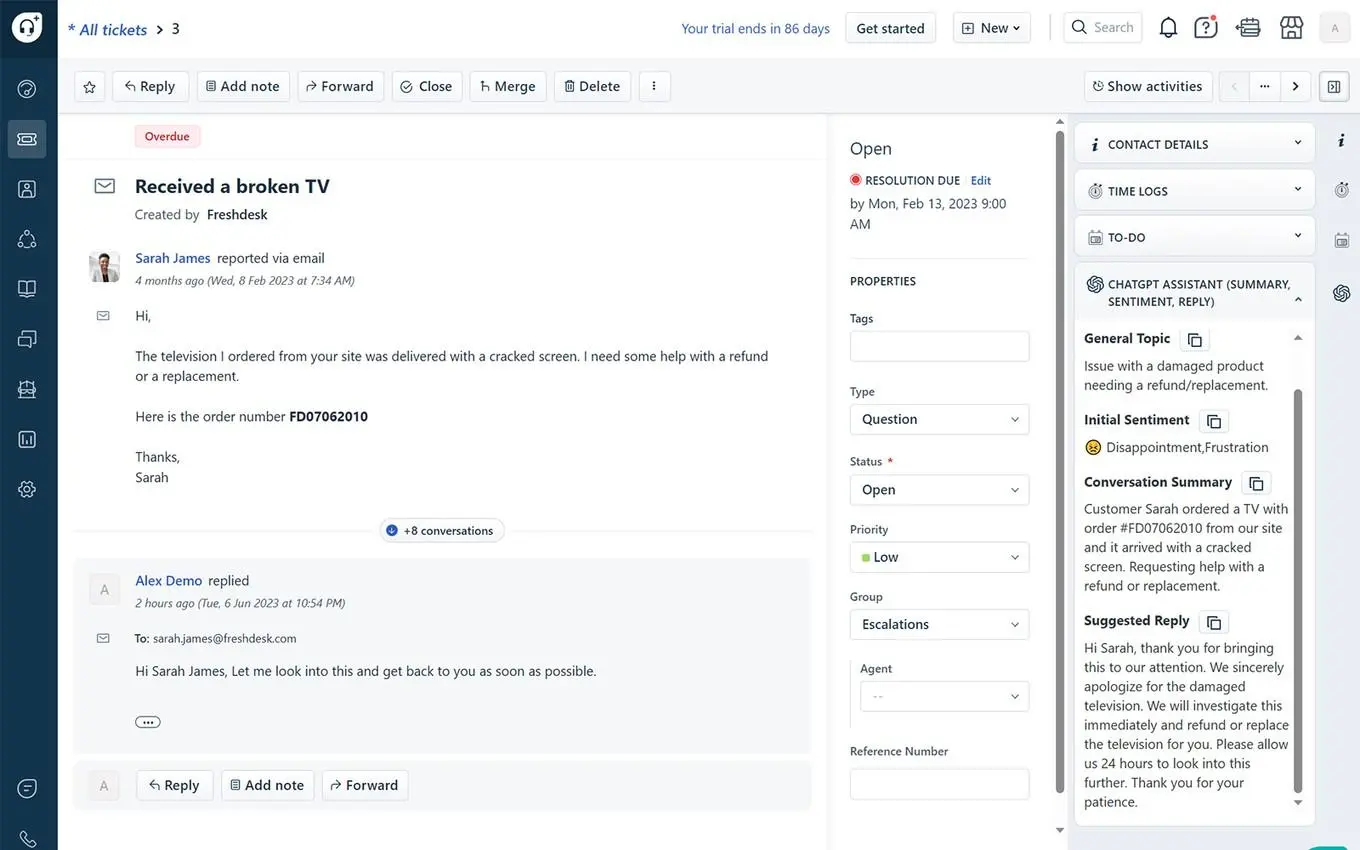
Freshdesk

Freshdesk is a strong option for businesses that want to move from a conversational support tool toward a more structured helpdesk environment.

Freshdesk combines ticketing, shared inboxes, customer portals, knowledge management, routing, analytics, and AI through its Freddy AI capabilities.

What Freshdesk Offers?

  • Freddy AI Agent: Freshdesk provides AI agents for automated customer support across supported channels, including email and chat through its AI Agent Studio.
  • AI-assisted support: Freddy can help agents with contextual assistance and provide operational insights.
  • Ticketing and automation: Freshdesk provides structured ticket management, routing, SLA capabilities, automation, and reporting.
  • Knowledge management: Customer portals and knowledge bases support self-service and provide information for AI-powered assistance.
  • Omnichannel options: Businesses can extend support across multiple communication channels through Freshworks’ customer service products.

Pricing:

Freshdesk starts at $29/agent/month when billed annually for Growth, followed by Pro at $79 and Enterprise at $119. Freddy AI Agent is included with the first 500 sessions, with additional sessions priced at $49 per 100 sessions.

6. Help Scout

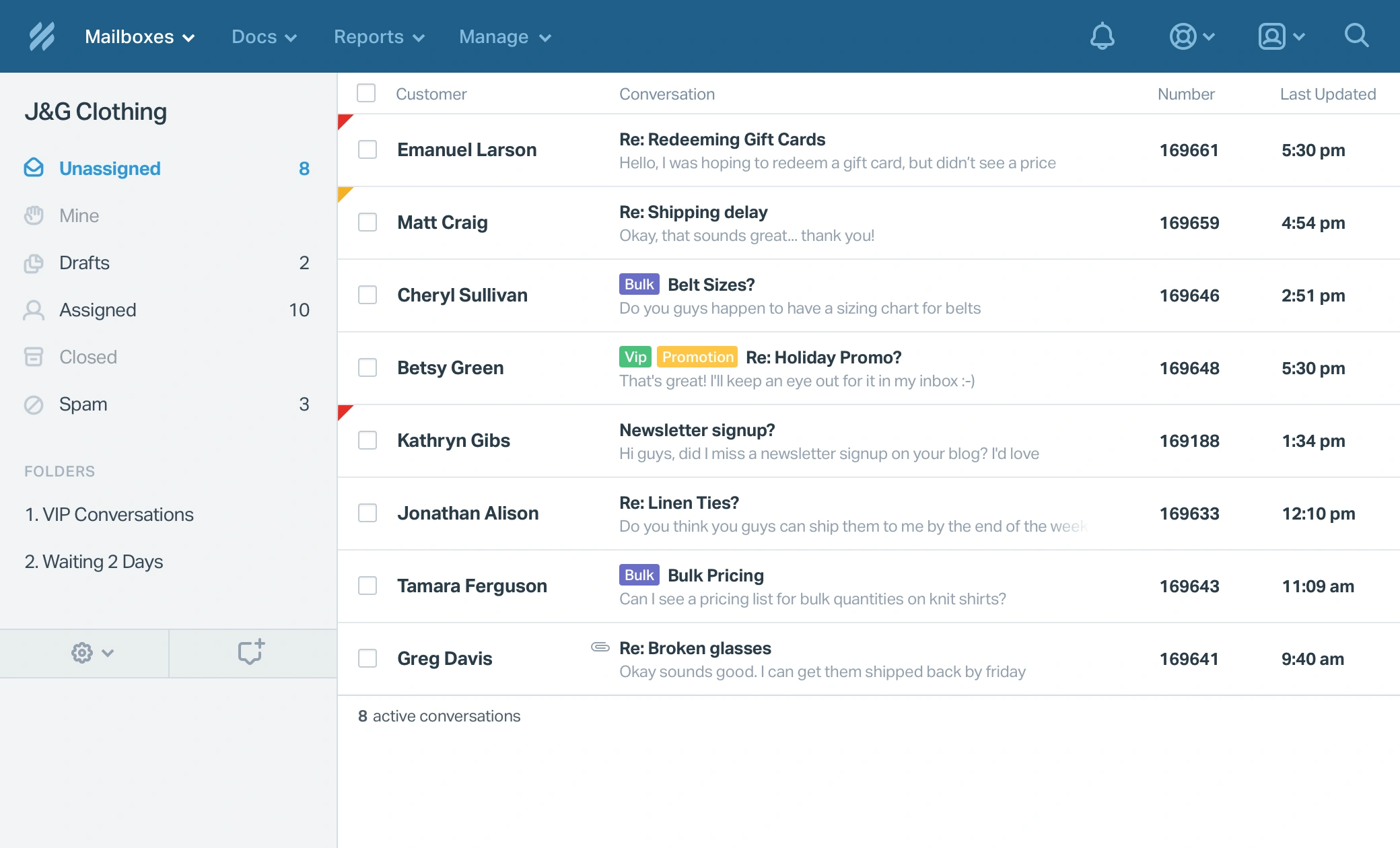
Help Scout

Help Scout is designed for teams that want a straightforward customer support workspace built around shared inboxes, knowledge bases, customer conversations, and lightweight automation.

Its AI offering, AI Answers, uses a company’s website and Docs knowledge base to answer customer questions through the Help Scout Beacon widget.

What Help Scout Offers?

  • AI Answers: AI uses a company’s existing knowledge sources to provide automated answers to customer questions.
  • Shared inbox: Support teams can manage customer conversations collaboratively rather than working from individual email accounts.
  • Knowledge base: Docs provides a self-service layer for customers and a source of information for AI Answers.
  • Beacon: The website widget combines self-service, AI answers, and access to human support.
  • Simple support workflows: Help Scout focuses heavily on keeping the support experience straightforward for both customers and agents.

Pricing:

Help Scout uses per-user pricing, with its Standard plan starting at $25/user/month. AI Resolutions are charged separately at $0.75 per successful AI resolution.

7. Crisp

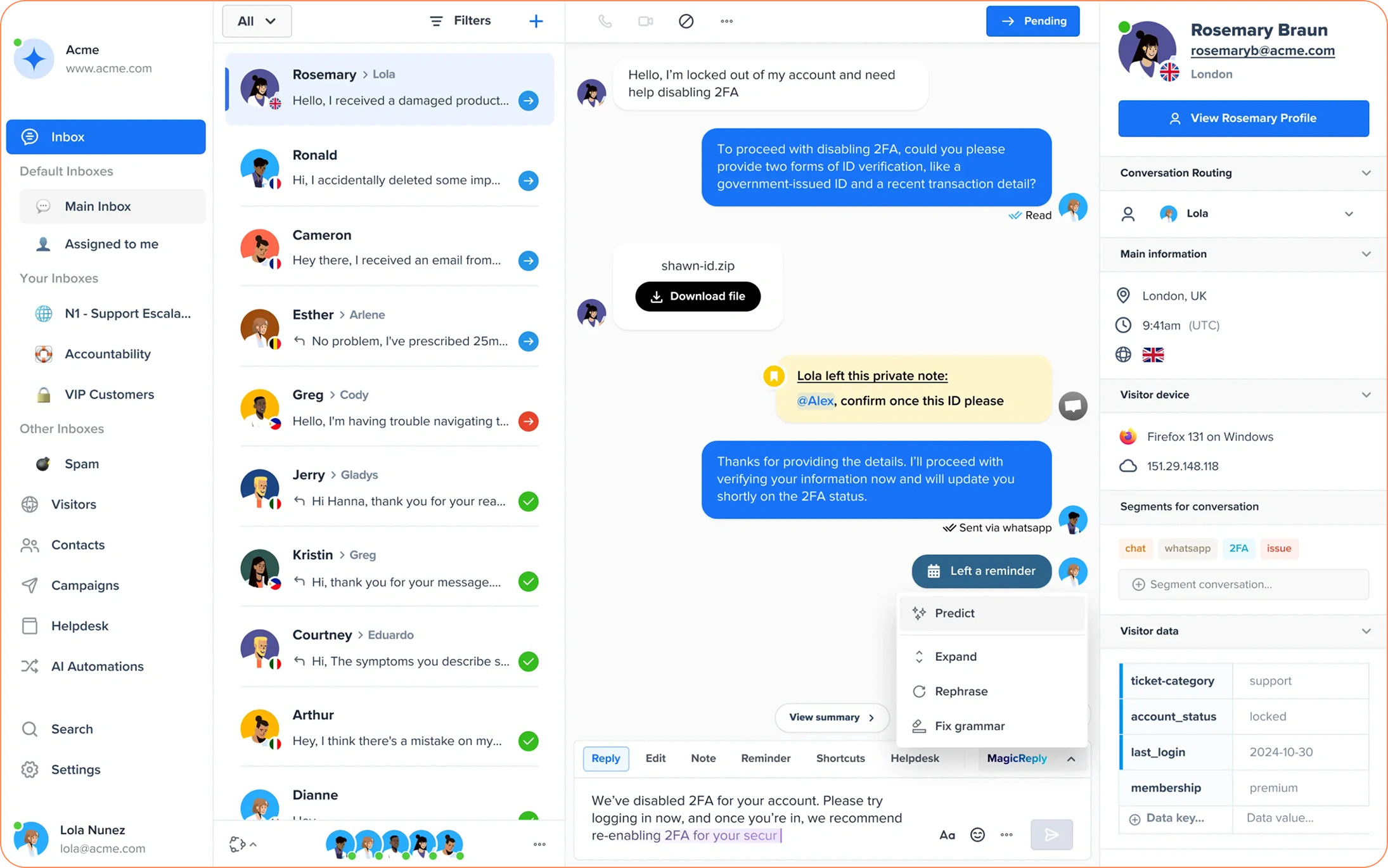
Crisp

Crisp combines customer messaging, shared inboxes, ticketing, automation, and AI in one platform.

It is particularly relevant for SMB and mid-market companies that manage customer conversations across multiple messaging channels and want AI layered into those workflows.

What Crisp Offers?

  • Shared inbox: Teams can manage conversations from different channels through one workspace.
  • AI capabilities: Crisp offers AI-powered customer support capabilities alongside its messaging and automation tools.
  • Workflow automation: Businesses can automate repetitive support processes and route conversations based on defined workflows.
  • Ticketing: Support teams can move conversations into structured ticket workflows when needed.
  • Integrations: Crisp supports integrations with other business tools to connect customer conversations with the wider support stack.

Pricing:

Crisp offers workspace-based pricing rather than traditional per-agent pricing. Its plans include Free, Mini at $45/month, Essentials at $95/month, and Plus at $295/month. Paid plans include monthly AI credits for its Hugo AI Agent, with $5, $25, and $75 in AI credits respectively on Mini, Essentials, and Plus.

8. LiveChat

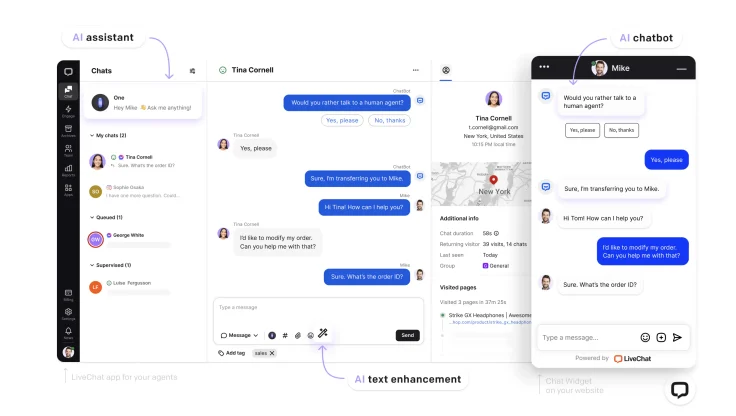
LiveChat

LiveChat is one of the more direct alternatives to Tidio for businesses where website chat remains the primary customer support channel.

The platform focuses on real-time customer conversations, visitor tracking, routing, reporting, and agent productivity, while its newer AI capabilities add automated support.

What LiveChat Offers

  • Website live chat: LiveChat provides a dedicated environment for real-time customer conversations.
  • AI Agent: Its AI Agent can handle customer cases automatically and transfer conversations to human agents when required.
  • Visitor tracking: Support and sales teams can understand who is visiting their website and use that context during conversations.
  • Routing and team management: Conversations can be routed to the appropriate agents or teams.
  • Analytics: Businesses can monitor chat volume, agent performance, response times, and customer service metrics.

Pricing:

LiveChat starts at $19/person/month when billed annually for Starter, with Team at $49 and Business at $79. The platform also offers an AI Agent that can resolve up to 80% of cases and hand conversations to human agents when needed.

9. HubSpot Service Hub

HubSpot Service Hub

HubSpot Service Hub is particularly valuable for companies that want customer support connected directly to their CRM.

Rather than treating support as a separate system, HubSpot connects service conversations with customer records, sales activity, marketing data, and other CRM information.

What HubSpot Offers

  • Customer Agent: HubSpot’s AI customer agent can use CRM data and customer context to help resolve conversations.
  • CRM-connected support: Customer service teams can access customer information alongside their support interactions.
  • Ticketing: Support requests can be organized, assigned, tracked, and managed through structured ticket workflows.
  • Shared inbox: Teams can manage customer conversations from a centralized workspace.
  • Knowledge base: Companies can create self-service content and use it as part of their support experience.
  • Broader customer platform: Service Hub connects with HubSpot’s sales, marketing, and customer relationship tools.

Pricing:

HubSpot Service Hub Professional starts at $90/seat/month when billed annually, while Enterprise starts at $150/seat/month. Professional also has a required $1,500 onboarding fee, while Enterprise has a $3,500 onboarding fee. HubSpot’s Customer Agent uses HubSpot Credits, with the current rate set at 50 credits per resolved conversation.

10. Chatbase

Chatbase

Chatbase takes a more AI-first approach than traditional helpdesk platforms.

Its platform is designed to let businesses build, test, deploy, and continuously improve customer-facing AI agents. Chatbase describes its agent architecture around models, context, APIs and integrations, customer experience capabilities, and enterprise security.

What Chatbase Offers

  • AI agent builder: Businesses can create customer-facing agents without building the entire AI infrastructure themselves.
  • Knowledge and instructions: Agents can be configured around company information, policies, procedures, and specific instructions.
  • APIs and integrations: Chatbase agents can connect with third-party tools and custom APIs, allowing them to perform more than knowledge-based Q&A.
  • Human-in-the-loop: The platform supports human escalation when an AI agent needs additional assistance.
  • Multiple deployment channels: Agents can be deployed across different customer-facing channels.
  • Testing and optimization: Businesses can test agents against real scenarios and monitor performance as they expand AI coverage.

Pricing:

Chatbase offers a free plan, followed by Hobby at $40/month, Standard at $150/month, and Pro at $500/month. The plans scale by monthly message credits and add capabilities such as integrations, helpdesk, voice, telephony, API access, and advanced analytics at higher tiers.

Which Tidio Alternative is Best for Your Use Case?

The right Tidio alternative depends on what you want your support operation to achieve after switching.

A lightweight chat replacement, an ecommerce helpdesk, an enterprise service platform, and an AI-first resolution layer require very different capabilities.

Here’s a practical way to narrow down the options:

Choose Azeon for AI-Led Support Resolution

Choose Azeon when the goal is to have AI handle more of the support process itself – from understanding intent and customer context to reasoning, taking actions across connected systems, resolving the request, and escalating with context when human intervention is required.

It is particularly suited to high-volume support environments where AI performance needs to be measured through resolution rates, escalation rates, resolution time, CSAT, and department-level operational performance.

Choose Intercom for SaaS and Product-Led Support

Intercom is a strong fit for SaaS businesses that want AI support alongside messaging, ticketing, help centers, and customer engagement. Fin makes it particularly relevant when automated customer resolution is a central requirement.

Choose Zendesk for Enterprise Service Operations

Zendesk fits organizations that need a comprehensive service operation with ticketing, routing, SLAs, reporting, omnichannel support, and advanced AI capabilities. It is the better direction when your requirements extend well beyond a website chat experience.

Choose Gorgias for Ecommerce

Gorgias is the strongest fit for ecommerce teams where support conversations frequently involve orders, returns, refunds, shipping, and product information. Its ecommerce integrations and AI-driven actions make it particularly relevant for Shopify-focused businesses.

Choose Freshdesk for Structured Support Operations

Freshdesk works well for growing teams that need structured ticketing, automation, knowledge management, reporting, and AI within a traditional helpdesk environment. It is a practical step when you want more operational depth around your support workflow.

Choose Help Scout for Straightforward Customer Support

Help Scout is a good fit for teams centered around shared inboxes, email support, knowledge bases, and a human-led service experience. Its AI Answers capability adds automated resolution without making the entire support operation AI-centric.

Choose Crisp for Omnichannel Messaging

Crisp is suited to SMB and mid-market teams that want a shared inbox across customer messaging channels, combined with automation, ticketing, and AI capabilities. Its workspace-based pricing can also appeal to teams that prefer a different pricing structure from per-agent platforms.

Choose LiveChat for Live-Chat-Focused Support

LiveChat makes the most sense when website chat and real-time customer engagement remain at the center of your support strategy. It combines live chat with visitor tracking, routing, analytics, and AI-assisted automation.

Choose HubSpot Service Hub for CRM-Connected Support

HubSpot Service Hub is the natural choice when customer support needs to operate alongside CRM, sales, marketing, and customer lifecycle data. Its Customer Agent can use CRM information and customer context when handling support conversations.

Choose Chatbase for an AI-First Support Architecture

Chatbase is worth considering when your priority is building AI agents around your own knowledge, procedures, APIs, and business systems. It is especially relevant for teams that want a dedicated AI layer capable of moving beyond knowledge-based chatbot responses.

Why Azeon Stands Out as a Tidio Alternative

Azeon is built to make AI part of the resolution process itself.

An agent can understand what the customer needs, pull context from your existing systems, reason through what should happen next, take the required action, and close the loop. When a human needs to step in, the conversation reaches them with the relevant context already attached.

And the bigger opportunity goes beyond individual conversations.

Azeon’s operational intelligence shows where AI is resolving work, where customers are still being escalated, how quickly requests are resolved, and which intents are creating the most escalation pressure.

You can move from:

“How can we automate more customer conversations?”

to:

“How much of our customer service operation can AI actually run?”

If that’s the direction you’re heading, Azeon is built for the move beyond Tidio.

See What Your Support Team Could Automate with Azeon

Discover how Azeon can turn complex customer requests into automated resolutions across your existing support stack.

Schedule a Demo →

FAQs

Can I keep my existing CRM and helpdesk when switching from Tidio?

Yes. The right alternative can sit alongside your existing CRM, helpdesk, billing, ecommerce, or communication systems. Before switching, check whether the platform supports your current integrations, APIs, authentication methods, and workflows so you can preserve the systems your support team already relies on.

What should I migrate from Tidio to a new customer support platform?

Start with the information that affects customer experience and support operations: conversation history, contacts, tags, routing rules, automations, knowledge-base content, integrations, and reporting requirements. Also document the workflows currently handled by Tidio so you can recreate or improve them rather than simply moving the configuration.

Can Tidio alternatives handle support across multiple channels?

Yes. Many alternatives support combinations of chat, email, messaging, social channels, and voice. The important consideration is whether customer context follows the conversation between channels. A platform that keeps the customer’s history and intent connected across channels can provide a more consistent support experience.

How do I evaluate whether an AI customer support platform actually resolves tickets?

Look beyond chatbot response accuracy. Evaluate resolution rate, successful task completion, escalation rate, average resolution time, CSAT, and the percentage of requests requiring human intervention. For action-oriented support, also test whether the AI can safely retrieve information and execute business processes in connected systems.

What should enterprises look for in a Tidio alternative?

For enterprise support, evaluate the platform across five areas: AI autonomy, integrations and system actions, customer context, governance, and measurable outcomes. Security, deployment options, auditability, role-based access, human oversight, and scalability also become important when AI moves from answering questions to performing business actions.

Tarak Joshi leads growth strategy and market expansion for agentic AI-powered customer support solutions. With 20+ years of experience in business strategy, IT consulting, and operational excellence, he focuses on helping enterprises improve support outcomes, reduce operational costs, and adopt AI with measurable business impact. His expertise spans customer experience transformation, AI-led service operations, and aligning technology investments with business goals.

Tarak Joshi
VP - Sales

Questions about Azeon?

Connect with our team to explore use cases, workflows, and deployment possibilities.