

Skip to content

Top Fin AI Alternatives & Competitors in 2026

Top Fin AI Alternatives & Competitors in 2026

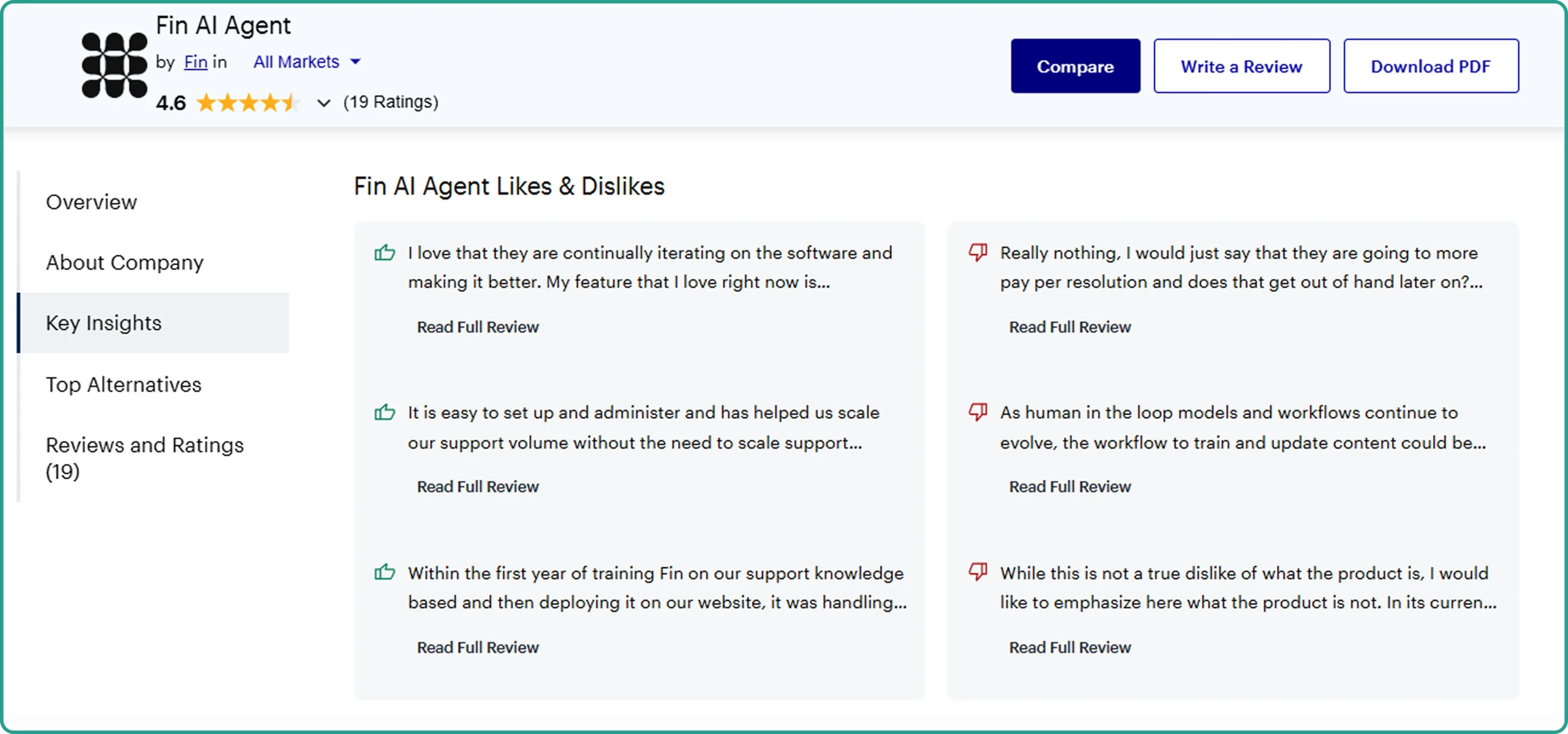
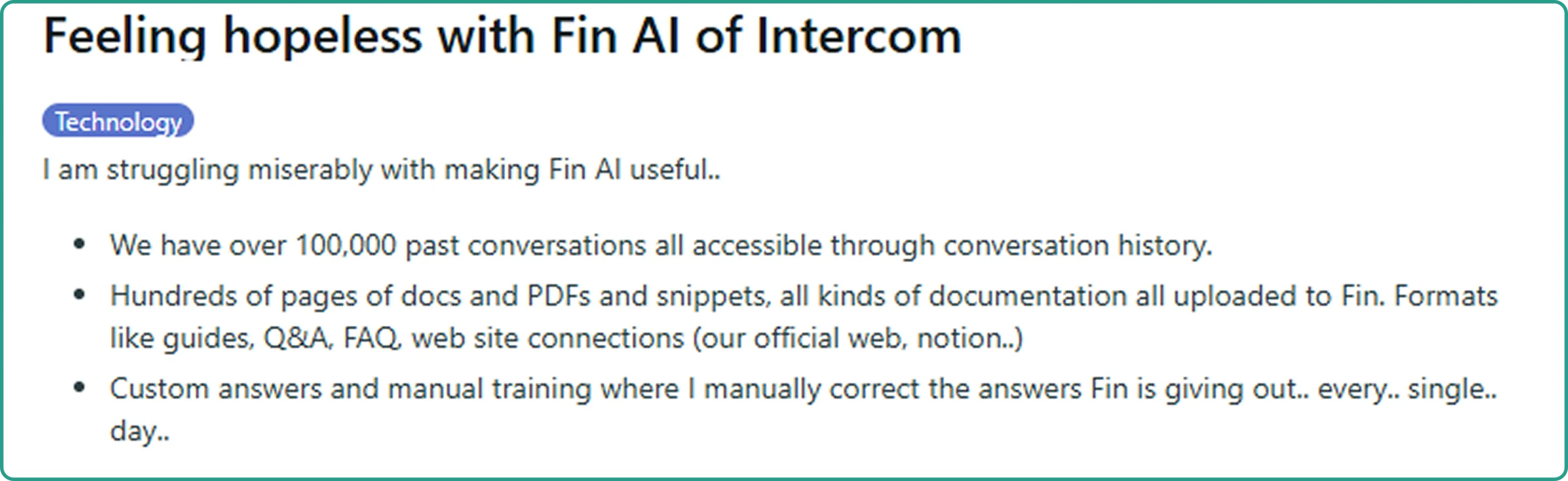
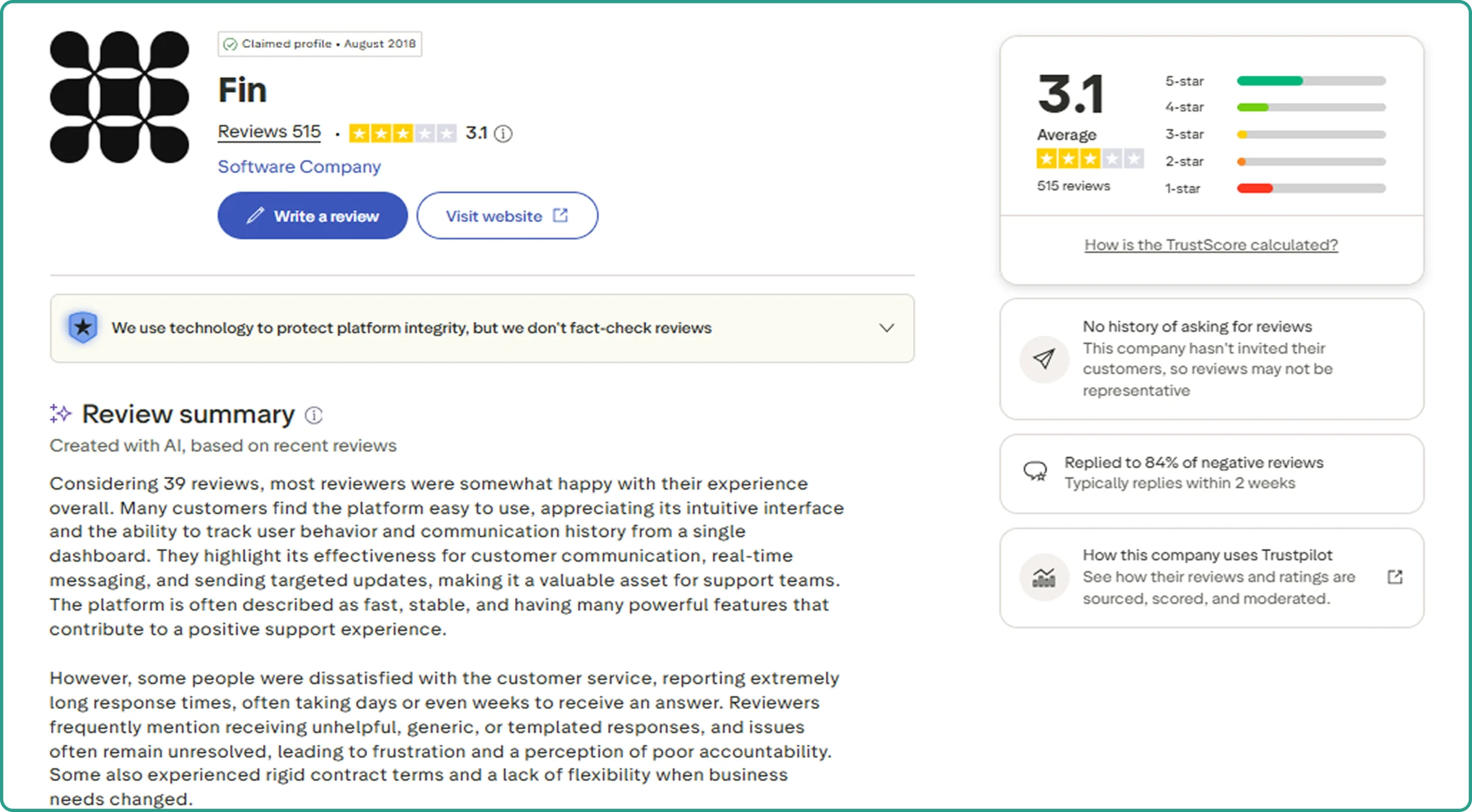
While Intercom Fin has emerged as a popular AI support solution, many businesses eventually begin evaluating Fin AI alternatives for deeper integrations, enterprise controls, flexible deployment, or pricing models aligned with outcomes.

In this guide, we compare the leading Fin AI competitors in 2026, including platforms built for enterprise support, omnichannel experiences, workflow automation, and AI-driven resolutions.

Criteria We Used to Evaluate Fin AI Alternatives

To identify the best Fin AI alternatives, we evaluated platforms using the following criteria:

  • AI reasoning and conversation quality
  • Workflow execution capabilities
  • CRM and helpdesk integrations
  • Omnichannel support
  • Human handoff and approvals
  • Security and compliance readiness
  • Enterprise scalability
  • Analytics and reporting
  • Pricing transparency
  • Ease of deployment

The strongest platforms combine conversational intelligence with business actions, allowing support teams to resolve issues rather than simply answer questions.

10 Best Fin AI Alternatives in 2026

Platform Best For Key Strength Deployment
Azeon Enterprise customer support Agentic AI with deterministic execution Cloud & On-Prem
Ada Self-service automation No-code chatbot builder Cloud
Forethought Ticket automation AI-powered support workflows Cloud
Zendesk AI Existing Zendesk users Native AI support tools Cloud
Salesforce Einstein for Service Salesforce customers CRM-native AI Cloud
Cognigy Voice and contact centers Conversational AI orchestration Cloud
Kore.ai Enterprise automation Multi-channel AI agents Cloud & Hybrid
Freshworks Freddy AI SMB support teams Easy implementation Cloud
Moveworks Employee support Internal helpdesk automation Cloud
Cresta Agent assistance Real-time coaching Cloud

1. Azeon

Best for: Enterprises looking for agentic AI that resolves customer issues across channels while operating within existing systems.

Overview:

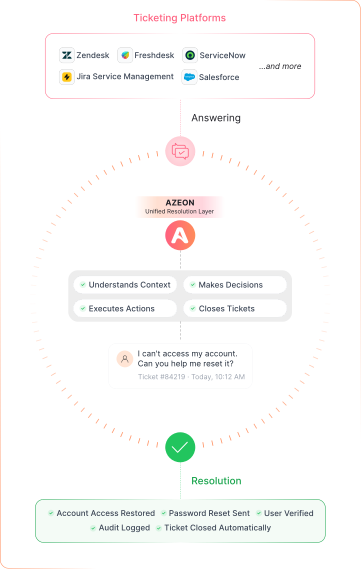
Azeon is one of the strongest Fin AI alternatives for organizations seeking more than conversational automation. Rather than functioning as a standalone chatbot, Azeon acts as an intelligence layer across customer support operations. It integrates with existing helpdesks, CRMs, billing systems, and communication channels without requiring migration.

What differentiates Azeon from many Fin AI competitors is its architecture. Azeon combines AI reasoning with deterministic execution, ensuring that customer interactions remain accurate, traceable, and governed. This enables businesses to automate support at scale while maintaining enterprise control.

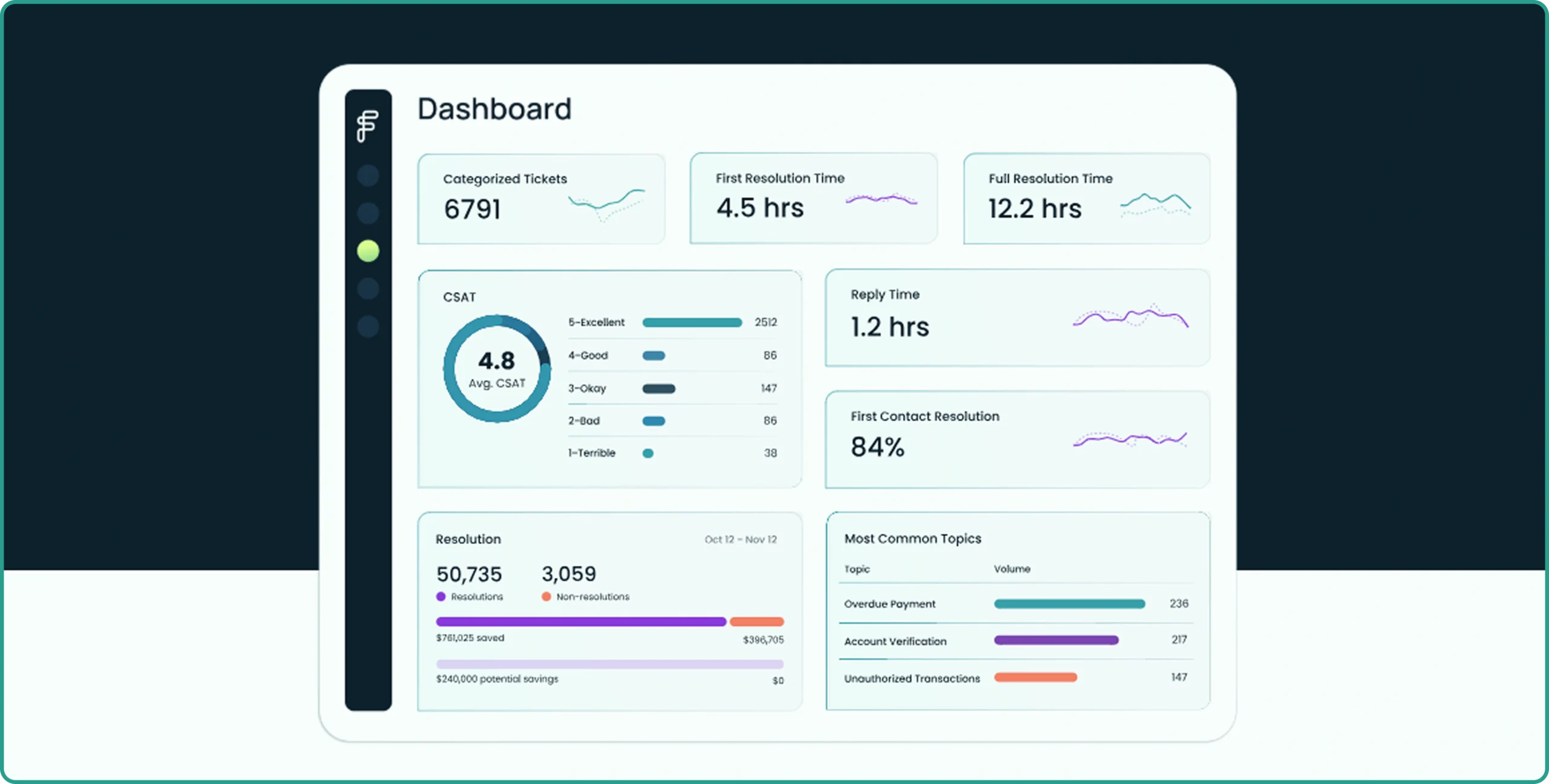
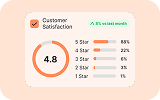
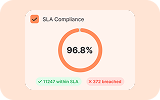
Azeon Executive Dashboard

Key Features:

  • Omnichannel Support: Deliver seamless customer experiences across chat, email, voice, and ticketing channels while preserving conversation continuity.
  • Shared Customer Memory: Maintain customer history, previous interactions, account details, and support context across every touchpoint.
  • Human-in-the-Loop Governance: Enable approvals, oversight, and intervention for sensitive actions to maintain business control.
  • Context-Aware Escalations: Transfer conversation summaries, customer information, and recommended next steps during agent handoffs.
  • Workflow Automation & Execution: Execute actions across CRM, billing, support, and operational systems without switching tools.
  • AI Reasoning Engine: Understand customer intent, urgency, sentiment, and business context before generating responses.
  • Knowledge Integration: Connect product documentation, policies, FAQs, and internal knowledge bases for accurate resolutions.
  • Root Cause Analytics: Identify recurring customer issues, product gaps, and operational bottlenecks to reduce ticket volume over time.
  • Auditability & Traceability: Maintain complete visibility into AI actions, decisions, and workflows for compliance and governance.
  • Flexible Deployment Options: Deploy across cloud, private cloud, and on-premises environments based on organizational requirements.
  • Extensive Integrations: Integrate with CRM platforms, help desks, communication channels, ERP systems, and enterprise applications.
| Proven Results from Live Environments |

Measured Outcomes Across Production Deployments

Metric
Outcome
CSAT improvement (Retail case study)
3.7 → 4.8
Reduction in repeat contact rate
35%
Reduction in Average Handle Time (Logistics)
32%
Common queries resolved annually
250,000+
Ticket automation without SLA risk (SaaS)
96%
Customer Lifetime Value improvement
2X
Goal Completion Rate (GCR)
95%+
Semantic Accuracy
>92%
Guardrail Adherence
99.999%
Annual OpEx Reduction
Up to $250K

Pros:

  • Built for financial services and other high-volume customer support environments.
  • Works with existing infrastructure without requiring system replacement or migration.
  • Strong governance, auditability, and compliance capabilities for regulated industries.
  • Supports cloud, private cloud, and on-premises deployment requirements.
  • Delivers context-aware customer experiences across channels and systems.
  • Outcome-based pricing aligned directly with business value and resolutions.

Cons:

  • Enterprise deployments may require implementation planning and stakeholder alignment.

Pricing:

Azeon follows a Result-as-a-Service pricing model where organizations pay based on successfully resolved customer issues rather than seats, AI tokens, API calls, or conversation volume.

David Pridgen
David Pridgen
Solution Consultant

Ready to Explore a Better Alternative to Fin AI?

Learn how Azeon reduces repeat contacts, improves CSAT, and automates support operations.

Book a Personalized Demo →

2. Ada

Best for: Businesses focused on self-service automation.

Overview:

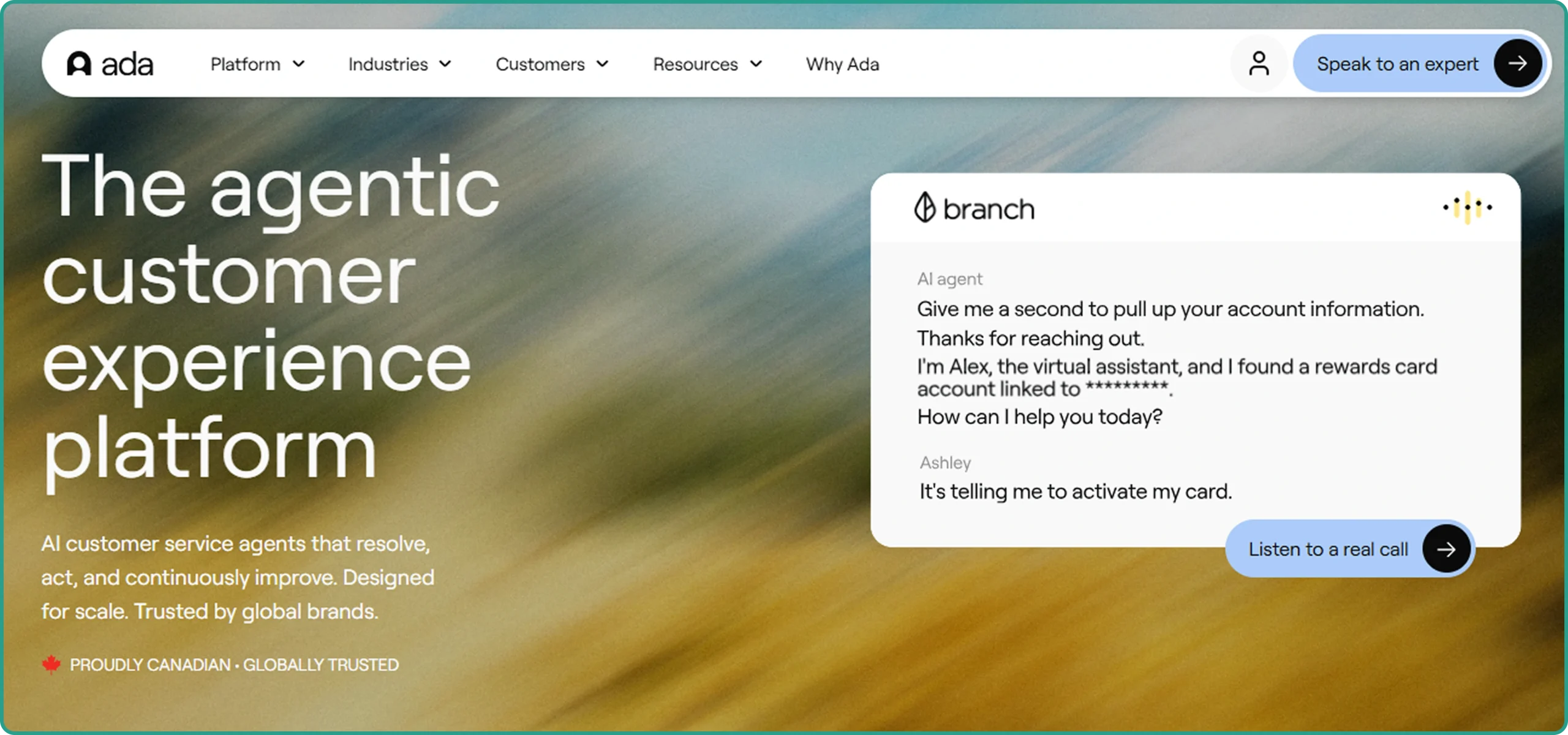
Ada is a well-known customer support automation platform that helps businesses build AI-powered self-service experiences. The platform provides no-code tools that allow support teams to deploy conversational agents quickly.

As one of the established Fin AI alternatives, Ada focuses heavily on customer self-service and ticket deflection. Organizations with large FAQ libraries and repetitive customer queries often find value in Ada’s automation capabilities.

Key Features:

  • No-code bot builder
  • Knowledge base integration
  • Multilingual support
  • Analytics dashboard
  • Omnichannel deployment
  • API integrations
  • AI-powered responses
  • Customer segmentation

Pros:

  • Easy deployment
  • User-friendly interface
  • Strong self-service capabilities
  • Supports multiple languages
  • Good analytics
  • Enterprise scalability

Cons:

  • Limited workflow execution
  • Advanced customization may require resources

Pricing:

Custom pricing based on business requirements.

3. Forethought

Best for: Organizations seeking AI-driven ticket automation and agent productivity improvements.

Overview:

Forethought is an AI platform designed to automate customer support workflows through intelligent ticket management and knowledge retrieval. The company focuses heavily on reducing manual effort while helping support teams resolve customer issues faster.

As one of the leading Fin AI competitors, Forethought uses AI to classify tickets, surface relevant information, and assist agents throughout the support lifecycle. Businesses that already operate mature support functions often adopt Forethought to increase efficiency without significantly changing their existing workflows.

Key Features:

  • Automates ticket classification using AI
  • Routes customer inquiries to the right teams
  • Assists agents with suggested responses
  • Retrieves answers from internal knowledge bases
  • Automates repetitive support workflows
  • Provides analytics for support performance
  • Integrates with CRMs and helpdesk tools
  • Supports escalation and case management

Pros:

  • Reduces manual ticket handling
  • Improves support team productivity
  • Works with existing support systems
  • Enterprise-ready for large teams
  • Offers strong reporting capabilities
  • Scales across high-volume operations

Cons:

  • Setup may require workflow optimization
  • Limited deployment flexibility

Pricing:

Forethought provides custom pricing based on company size, support volume, and required capabilities.

4. Zendesk AI

Best for: Existing Zendesk customers looking to add AI capabilities to their support operations.

Overview:

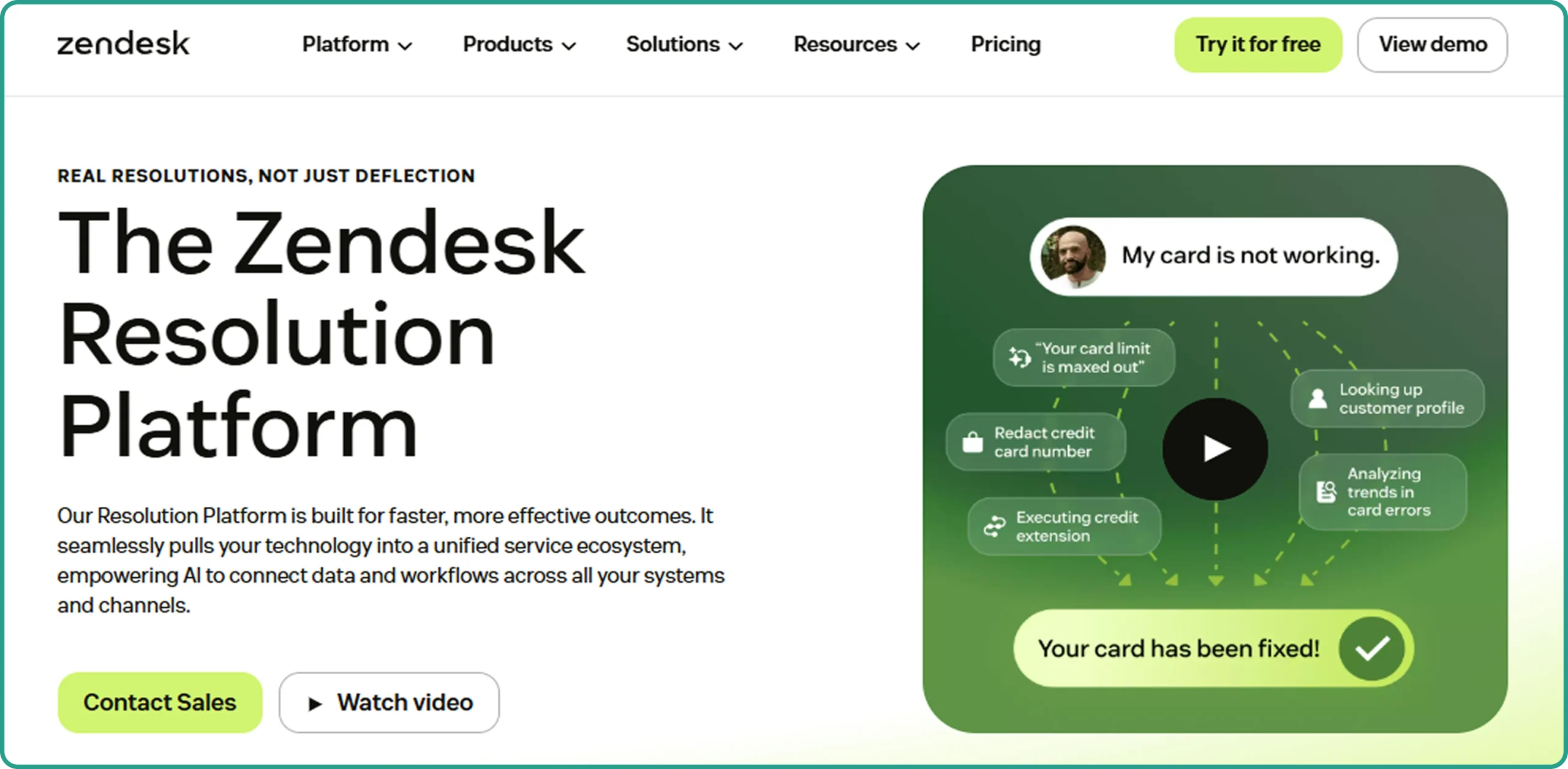
Zendesk AI extends the Zendesk platform with generative AI features, automation tools, and intelligent workflows. For businesses already using Zendesk, adopting its AI capabilities often requires less operational change than introducing a separate solution.

Among Fin AI alternatives, Zendesk AI stands out for its mature support ecosystem and extensive marketplace integrations. Organizations with established Zendesk workflows can leverage AI-powered ticketing, suggested responses, and knowledge management while continuing to operate within familiar systems.

Key Features:

  • Automates ticket classification and prioritization
  • Generates suggested responses for agents
  • Organizes and retrieves knowledge articles
  • Automates repetitive support workflows
  • Supports email, chat, and social channels
  • Provides customer service analytics
  • Maintains customer context across interactions
  • Assists agents during live conversations

Pros:

  • Native integration with Zendesk products
  • Familiar interface for existing users
  • Strong ecosystem of integrations
  • Scales with growing support teams
  • Provides detailed analytics and reporting
  • Backed by an established platform

Cons:

  • Best suited for Zendesk customers
  • Costs increase as usage grows
  • Limited flexibility outside the ecosystem

Pricing:

Zendesk AI pricing depends on Zendesk Suite plans and additional AI capabilities selected by the customer.

5. Salesforce Einstein for Service

Best for: Large enterprises operating within the Salesforce ecosystem.

Overview:

Salesforce Einstein for Service brings AI capabilities directly into customer support operations powered by Salesforce Service Cloud. The platform uses CRM data to personalize customer experiences, automate workflows, and assist agents with intelligent recommendations.

As one of the strongest Fin AI competitors for enterprise organizations, Einstein offers deep integration with customer records, cases, and workflows. Businesses heavily invested in Salesforce often benefit from unified customer visibility and AI-powered service automation across departments.

Key Features:

  • CRM-native AI that leverages customer data directly from Salesforce records
  • Predictive analytics that help identify trends and improve support outcomes
  • Agent assistance capabilities that recommend actions and responses in real time
  • Workflow automation tools that reduce manual effort across service operations
  • Intelligent case routing that directs requests to the most suitable teams
  • Knowledge recommendations that surface relevant support articles instantly
  • Omnichannel engagement across chat, email, voice, and messaging channels
  • Advanced reporting dashboards that provide operational insights at scale

Pros:

  • Deep integration with the Salesforce ecosystem and customer data
  • Highly customizable for complex enterprise service environments
  • Strong security and compliance capabilities for regulated industries
  • Advanced analytics support data-driven decision making
  • Provides a unified view of customers across teams
  • Scales effectively for large global organizations

Cons:

  • Implementation and configuration can be resource-intensive
  • Pricing may be expensive for smaller or mid-sized businesses
  • Businesses outside Salesforce may face integration challenges

Pricing:

Salesforce Einstein for Service pricing varies depending on Service Cloud editions, AI add-ons, and enterprise requirements.

6. Cognigy

Best for: Enterprises running contact centers and voice automation at scale.

Overview:

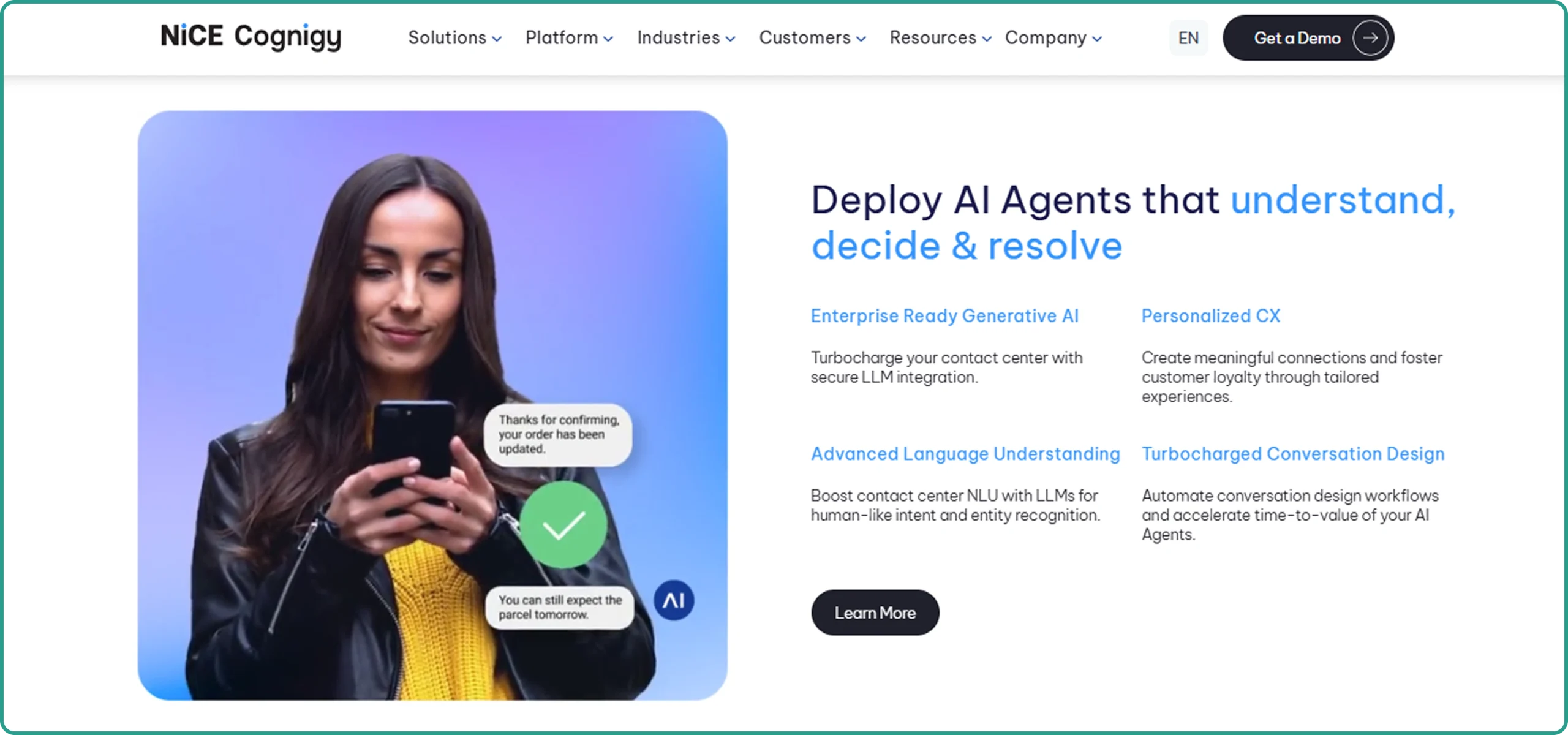
Cognigy is an enterprise conversational AI platform built for customer service teams that manage large volumes of voice and chat interactions. The platform enables organizations to deploy AI agents across multiple channels while maintaining centralized control over customer experiences.

Among the top Fin AI alternatives, Cognigy stands out for its strong voice AI capabilities and contact center integrations. Enterprises in industries such as telecommunications, banking, and travel often use Cognigy to automate customer interactions while supporting human agents during complex conversations.

Key Features:

  • Voice AI capabilities that automate customer conversations across contact centers
  • Omnichannel support for chat, messaging apps, voice, and web experiences
  • Low-code development tools for creating conversational workflows faster
  • Enterprise integrations with CRMs, contact centers, and backend systems
  • AI-powered intent recognition for understanding customer requests accurately
  • Human handoff capabilities that transfer context to live agents seamlessly
  • Analytics dashboards for monitoring conversation performance and outcomes
  • Multi-language support for serving global customer bases

Pros:

  • Strong voice automation capabilities for contact center environments
  • Enterprise-grade integrations with major business systems
  • Flexible workflow design through low-code tools
  • Supports large-scale deployments across multiple regions
  • Comprehensive analytics for operational visibility
  • Strong omnichannel capabilities

Cons:

  • May require technical expertise during implementation
  • Smaller businesses may find the platform complex

Pricing:

Cognigy offers custom enterprise pricing based on usage, integrations, and deployment needs.

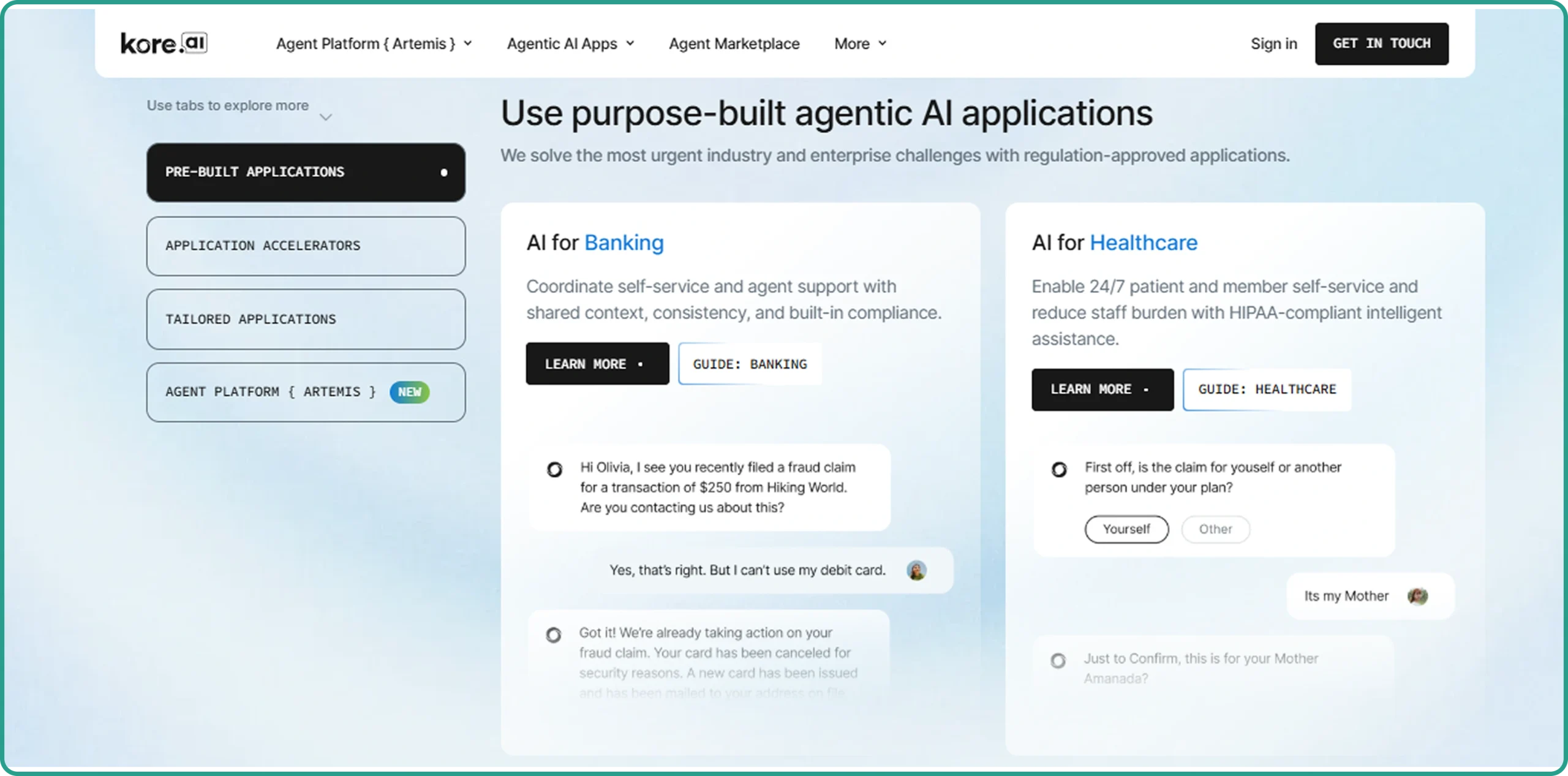
7. Kore.ai

Best for: Enterprises seeking AI agents across customer service and business operations.

Overview:

Kore.ai is an enterprise conversational AI platform that enables organizations to build virtual assistants for customer support, employee experiences, and workflow automation. Its broad capabilities make it suitable for companies looking beyond customer service use cases.

As one of the leading Fin AI competitors, Kore.ai supports advanced orchestration, integrations, and multi-channel experiences. Enterprises often adopt the platform when they need scalable AI deployments across departments.

Key Features:

  • AI agent builder for creating conversational experiences across use cases
  • Omnichannel deployment across web, mobile, messaging, and voice channels
  • Workflow automation capabilities that connect AI with backend systems
  • Pre-built industry templates that accelerate implementation
  • Enterprise integrations with CRM, ERP, and support platforms
  • Natural language understanding for accurate customer interactions
  • Analytics and reporting tools for monitoring performance
  • Human escalation workflows for complex scenarios

Pros:

  • Broad enterprise use cases beyond customer support
  • Strong integration ecosystem across business applications
  • Scalable infrastructure for large organizations
  • Flexible deployment options for different environments
  • Supports multiple industries and use cases
  • Advanced conversational AI capabilities

Cons:

  • Initial setup may require specialized expertise
  • Enterprise pricing may be costly for smaller teams
  • Some advanced features involve longer implementation cycles

Pricing:

Kore.ai provides custom pricing tailored to enterprise requirements and deployment scale.

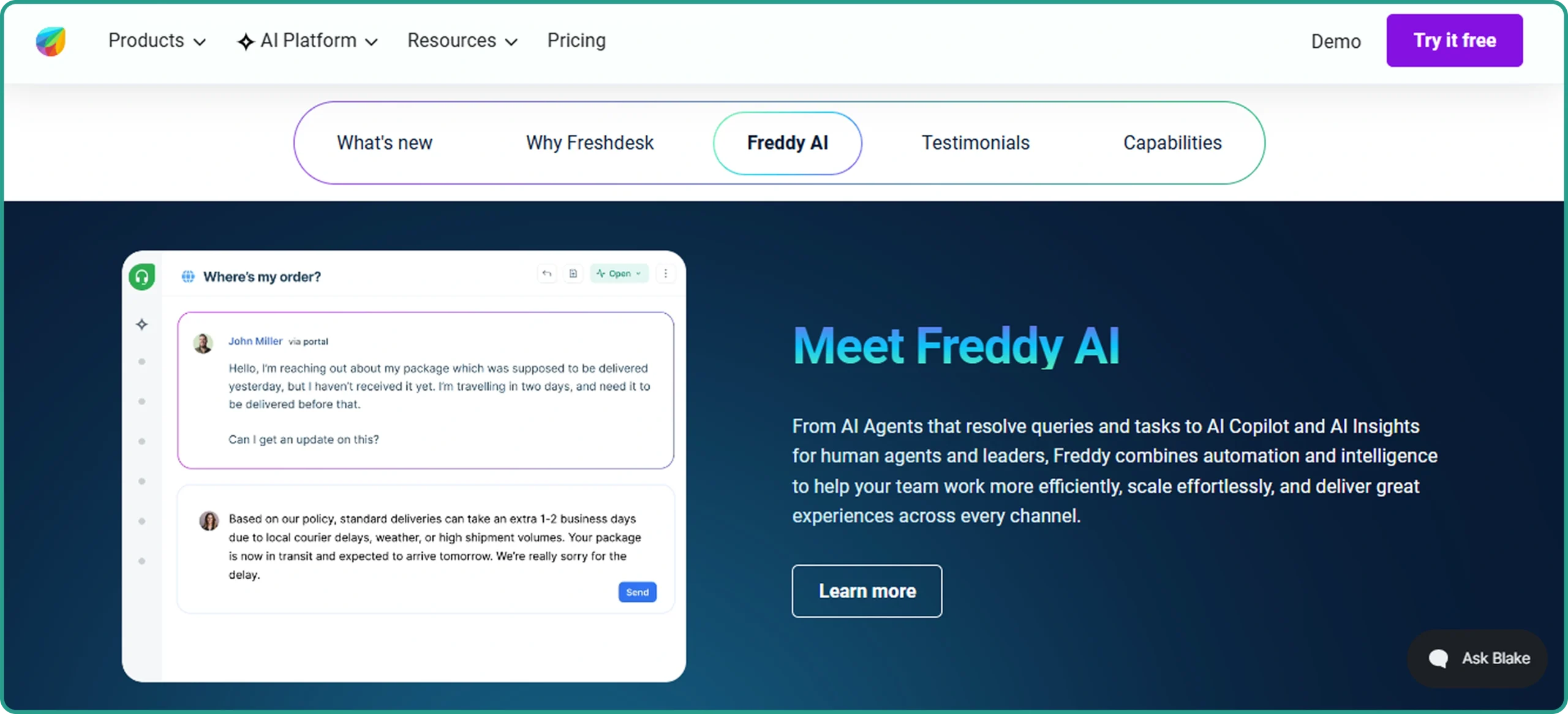
8. Freshworks Freddy AI

Best for: SMBs and mid-market companies seeking easy-to-adopt AI support tools.

Overview:

Freshworks Freddy AI brings generative AI and automation capabilities into the Freshworks ecosystem. The platform helps businesses automate support tasks, improve agent productivity, and enhance customer experiences without extensive implementation efforts.

Among Fin AI alternatives, Freddy AI is often chosen by growing businesses that value ease of use and cost efficiency. Organizations already using Freshworks products can integrate AI capabilities with minimal disruption.

Key Features:

  • AI-powered ticket summarization that helps agents review cases faster
  • Automated responses for handling repetitive customer inquiries
  • Workflow automation capabilities for routine support processes
  • Knowledge base integration for accurate information retrieval
  • Omnichannel support across chat, email, and messaging platforms
  • Analytics dashboards for tracking support metrics
  • Agent assistance tools that improve response quality
  • CRM integrations with Freshworks products and third-party systems

Pros:

  • User-friendly interface with fast implementation
  • Cost-effective solution for SMBs and mid-sized businesses
  • Native integration with the Freshworks ecosystem
  • Strong automation capabilities for common workflows
  • Minimal technical expertise required for deployment
  • Scales as support operations grow

Cons:

  • Advanced enterprise capabilities may be limited
  • Best suited for organizations already using Freshworks
  • Customization options may be less extensive than enterprise platforms

Pricing:

Freddy AI pricing varies based on Freshworks plans and selected AI features.

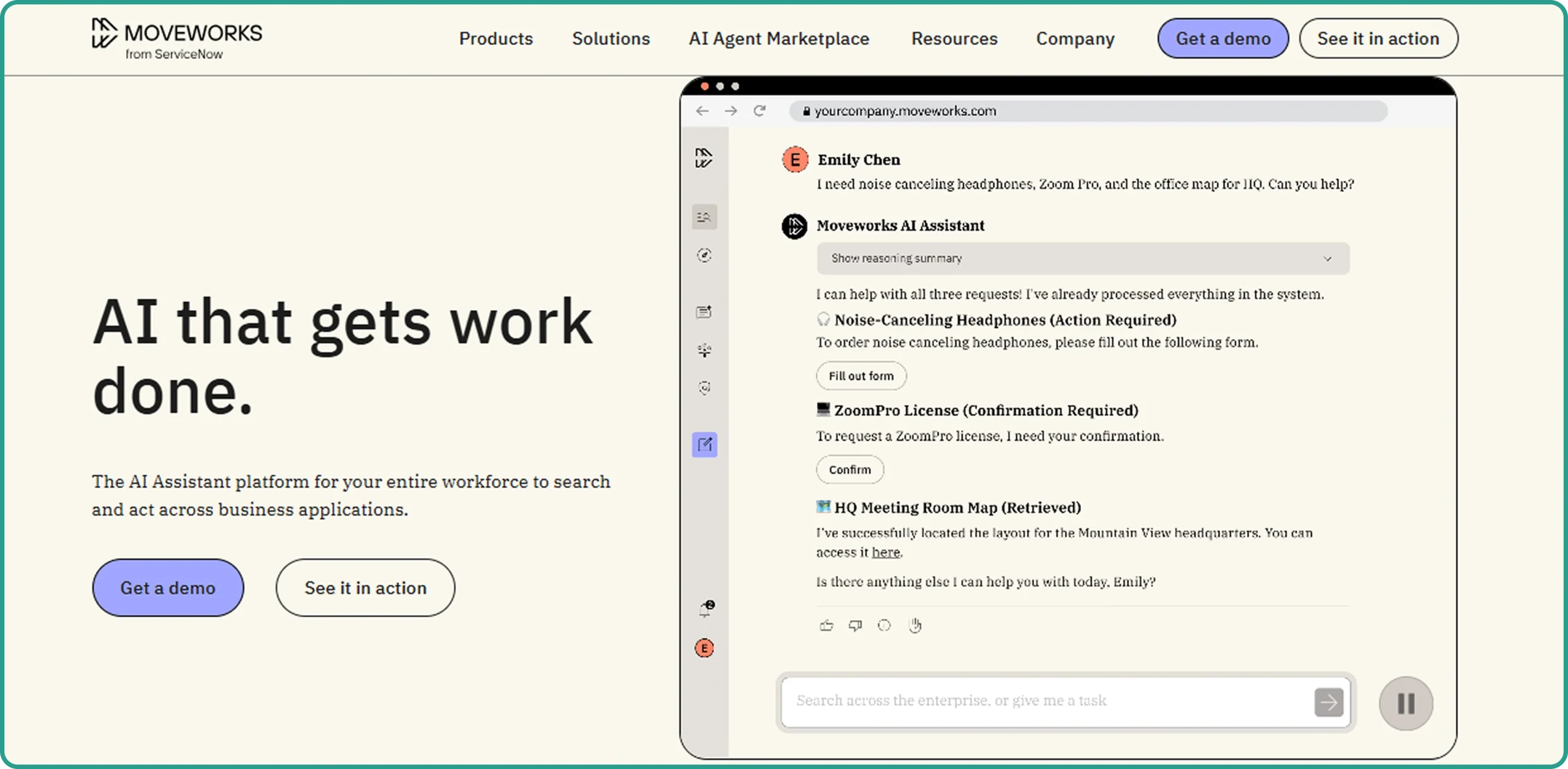
9. Moveworks

Best for: Internal employee support and IT service automation.

Overview:

Moveworks specializes in automating employee support experiences across IT, HR, and workplace operations. While its primary focus differs from customer service, some organizations evaluate it among Fin AI competitors due to its strong AI capabilities.

The platform excels at helping employees resolve issues quickly through conversational experiences integrated with enterprise systems. Large organizations often use Moveworks to reduce internal support workloads and improve productivity.

Key Features:

  • AI-powered employee support for IT and HR operations
  • Enterprise search capabilities that surface information instantly
  • Workflow automation across workplace systems and applications
  • Integrations with collaboration tools and service platforms
  • Natural language understanding for conversational experiences
  • Self-service capabilities that reduce support tickets
  • Analytics tools for measuring adoption and performance
  • Automated task execution across connected systems

Pros:

  • Excellent for internal employee support use cases
  • Strong enterprise integrations with workplace applications
  • Improves employee productivity and self-service adoption
  • Advanced AI capabilities for enterprise environments
  • Reduces repetitive support requests
  • Scalable for large organizations

Cons:

  • Primarily focused on employee support rather than customer service
  • Enterprise pricing may be expensive for smaller teams
  • Limited fit for customer-facing support operations

Pricing:

Moveworks provides custom pricing based on organization size and deployment requirements.

10. Cresta

Best for: Organizations seeking real-time agent assistance and coaching.

Overview:

Cresta is an AI platform focused on improving contact center performance through live guidance and coaching. Rather than fully automating customer interactions, the platform enhances human agent performance during conversations.

As a Fin AI alternative, Cresta appeals to businesses that want AI-assisted customer service while keeping agents at the center of interactions. Its real-time recommendations can improve resolution speed and consistency.

Key Features:

  • Real-time agent coaching during customer conversations
  • AI-powered recommendations that improve response quality
  • Conversation analytics for identifying trends and opportunities
  • Quality assurance tools for monitoring agent performance
  • Contact center integrations with existing systems
  • Performance dashboards for managers and supervisors
  • Knowledge surfacing capabilities during live interactions
  • Automated conversation summaries for faster documentation

Pros:

  • Enhances agent productivity during live conversations
  • Strong analytics and coaching capabilities
  • Integrates with existing contact center infrastructure
  • Improves consistency across support teams
  • Supports quality assurance initiatives
  • Enterprise-ready platform for large operations

Cons:

  • Focuses more on agent assistance than full automation
  • Enterprise pricing may require significant investment
  • May not replace standalone AI support platforms

Pricing:

Cresta offers custom enterprise pricing based on contact center size and feature requirements.

How to Choose the Right Fin AI Alternative?

Choosing the right Fin AI alternative depends on your support operations, technology stack, and long-term AI strategy. While some businesses prioritize self-service automation, others require enterprise governance, workflow execution, and omnichannel support.

When evaluating Fin AI competitors, consider the following questions:

  • Does the platform integrate with your existing CRM and helpdesk systems?
  • Can it execute workflows or only generate responses?
  • Does it support human approvals for sensitive actions?
  • How well does it maintain customer context across channels?
  • Is deployment available in cloud, hybrid, or on-prem environments?
  • Does pricing align with outcomes or simply usage?

The strongest customer support AI platforms go beyond answering questions – they resolve issues, automate actions, and create connected customer experiences.

Which Fin AI Alternative is Best?

There is no one-size-fits-all solution when evaluating Fin AI alternatives. The best platform depends on your business requirements, existing technology investments, and customer support goals.

Businesses seeking simple self-service automation may prefer tools like Ada or Freshworks Freddy AI. Organizations deeply invested in Salesforce or Zendesk may benefit from their native AI capabilities.

However, enterprises looking for agentic AI that combines reasoning, memory, workflow execution, governance, and omnichannel support should closely evaluate Azeon.

With deterministic execution, shared customer memory, human-in-the-loop controls, and Result-as-a-Service pricing, Azeon is built for organizations that want AI to deliver measurable support outcomes.

Ready to Move Beyond Fin AI?

Resolve more issues without replacing existing systems with Azeon.

FAQs

What are the best Fin AI alternatives?

Some of the best Fin AI alternatives include Azeon, Ada, Forethought, Zendesk AI, Salesforce Einstein for Service, Cognigy, Kore.ai, Freshworks Freddy AI, Moveworks, and Cresta.

Why do companies look for Fin AI alternatives?

Companies often seek Fin AI alternatives for deeper integrations, enterprise governance, flexible deployment options, advanced workflow automation, and more transparent pricing models.

Which Fin AI alternative is best for enterprises?

Enterprise organizations often evaluate platforms like Azeon, Salesforce Einstein for Service, Cognigy, and Kore.ai due to their scalability, security, and advanced automation capabilities.

What should I look for in a Fin AI competitor?

Key factors include AI accuracy, integrations, workflow automation, omnichannel support, human handoffs, analytics, security, and pricing flexibility.

Does Azeon replace existing support systems?

No. Azeon works as an intelligence layer on top of existing support systems, allowing businesses to add AI capabilities without migrating their infrastructure.

David works closely with enterprise organizations to help them modernize customer support operations through AI-driven automation. With experience in strategic account management, customer engagement, and technology consulting, David focuses on aligning business objectives with scalable support solutions that improve efficiency, customer experience, and operational performance.

David Pridgen
Solution Consultant

Questions about Azeon?

Connect with our team to explore use cases, workflows, and deployment possibilities.